Indiana University Melvin and Bren Simon Cancer Center, Indianapolis, IN, USA.
WolfBrown, Boston, MA, USA.
J Altern Complement Med. 2020 May;26(5):424-434. doi: 10.1089/acm.2019.0413. Epub 2020 Feb 19.
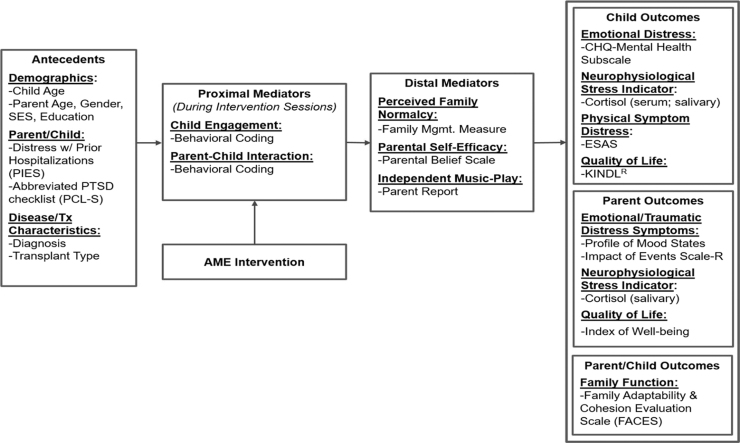
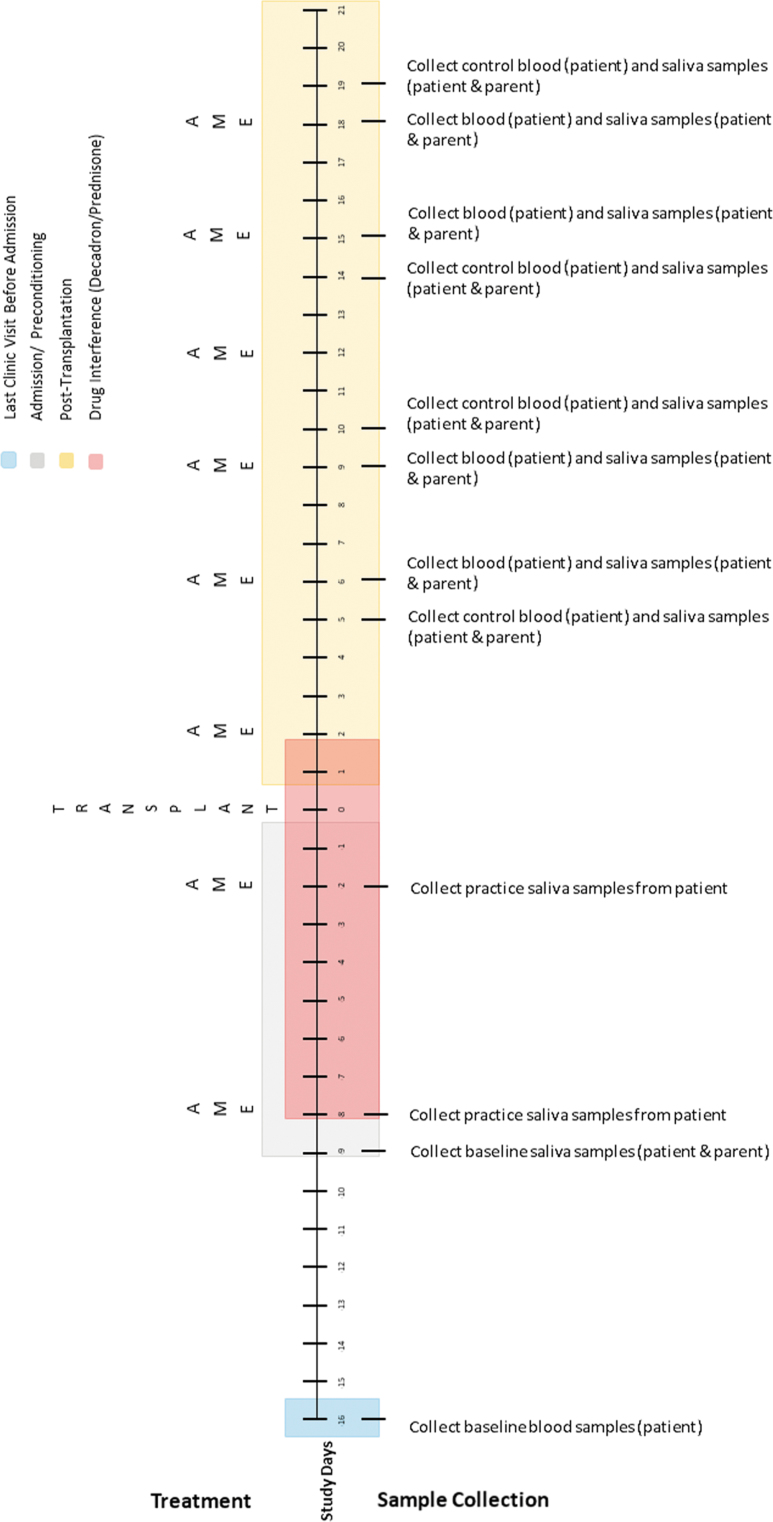
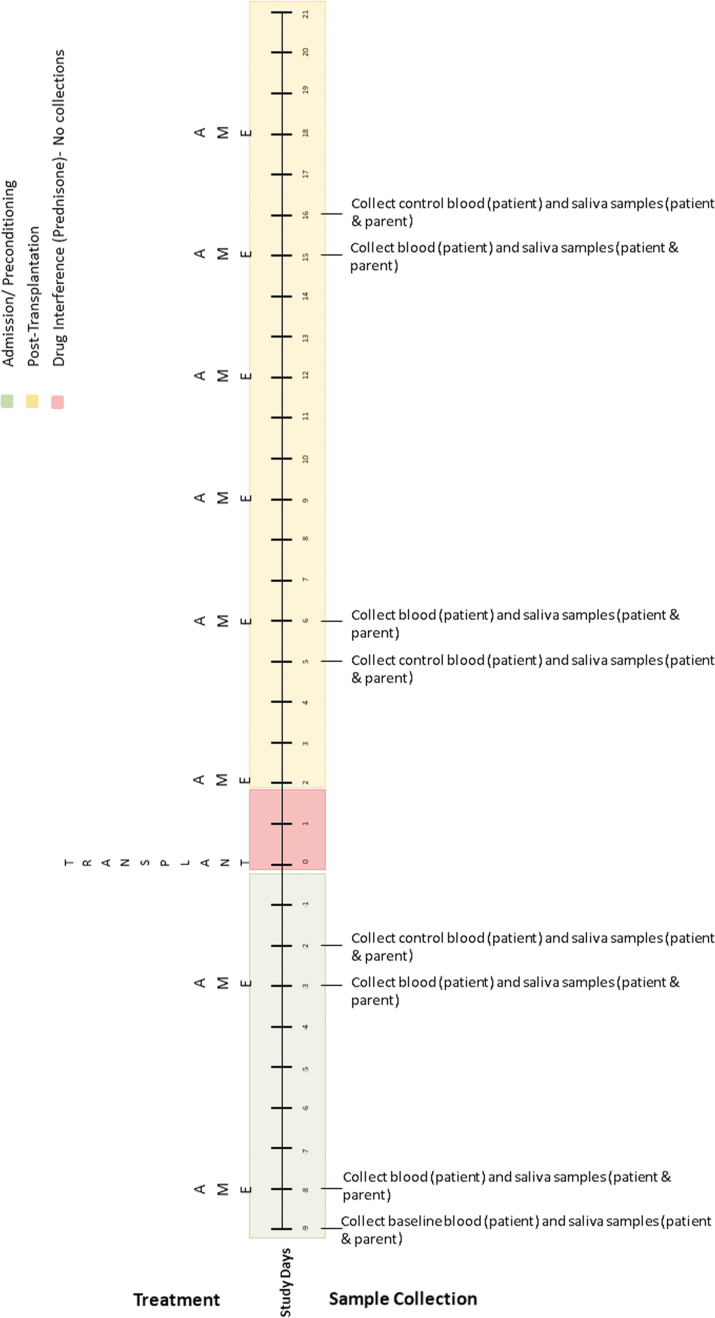
Primary aims of the proposed protocol are to determine the feasibility/acceptability of the active music engagement intervention protocol during hematopoietic stem cell transplantation (HSCT) and clinical feasibility/acceptability of the biological sample collection schedule. The authors propose a single-case, alternating treatment design to compare levels of child and caregiver cortisol in blood and saliva collected on alternating days, when the dyad receives and does not receive AME sessions. Included are the scientific rationale for this design and detailed intervention and sample collection schedules based on transplant type. Pediatric inpatient HSCT unit. Eligible participants are dyads of children 3-8 years old, hospitalized for HSCT, and their caregiver. Children with malignant and nonmalignant conditions will be eligible, regardless of transplant type. AME intervention is delivered by a board-certified music therapist who tailors music-based play experiences to encourage active engagement in, and independent use of, music play to manage the inter-related emotional distress experienced by children and their caregivers during HSCT. Dyads will receive two 45-min AME sessions each week during hospitalization. Eight collections of blood (child) and saliva (child/caregiver) will be performed for cortisol measurement. The authors will also collect self-report and caregiver proxy measures for dyad emotional distress, quality of life, and family function. At study conclusion, qualitative caregiver interviews will be conducted. Planned analyses will be descriptive and evaluate the feasibility of participant recruitment, cortisol collection, planned evaluations, and AME delivery. Analysis of qualitative interviews will be used to gain an understanding about the ease/burden of biological sample collection and any perceived benefit of AME. Behavioral intervention studies examining biological mechanisms of action in pediatric transplant populations are rare. Findings will provide important information about the feasibility/acceptability of collecting cortisol samples during a high-intensity treatment and advance understanding about the use of active music interventions to mitigate child/caregiver distress during the transplant period.
本研究方案的主要目的是确定造血干细胞移植(HSCT)期间主动音乐参与干预方案的可行性/可接受性,以及生物样本采集计划的临床可行性/可接受性。作者提出了一种单病例、交替治疗设计,以比较在接受和不接受主动音乐参与(AME)治疗时,对接受 HSCT 治疗的 3-8 岁儿童及其照顾者的血液和唾液中皮质醇水平。本设计包括了科学依据,并根据移植类型详细介绍了干预措施和样本采集计划。儿科住院 HSCT 病房。符合条件的参与者是接受 HSCT 治疗的 3-8 岁儿童及其照顾者组成的一对。无论移植类型如何,患有恶性和非恶性疾病的儿童都符合条件。AME 干预由持有委员会认证的音乐治疗师提供,他们会根据音乐基础的游戏体验,鼓励儿童积极参与和独立使用音乐来管理与 HSCT 相关的情绪困扰。住院期间,患儿每周将接受两次 45 分钟的 AME 治疗。将进行八次皮质醇测量的血液(儿童)和唾液(儿童/照顾者)采集。作者还将收集有关患儿及其照顾者的情绪困扰、生活质量和家庭功能的自我报告和照顾者代理评估。在研究结束时,将进行定性照顾者访谈。计划的分析将是描述性的,评估参与者招募、皮质醇采集、计划评估和 AME 实施的可行性。对定性访谈的分析将用于了解生物样本采集的难易程度/负担,以及 AME 的任何感知益处。在儿科移植人群中,研究生物学作用机制的行为干预研究很少。研究结果将提供有关在高强度治疗期间采集皮质醇样本的可行性/可接受性的重要信息,并深入了解主动音乐干预在移植期间减轻患儿/照顾者痛苦的作用。