Calmeiro João, Carrascal Mylène A, Tavares Adriana Ramos, Ferreira Daniel Alexandre, Gomes Célia, Falcão Amílcar, Cruz Maria Teresa, Neves Bruno Miguel
Faculty of Pharmacy, University of Coimbra, 3000-548 Coimbra, Portugal.
Center for Neuroscience and Cell Biology-CNC, University of Coimbra, 3004-504 Coimbra, Portugal.
Pharmaceutics. 2020 Feb 15;12(2):158. doi: 10.3390/pharmaceutics12020158.
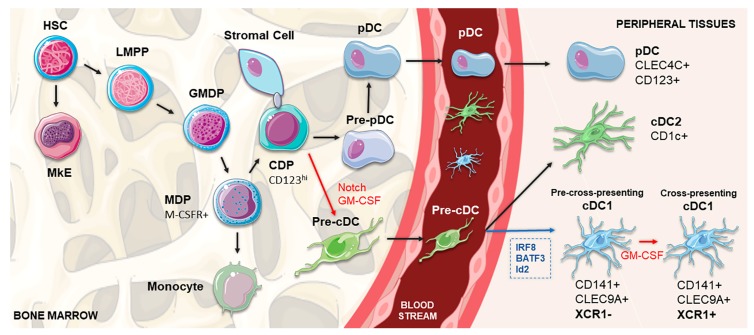
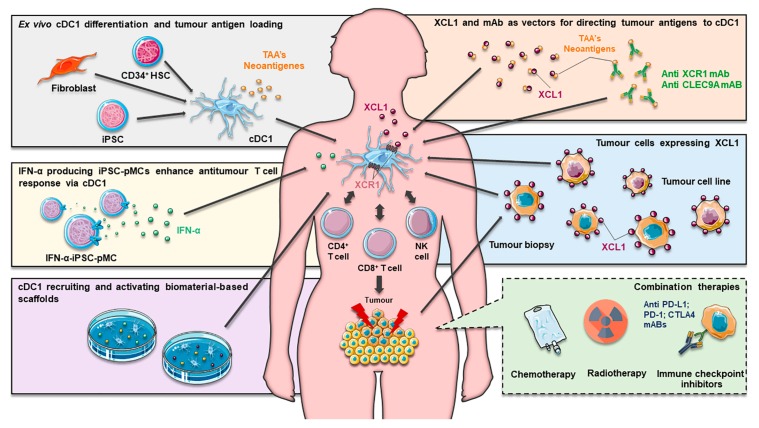
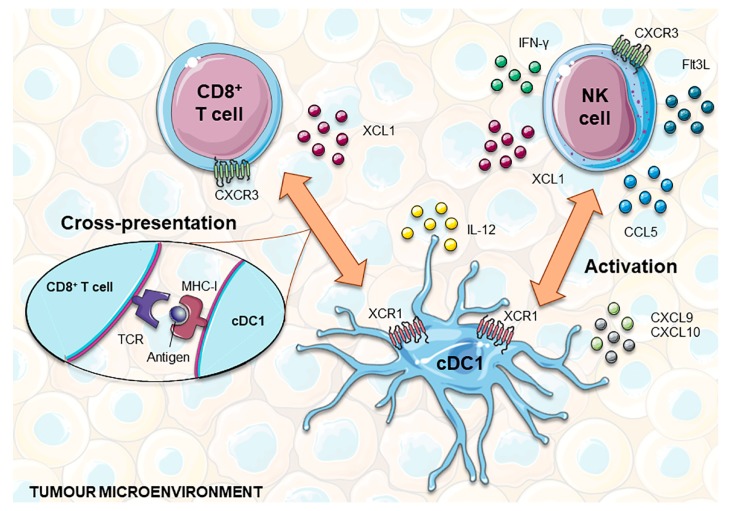
Throughout the last decades, dendritic cell (DC)-based anti-tumor vaccines have proven to be a safe therapeutic approach, although with inconsistent clinical results. The functional limitations of ex vivo monocyte-derived dendritic cells (MoDCs) commonly used in these therapies are one of the pointed explanations for their lack of robustness. Therefore, a great effort has been made to identify DC subsets with superior features for the establishment of effective anti-tumor responses and to apply them in therapeutic approaches. Among characterized human DC subpopulations, conventional type 1 DCs (cDC1) have emerged as a highly desirable tool for empowering anti-tumor immunity. This DC subset excels in its capacity to prime antigen-specific cytotoxic T cells and to activate natural killer (NK) and natural killer T (NKT) cells, which are critical factors for an effective anti-tumor immune response. Here, we sought to revise the immunobiology of cDC1 from their ontogeny to their development, regulation and heterogeneity. We also address the role of this functionally thrilling DC subset in anti-tumor immune responses and the most recent efforts to apply it in cancer immunotherapy.
在过去几十年中,基于树突状细胞(DC)的抗肿瘤疫苗已被证明是一种安全的治疗方法,尽管临床结果并不一致。这些疗法中常用的体外单核细胞衍生树突状细胞(MoDC)的功能局限性是其缺乏稳健性的突出解释之一。因此,人们付出了巨大努力来鉴定具有卓越特性的DC亚群,以建立有效的抗肿瘤反应并将其应用于治疗方法中。在已鉴定的人类DC亚群中,传统1型DC(cDC1)已成为增强抗肿瘤免疫的极具吸引力的工具。这个DC亚群在启动抗原特异性细胞毒性T细胞以及激活自然杀伤(NK)细胞和自然杀伤T(NKT)细胞方面表现出色,而这些细胞是有效抗肿瘤免疫反应的关键因素。在此,我们试图从其个体发生到发育、调节和异质性来审视cDC1的免疫生物学。我们还讨论了这个功能令人兴奋的DC亚群在抗肿瘤免疫反应中的作用以及将其应用于癌症免疫治疗的最新努力。