Institute for Systems Genetics and Department of Biochemistry and Molecular Pharmacology, New York University School of Medicine, New York, USA.
Department of Pathology, Johns Hopkins University School of Medicine, 733N Broadway, Baltimore, MD 21205, USA.
Philos Trans R Soc Lond B Biol Sci. 2020 Mar 30;375(1795):20190335. doi: 10.1098/rstb.2019.0335. Epub 2020 Feb 10.
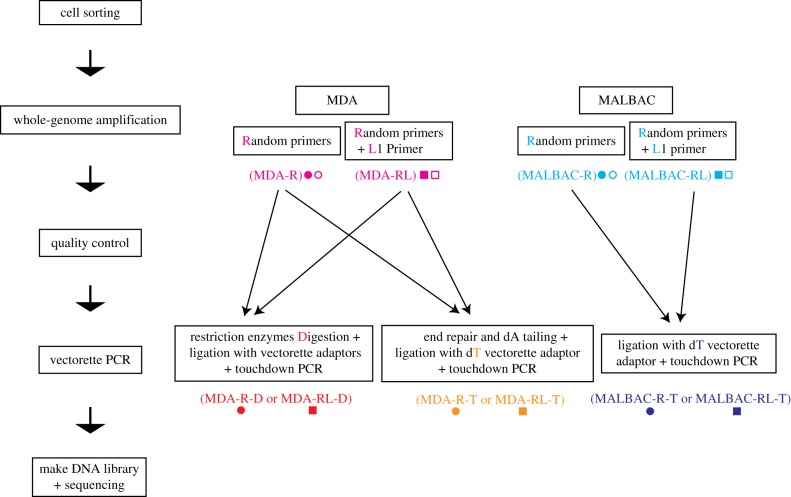
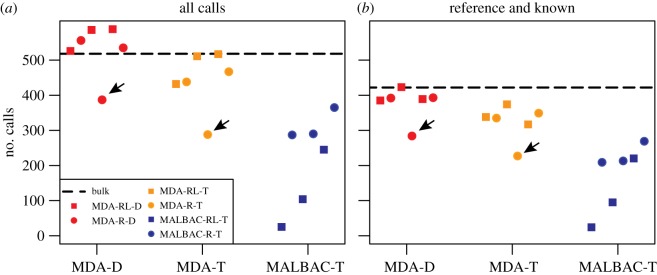
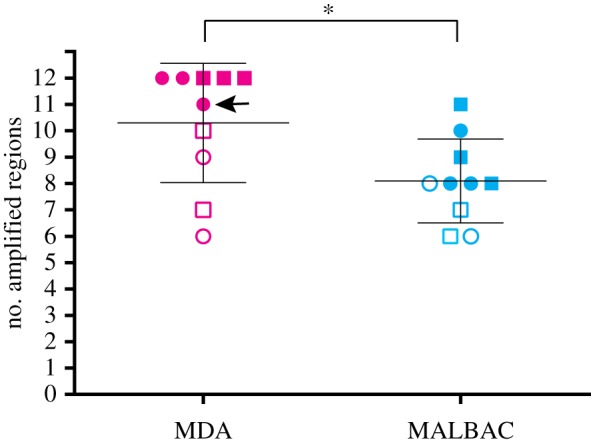
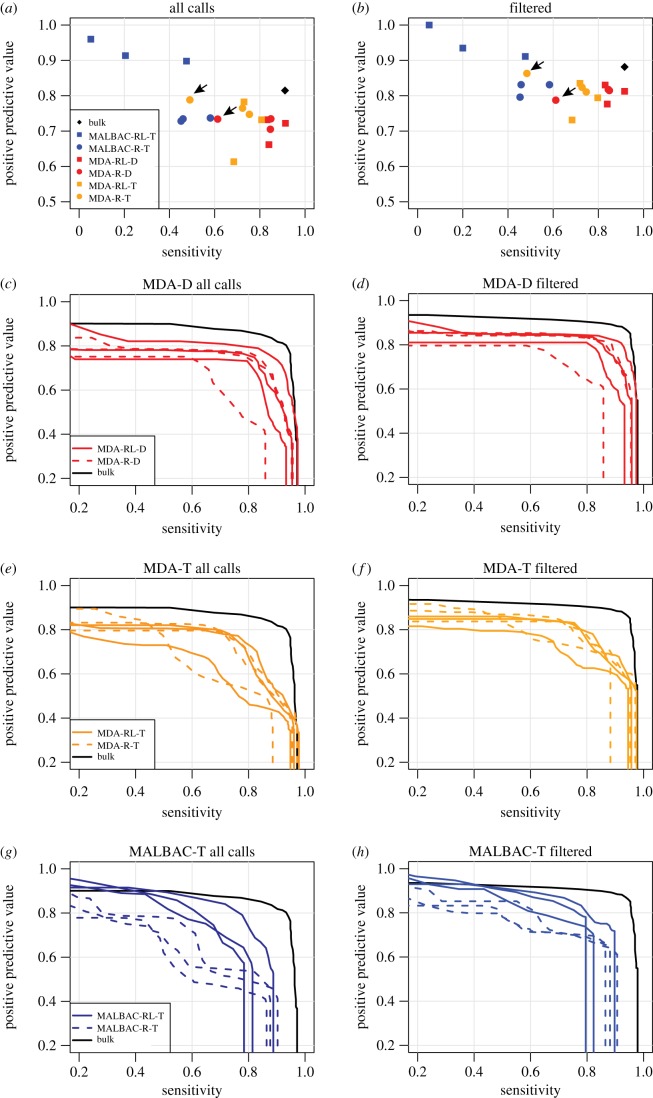
Long interspersed element-1 (LINE-1, L1) sequences, which comprise about 17% of human genome, are the product of one of the most active types of mobile DNAs in modern humans. LINE-1 insertion alleles can cause inherited and de novo genetic diseases, and LINE-1-encoded proteins are highly expressed in some cancers. Genome-wide LINE-1 mapping in single cells could be useful for defining somatic and germline retrotransposition rates, and for enabling studies to characterize tumour heterogeneity, relate insertions to transcriptional and epigenetic effects at the cellular level, or describe cellular phylogenies in development. Our laboratories have reported a genome-wide LINE-1 insertion site mapping method for bulk DNA, named transposon insertion profiling by sequencing (TIPseq). There have been significant barriers applying LINE-1 mapping to single cells, owing to the chimeric artefacts and features of repetitive sequences. Here, we optimize a modified TIPseq protocol and show its utility for LINE-1 mapping in single lymphoblastoid cells. Results from single-cell TIPseq experiments compare well to known LINE-1 insertions found by whole-genome sequencing and TIPseq on bulk DNA. Among the several approaches we tested, whole-genome amplification by multiple displacement amplification followed by restriction enzyme digestion, vectorette ligation and LINE-1-targeted PCR had the best assay performance. This article is part of a discussion meeting issue 'Crossroads between transposons and gene regulation'.
长散在元件-1(LINE-1,L1)序列约占人类基因组的 17%,是现代人类中最活跃的移动 DNA 类型之一的产物。LINE-1 插入等位基因可导致遗传性和新生遗传疾病,并且 LINE-1 编码的蛋白质在某些癌症中高度表达。单细胞全基因组 LINE-1 作图可用于定义体细胞和生殖系 retrotransposition 率,并能够进行研究以表征肿瘤异质性、将插入与细胞水平的转录和表观遗传效应相关联、或描述发育中的细胞系统发育。我们的实验室已经报道了一种用于批量 DNA 的全基因组 LINE-1 插入位点作图方法,称为测序的转座子插入分析(TIPseq)。由于嵌合伪影和重复序列的特征,将 LINE-1 作图应用于单细胞存在重大障碍。在这里,我们优化了一种改良的 TIPseq 方案,并展示了其在单个淋巴母细胞中的 LINE-1 作图的实用性。单细胞 TIPseq 实验的结果与通过全基因组测序和批量 DNA 上的 TIPseq 发现的已知 LINE-1 插入物非常吻合。在我们测试的几种方法中,通过多重置换扩增进行全基因组扩增,然后进行限制性内切酶消化、vectorette 连接和 LINE-1 靶向 PCR 的方法具有最佳的检测性能。本文是“转座子与基因调控交叉点”讨论会议的一部分。