NICM Health Research Institute, Western Sydney University, Locked Bag 1797, Penrith, NSW, 2751, Australia.
ICON Cancer Centre, Sydney Adventist Hospital, Wahroonga, NSW, 2076, Australia.
BMC Cancer. 2020 Feb 20;20(1):113. doi: 10.1186/s12885-020-6566-4.
Overweight/obesity are strongly implicated in breast cancer development, and weight gain post-diagnosis is associated with greater morbidity and all-cause mortality. The aim of this study was to describe the prevalence of overweight/obesity and the pattern of weight gain after diagnosis of breast cancer amongst Australian women.
We collected sociodemographic, medical, weight and lifestyle data using an anonymous, self-administered online cross-sectional survey between November 2017 and January 2018 from women with breast cancer living in Australia. The sample consisted mainly of members of the Breast Cancer Network Australia Review and Survey Group.
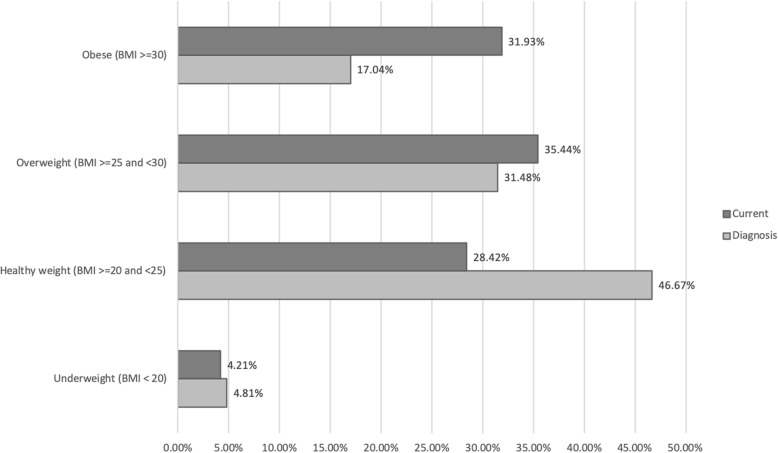
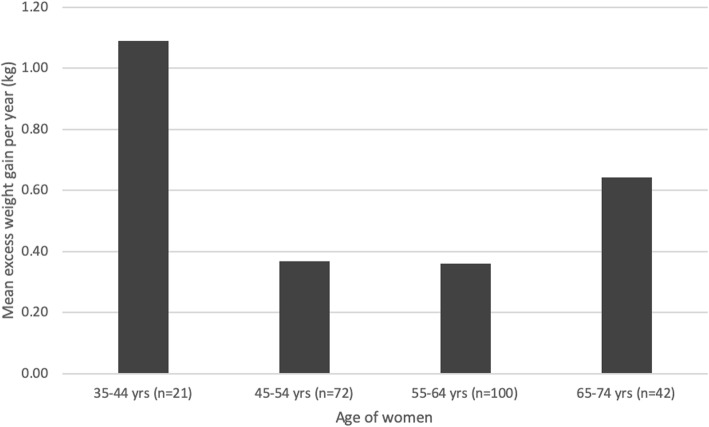
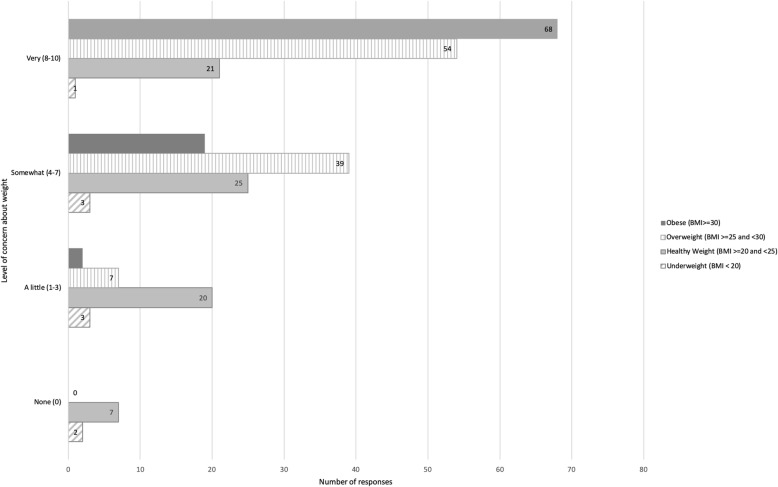
From 309 responses we obtained complete pre/post diagnosis weight data in 277 women, and calculated pre/post Body Mass Index (BMI) for 270 women. The proportion of women with overweight/obesity rose from 48.5% at diagnosis to 67.4% at time of survey. Most women were Caucasian with stage I-III breast cancer (n = 254) or ductal carcinoma in situ (DCIS) (n = 33) and mean age was 59.1 years. The majority of women (63.7%) reported they had gained weight after diagnosis with an average increase of 9.07 kg in this group. Of the women who provided complete weight data, half gained 5 kg or more, 17.0% gained > 20 kg, and 60.7% experienced an increase in BMI of >1 kg/m Over half of the women rated their concern about weight as high. Of those women who gained weight, more than half reported that this occurred during the first year after diagnosis. Two-thirds (69.1%) of women aged 35-74 years gained, on average, 0.48 kg more weight per year than age-matched controls.
Although the findings from this survey should be interpreted cautiously due to a limited response rate and self-report nature, they suggest that women in Australia gain a considerable amount of weight after a diagnosis of breast cancer/DCIS (in excess of age-matched data for weight gain) and report high levels of concern about their weight. Because weight gain after breast cancer may lead to poorer outcomes, efforts to prevent and manage weight gain must be prioritized and accelerated particularly in the first year after diagnosis.
超重/肥胖与乳腺癌的发展密切相关,而诊断后体重增加与更高的发病率和全因死亡率相关。本研究的目的是描述澳大利亚女性乳腺癌患者超重/肥胖的患病率和诊断后体重增加的模式。
我们于 2017 年 11 月至 2018 年 1 月期间通过匿名、自我管理的在线横断面调查收集了澳大利亚乳腺癌女性的社会人口统计学、医学、体重和生活方式数据。该样本主要由澳大利亚乳腺癌网络审查和调查小组的成员组成。
在 309 份回复中,我们获得了 277 名女性完整的诊断前后体重数据,并计算了 270 名女性的诊断前后体重指数(BMI)。超重/肥胖的女性比例从诊断时的 48.5%上升到调查时的 67.4%。大多数女性为白种人,患有 I-III 期乳腺癌(n=254)或导管原位癌(DCIS)(n=33),平均年龄为 59.1 岁。大多数女性(63.7%)报告在诊断后体重增加,这组女性的平均体重增加了 9.07kg。在提供完整体重数据的女性中,一半体重增加了 5kg 或更多,17.0%的体重增加超过 20kg,60.7%的 BMI 增加超过 1kg/m。超过一半的女性对体重的担忧程度较高。在体重增加的女性中,超过一半的人报告体重增加发生在诊断后的第一年。69.1%的 35-74 岁女性平均每年体重增加 0.48kg,比年龄匹配的对照组多。
尽管由于回复率有限和自我报告的性质,本调查的结果应谨慎解释,但它们表明澳大利亚女性在诊断出乳腺癌/DCIS 后体重增加了相当多的量(超过了体重增加的年龄匹配数据),并报告了对体重的高度担忧。由于乳腺癌后体重增加可能导致预后较差,因此必须优先并加速努力预防和管理体重增加,特别是在诊断后的第一年。