Division of Infection and Immunity, School of Medicine, Cardiff University, Cardiff, United Kingdom.
Department of Medicine, University of Toronto, Toronto, Canada.
J Virol. 2020 Apr 16;94(9). doi: 10.1128/JVI.01597-19.
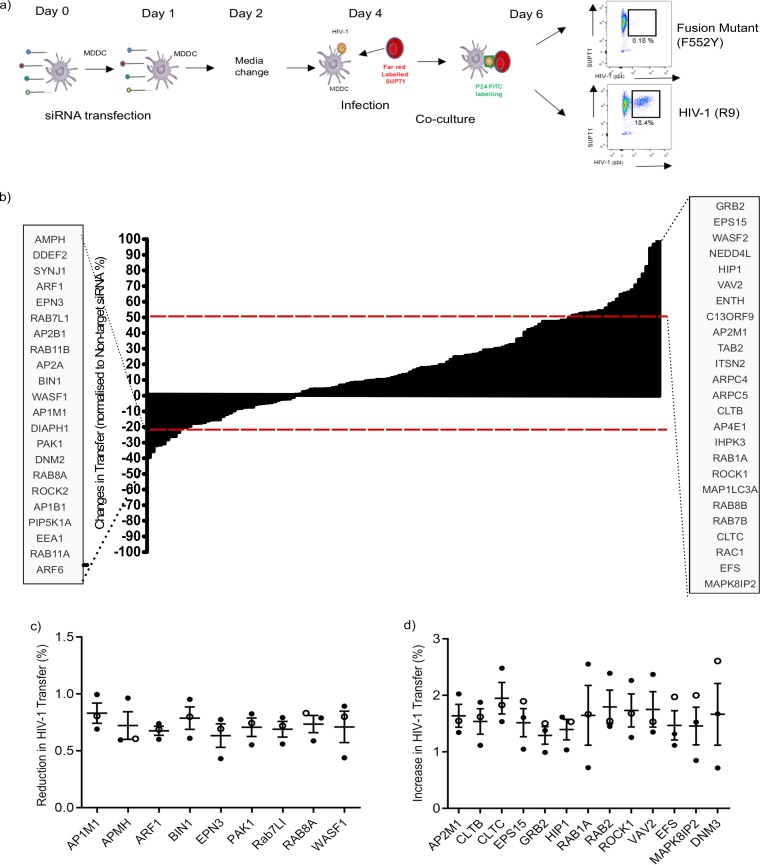
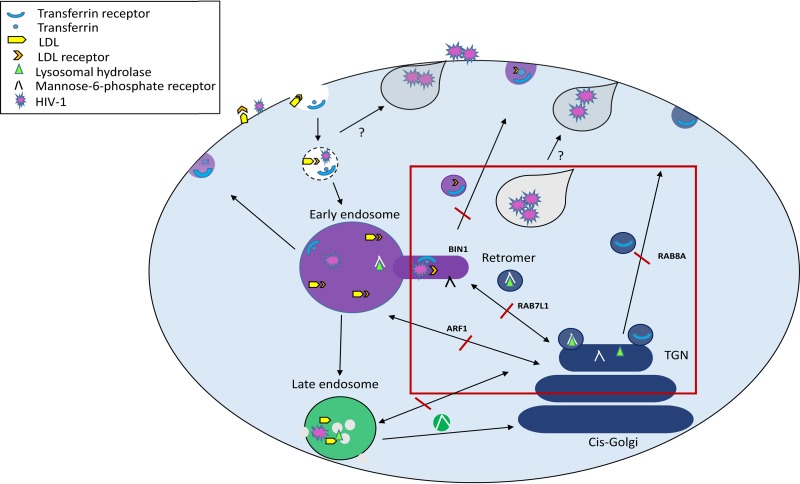
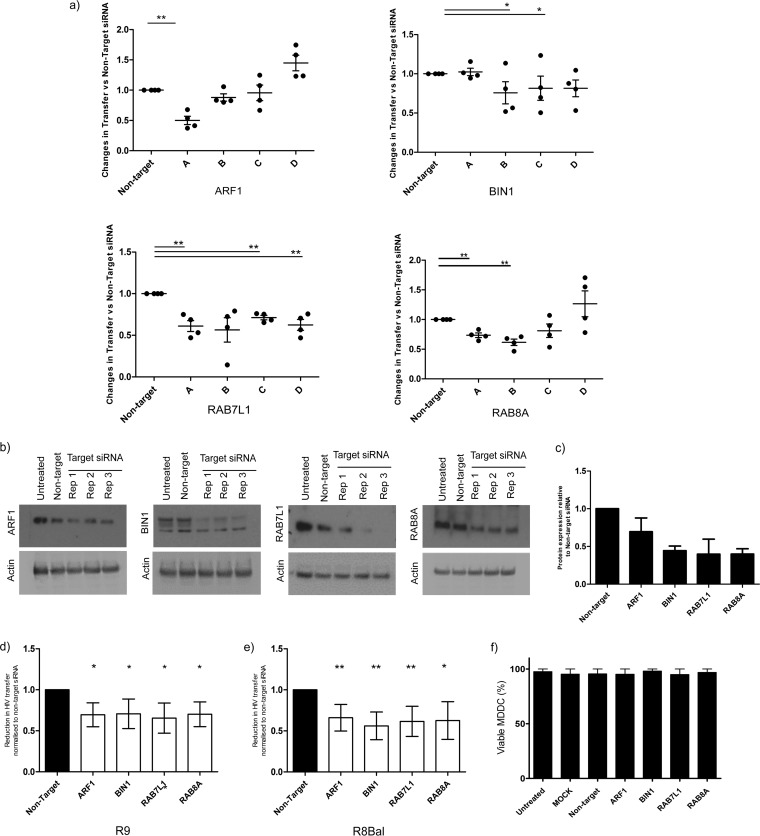
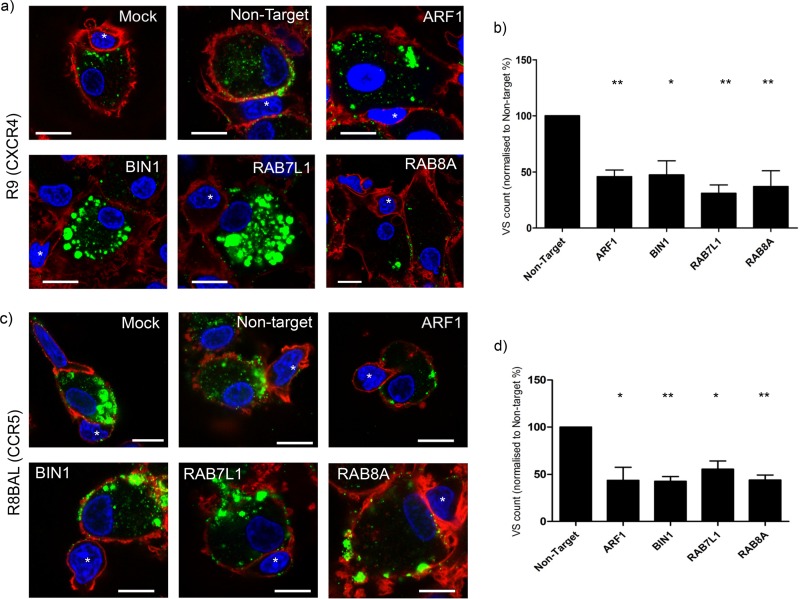
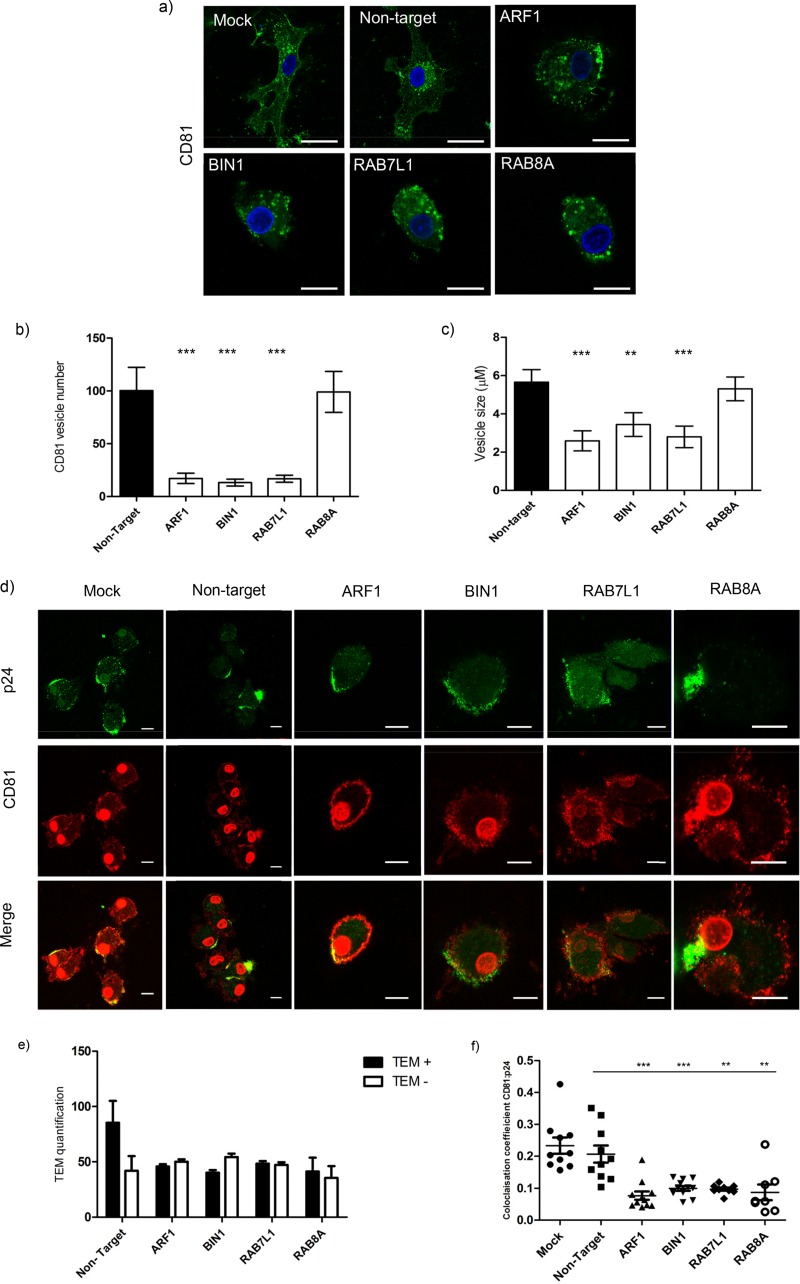
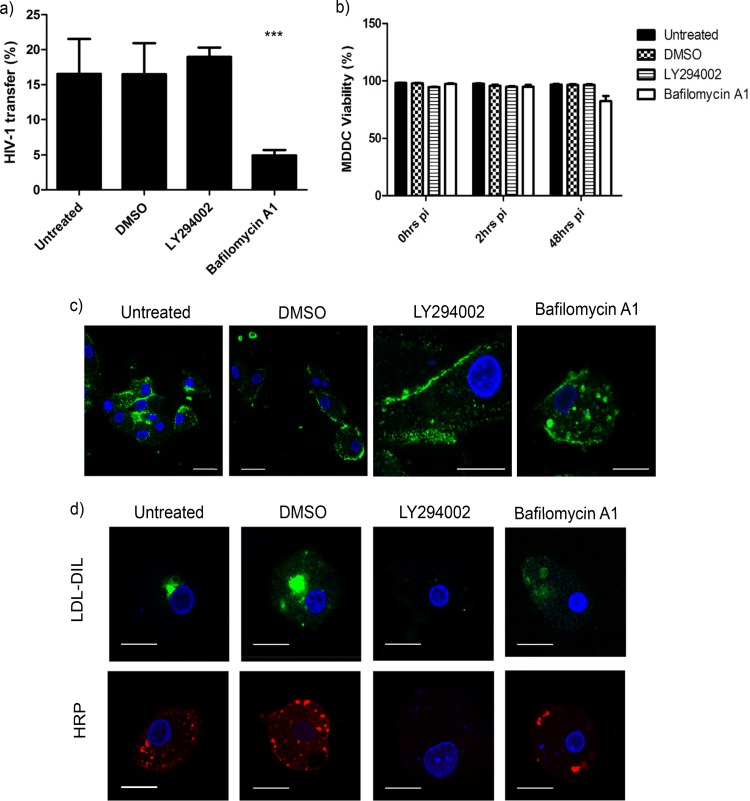
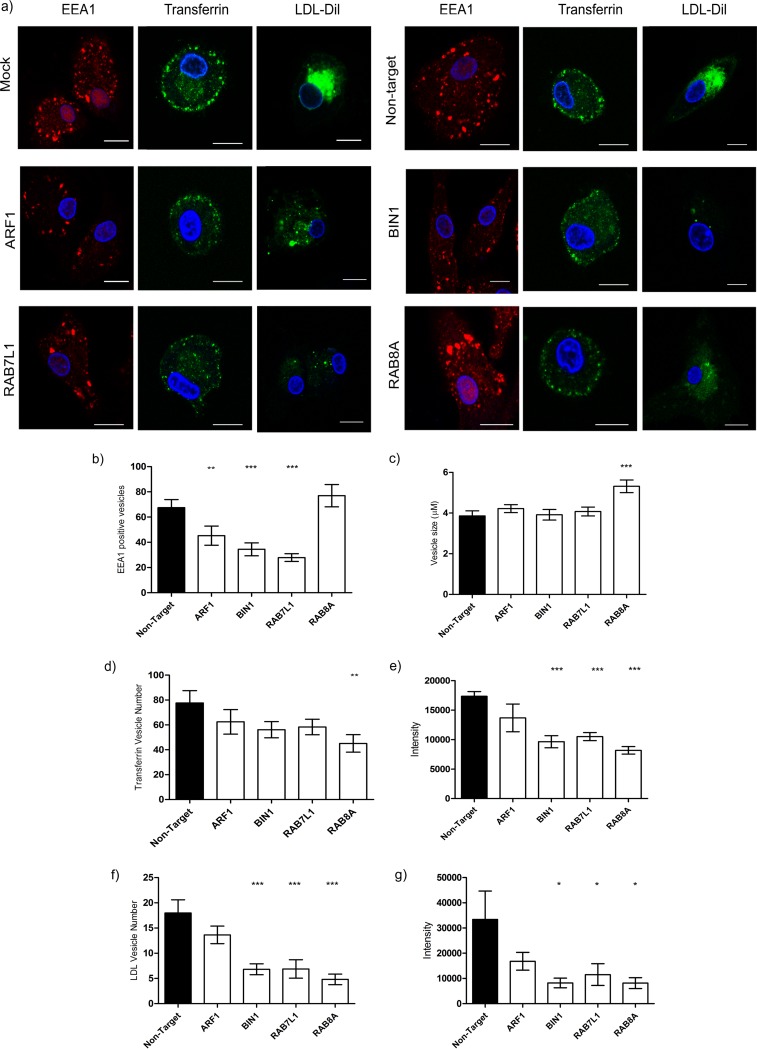
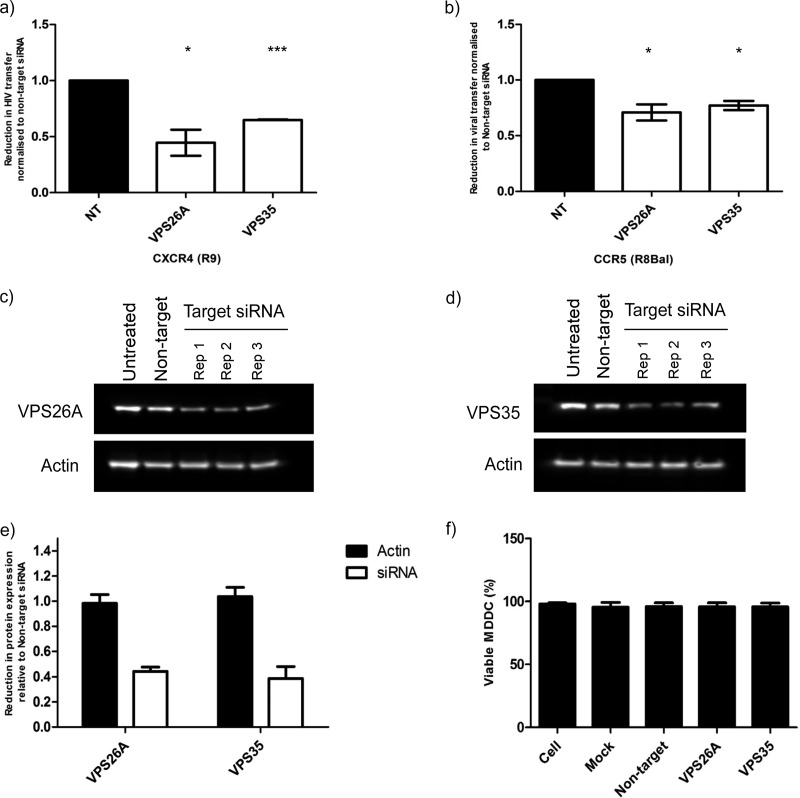
Dendritic cells (DCs) are one of the earliest targets of HIV-1 infection acting as a "Trojan horse," concealing the virus from the innate immune system and delivering it to T cells via virological synapses (VS). To explicate how the virus is trafficked through the cell to the VS and evades degradation, a high-throughput small interfering RNA screen targeting membrane trafficking proteins was performed in monocyte-derived DCs. We identified several proteins including BIN-1 and RAB7L1 that share common roles in transport from endosomal compartments. Depletion of target proteins resulted in an accumulation of virus in intracellular compartments and significantly reduced viral -infection via the VS. By targeting endocytic trafficking and retromer recycling to the plasma membrane, we were able to reduce the virus's ability to accumulate at budding microdomains and the VS. Thus, we identify key genes involved in a pathway within DCs that is exploited by HIV-1 to traffic to the VS. The lentivirus human immunodeficiency virus (HIV) targets and destroys CD4 T cells, leaving the host vulnerable to life-threatening opportunistic infections associated with AIDS. Dendritic cells (DCs) form a virological synapse (VS) with CD4 T cells, enabling the efficient transfer of virus between the two cells. We have identified cellular factors that are critical in the induction of the VS. We show that ADP-ribosylation factor 1 (ARF1), bridging integrator 1 (BIN1), and Rab GTPases RAB7L1 and RAB8A are important regulators of HIV-1 trafficking to the VS and therefore the infection of CD4 T cells. We found these cellular factors were essential for endosomal protein trafficking and formation of the VS and that depletion of target proteins prevented virus trafficking to the plasma membrane by retaining virus in intracellular vesicles. Identification of key regulators in HIV-1 -infection between DC and CD4 T cells has the potential for the development of targeted therapy to reduce -infection of HIV-1 .
树突状细胞(DCs)是 HIV-1 感染的最早靶点之一,充当“特洛伊木马”,将病毒隐藏在先天免疫系统之外,并通过病毒学突触(VS)将其递送给 T 细胞。为了解释病毒如何通过细胞运输到 VS 并逃避降解,我们在单核细胞衍生的 DC 中进行了针对膜转运蛋白的高通量小干扰 RNA 筛选。我们鉴定了几种蛋白质,包括 BIN-1 和 RAB7L1,它们在从内体区室的运输中具有共同作用。靶蛋白的耗竭导致病毒在细胞内区室中积累,并显著减少通过 VS 的病毒感染。通过靶向内吞转运和逆行转运到质膜,我们能够减少病毒在出芽微域和 VS 中积累的能力。因此,我们确定了参与 HIV-1 运输到 VS 的 DC 内途径的关键基因。慢病毒人类免疫缺陷病毒(HIV)靶向并破坏 CD4 T 细胞,使宿主易受与艾滋病相关的危及生命的机会性感染。树突状细胞(DCs)与 CD4 T 细胞形成病毒学突触(VS),使病毒在两种细胞之间高效转移。我们已经确定了在诱导 VS 中至关重要的细胞因子。我们表明,ADP-核糖基化因子 1(ARF1)、桥接整合器 1(BIN1)和 Rab GTPases RAB7L1 和 RAB8A 是 HIV-1 运输到 VS 以及因此感染 CD4 T 细胞的重要调节剂。我们发现这些细胞因子对于内体蛋白运输和 VS 的形成是必不可少的,并且靶蛋白的耗竭通过将病毒保留在细胞内囊泡中来阻止病毒向质膜的运输。鉴定 HIV-1 在 DC 和 CD4 T 细胞之间感染的关键调节剂有可能开发靶向治疗以减少 HIV-1 的感染。