Nature. 2020 Feb;578(7795):375-380. doi: 10.1038/s41586-020-2006-5. Epub 2020 Feb 19.
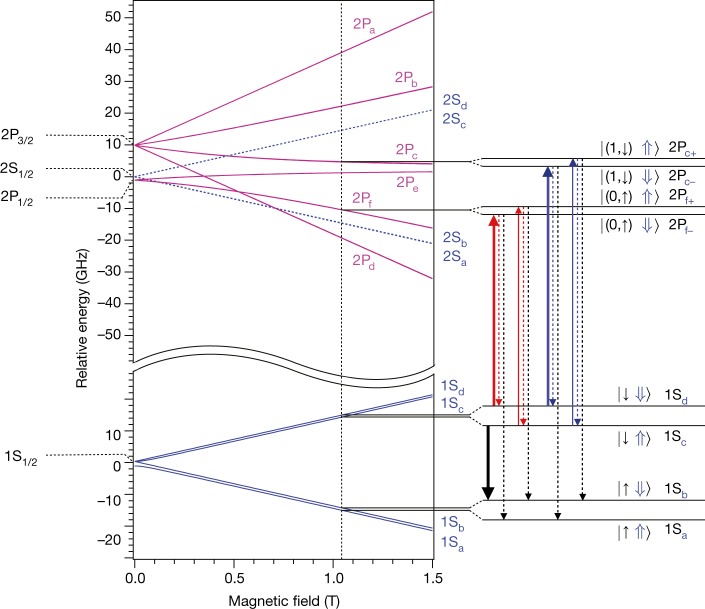
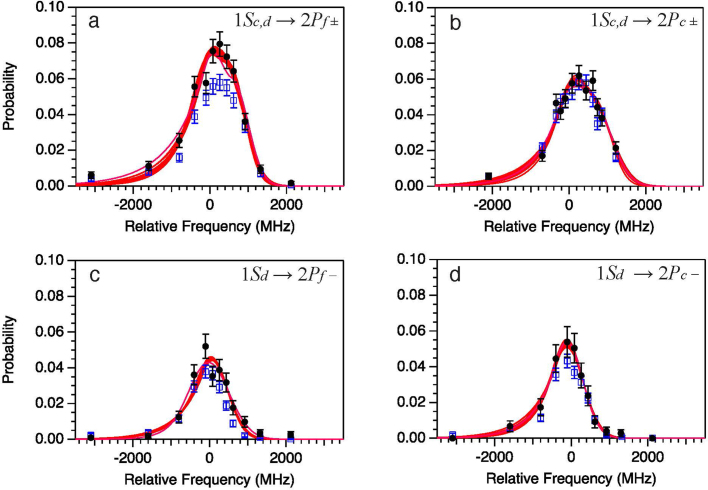
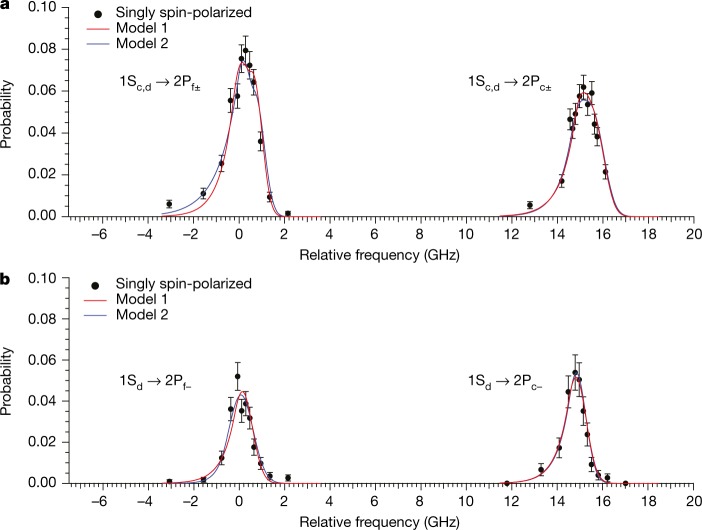
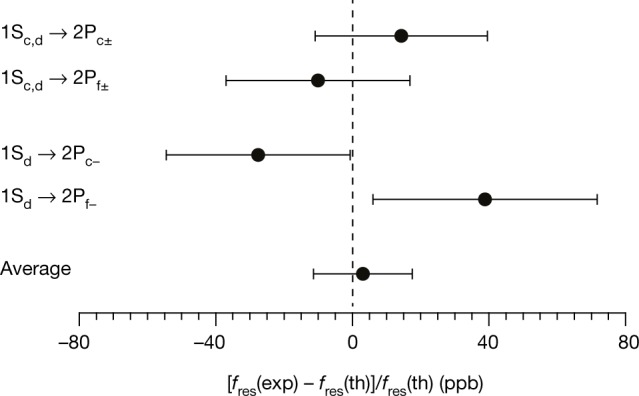
At the historic Shelter Island Conference on the Foundations of Quantum Mechanics in 1947, Willis Lamb reported an unexpected feature in the fine structure of atomic hydrogen: a separation of the 2S and 2P states. The observation of this separation, now known as the Lamb shift, marked an important event in the evolution of modern physics, inspiring others to develop the theory of quantum electrodynamics. Quantum electrodynamics also describes antimatter, but it has only recently become possible to synthesize and trap atomic antimatter to probe its structure. Mirroring the historical development of quantum atomic physics in the twentieth century, modern measurements on anti-atoms represent a unique approach for testing quantum electrodynamics and the foundational symmetries of the standard model. Here we report measurements of the fine structure in the n = 2 states of antihydrogen, the antimatter counterpart of the hydrogen atom. Using optical excitation of the 1S-2P Lyman-α transitions in antihydrogen, we determine their frequencies in a magnetic field of 1 tesla to a precision of 16 parts per billion. Assuming the standard Zeeman and hyperfine interactions, we infer the zero-field fine-structure splitting (2P-2P) in antihydrogen. The resulting value is consistent with the predictions of quantum electrodynamics to a precision of 2 per cent. Using our previously measured value of the 1S-2S transition frequency, we find that the classic Lamb shift in antihydrogen (2S-2P splitting at zero field) is consistent with theory at a level of 11 per cent. Our observations represent an important step towards precision measurements of the fine structure and the Lamb shift in the antihydrogen spectrum as tests of the charge-parity-time symmetry and towards the determination of other fundamental quantities, such as the antiproton charge radius, in this antimatter system.
在 1947 年具有历史意义的量子力学基础谢利岛会议上,威利斯·兰姆(Willis Lamb)报告了氢原子精细结构中的一个意外特征:2S 和 2P 态的分离。这种分离的观察,现在称为兰姆位移(Lamb shift),标志着现代物理学发展中的一个重要事件,激发了其他人发展量子电动力学理论。量子电动力学也描述了反物质,但直到最近才有可能合成和捕获原子反物质来探测其结构。反物质的精细结构测量反映了 20 世纪量子原子物理学的历史发展,是检验量子电动力学和标准模型基本对称性的独特方法。在这里,我们报告了反氢(氢原子的反物质对应物)中 n = 2 态精细结构的测量结果。我们使用反氢 1S-2P 莱曼-α跃迁的光激发,在 1 特斯拉的磁场中以 16 十亿分之一的精度确定它们的频率。在假设标准塞曼和超精细相互作用的情况下,我们推断出反氢的零场精细结构分裂(2P-2P)。由此得到的值与量子电动力学的预测精度一致,为 2%。利用我们之前测量的 1S-2S 跃迁频率,我们发现反氢中的经典兰姆位移(零场 2S-2P 分裂)与理论一致,精度为 11%。我们的观测结果是朝着反氢光谱的精细结构和兰姆位移的精确测量迈出的重要一步,这是对电荷宇称时间对称性的检验,并朝着在这个反物质系统中确定其他基本量(如反质子电荷半径)的方向发展。