Kuderer S, Helmert E, Szöke H, Joos S, Kohl M, Svaldi J, Beissner F, Andrasik F, Vagedes J
ARCIM Institute (Academic Research in Complementary and Integrative Medicine), Im Haberschlai 7, 70794 Filderstadt, Germany.
University of Pécs, Department of CAM, Hunyadi út 4, 7621 Pécs, Hungary.
Evid Based Complement Alternat Med. 2020 Jan 30;2020:2416582. doi: 10.1155/2020/2416582. eCollection 2020.
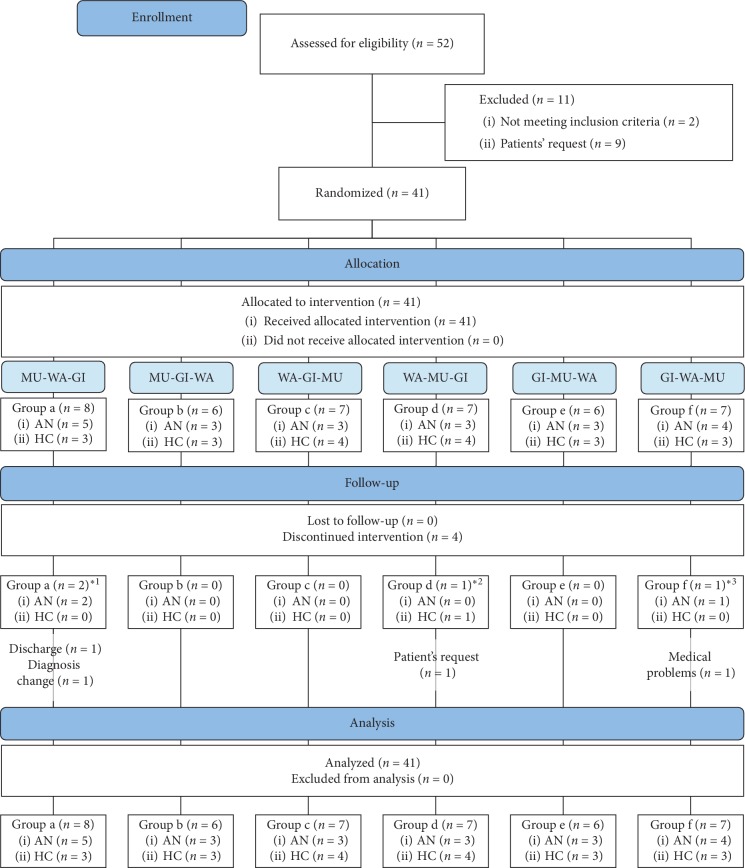
To analyze the thermogenic effects of footbaths with medicinal powders in adolescents with anorexia nervosa (AN) in comparison to healthy controls (HCs). . Forty-one female participants (21 AN, 20 HCs; 14.22 ± 1.54 years) received three footbaths-warm water and mustard (MU, Sinapis nigra), warm water and ginger (GI, Zingiber officinale), or warm water only (WA), in random order within a crossover design. Data were collected before (t1), immediately after foot immersion (maximum 20 minutes) (t2), and after 10 minutes subsequently (t3). Actual skin temperature (high resolution thermography) and perceived warmth (HeWEF questionnaire) were assessed at each time point for various body parts. The primary outcome measure was self-perceived warmth at the feet at t3. Secondary outcome measures were objective skin temperature and subjective warmth at the face, hands, and feet.
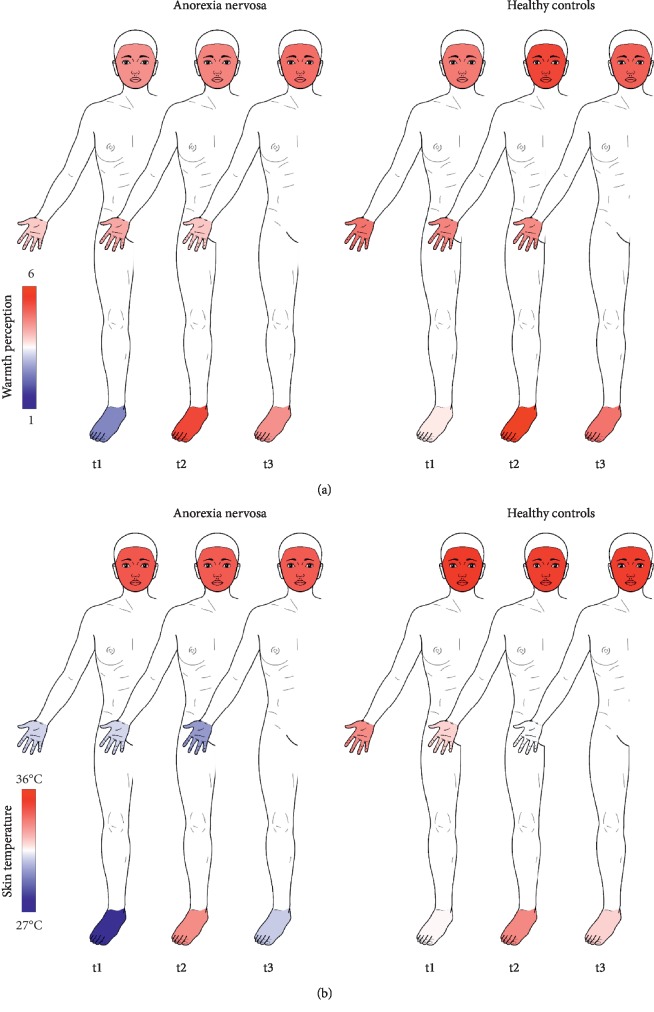
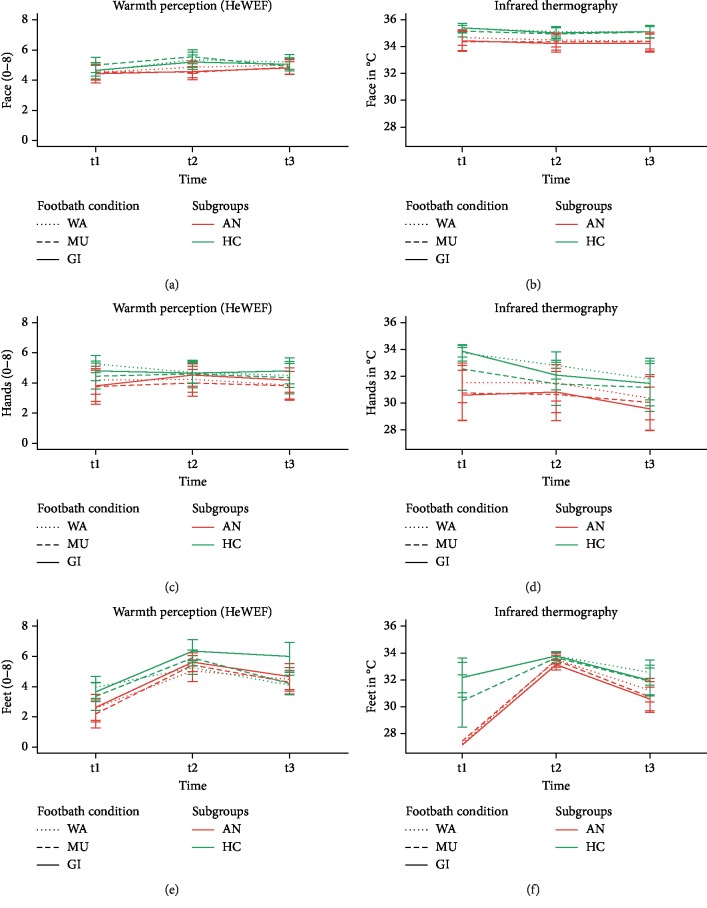
Perceived warmth at the feet at t3 was significantly higher after GI compared to WA (mean difference -1.02) and MU (-1.07), with no differences between those with AN and HC (-0.29). For the secondary outcome measures, a craniocaudal temperature gradient for the skin temperature (thermography) was noted at t1 for patients with AN and HC (AN with colder feet). The craniocaudal gradient for subjective warmth was only seen for patients with AN.
Footbaths with ginger increased warmth perception at the feet longer than with mustard or warm water only for adolescents with AN as well as for HC. The impact of ginger footbaths on recovery of thermoregulatory disturbances in patients with AN repeated over extended periods merits further investigation.
与健康对照者(HCs)相比,分析药浴足疗法对神经性厌食症(AN)青少年的产热效应。41名女性参与者(21名AN患者,20名HCs;年龄14.22±1.54岁)在交叉设计中按随机顺序接受三种足浴——温水加芥末(MU,黑芥子)、温水加生姜(GI,姜)或仅用温水(WA)。在足浴前(t1)、足部浸泡后立即(最长20分钟)(t2)以及随后10分钟后(t3)收集数据。在每个时间点对身体各部位评估实际皮肤温度(高分辨率热成像)和感知温暖程度(HeWEF问卷)。主要结局指标是t3时足部的自我感知温暖程度。次要结局指标是面部、手部和足部的客观皮肤温度和主观温暖程度。
与WA相比,GI足浴后t3时足部的感知温暖程度显著更高(平均差异-1.02),与MU相比也是如此(平均差异-1.07),AN患者和HCs之间无差异(平均差异-0.29)。对于次要结局指标,在t1时,AN患者和HCs均出现皮肤温度(热成像)的头足温度梯度(AN患者足部温度较低)。主观温暖程度的头足梯度仅在AN患者中出现。
对于AN青少年以及HCs,生姜足浴比芥末足浴或仅用温水足浴能更长时间地提高足部的温暖感知。生姜足浴对AN患者体温调节紊乱恢复的长期影响值得进一步研究。