ARCIM Institute, Filderstadt, Germany.
University Hospital Tuebingen, Tuebingen, Germany.
Integr Cancer Ther. 2021 Jan-Dec;20:15347354211058449. doi: 10.1177/15347354211058449.
To analyze the thermogenic effects of footbaths with medicinal powders in oncological patients (ON) and healthy controls (HC).
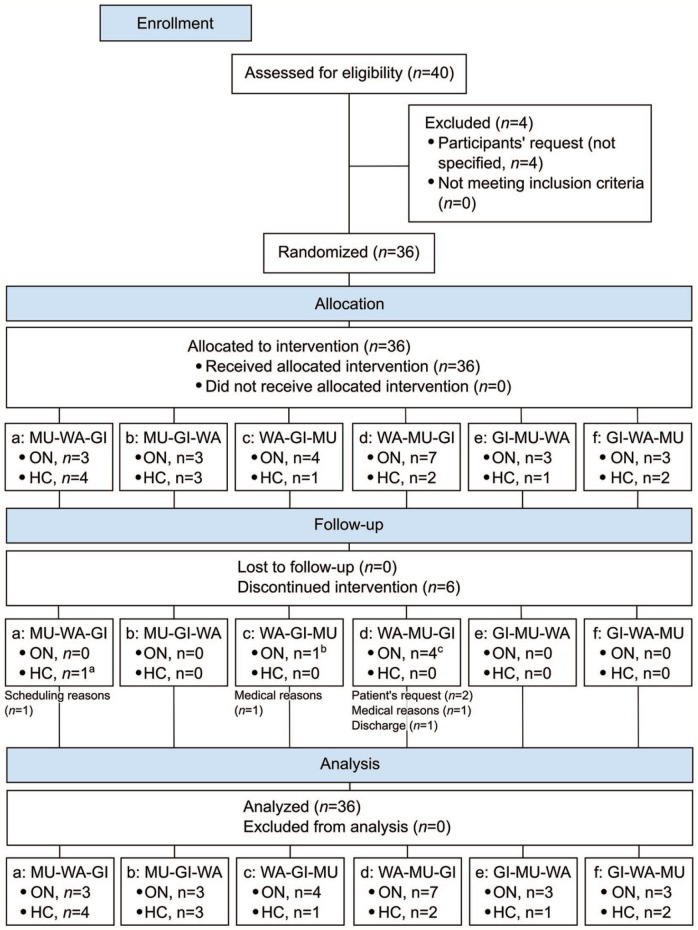
Thirty-six participants (23 ON, 13 HC; 24 females; 49.9 ± 13.3 years) received 3 footbaths in a random order with cross-over design: warm water only (WA), warm water plus mustard (MU, Sinapis nigra), and warm water plus ginger (GI, Zingiber officinale). Warmth perception of the feet (Herdecke Warmth Perception Questionnaire, HeWEF) at the follow-up (10 minutes after completion of footbaths, t2) was assessed as the primary outcome measure. Secondary outcome measures included overall warmth as well as self-reported warmth (HeWEF) and measured skin temperature (high resolution thermography) of the face, hands and feet at baseline (t0), post immersion (t1), and follow-up (t2).
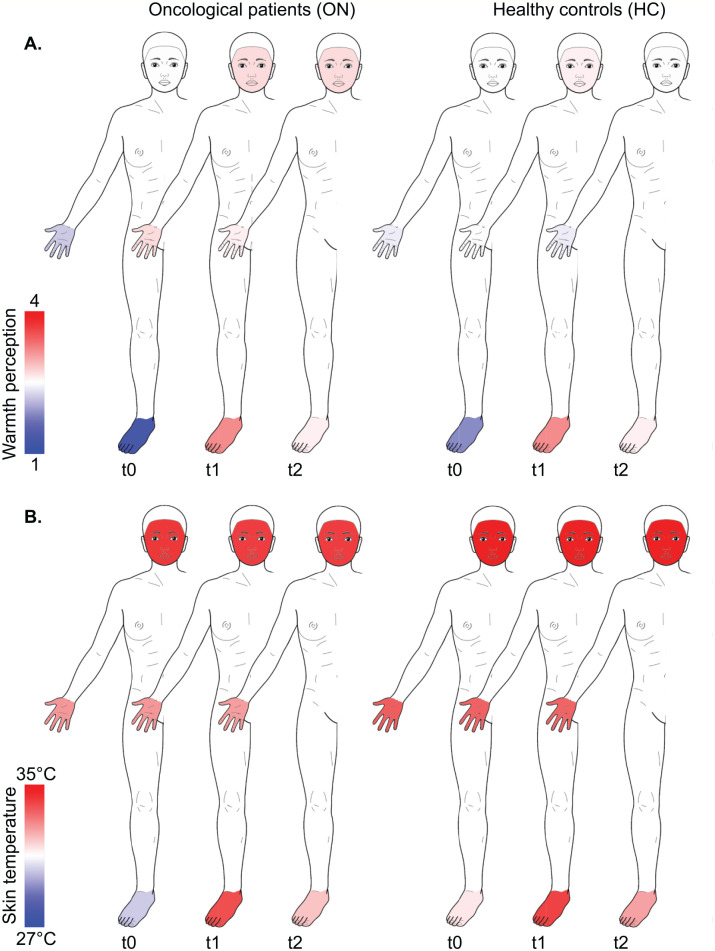
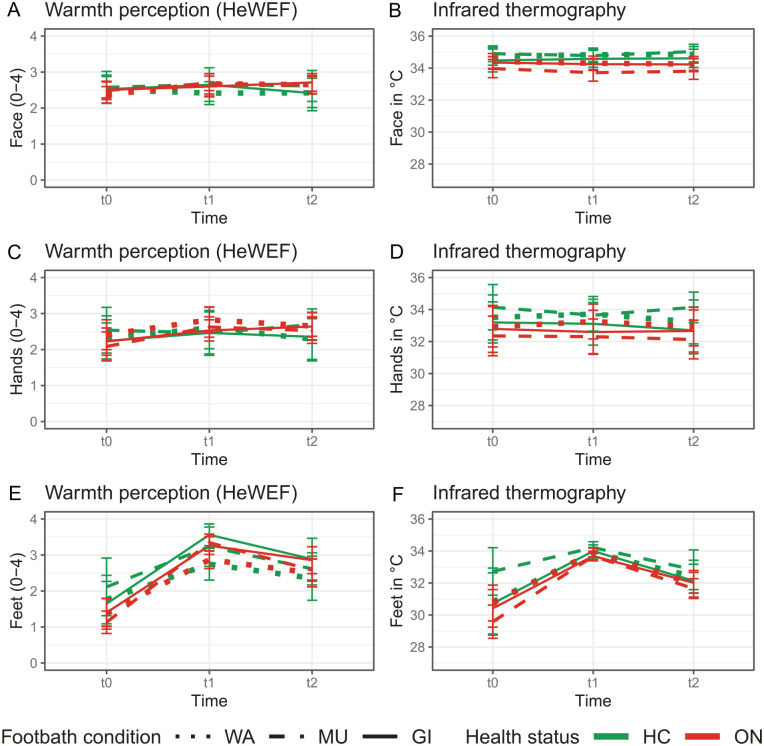
With respect to the warmth perception of the feet, GI and MU differed significantly from WA ('s < .05) with the highest effect sizes at t1 (WA vs GI, = 0.92, WA vs MU, = 0.73). At t2, perceived warmth tended to be higher with GI compared to WA ( = 0.46). No differences were detected between ON and HC for self-reported warmth. With respect to skin temperatures, face and feet skin temperatures of ON were colder (at t0 and t1, 0.42 ≥ ≥ 0.68) and tended to have diametrical response patterns than HC (ON vs HC: colder vs warmer after MU).
Among adult oncological patients and healthy controls, footbaths with mustard and ginger increased warmth perception of the feet longer than with warm water only. The potential impact of regularly administered thermogenic footbaths over extended periods merits further investigation for the recovery of cancer-related sense of cold.
分析药用粉末足浴对肿瘤患者(ON)和健康对照(HC)的产热作用。
36 名参与者(ON 23 例,HC 13 例;女性 24 例;年龄 49.9±13.3 岁)以交叉设计随机接受 3 种足浴:仅温水(WA)、温水加芥末(MU,黑芥菜)和温水加生姜(GI,生姜)。在随访(足浴完成后 10 分钟,t2)时,使用赫德克温热感觉问卷(HeWEF)评估足部的温热感觉(主要结局指标)。次要结局指标包括整体温热感以及自我报告的温热感(HeWEF)和面部、手部和足部的皮肤温度(高分辨率热成像),在基线(t0)、浸泡后(t1)和随访(t2)时进行测量。
就足部温热感觉而言,GI 和 MU 与 WA 差异有统计学意义(P<0.05),t1 时的效应量最大(WA 与 GI, = 0.92;WA 与 MU, = 0.73)。在 t2 时,与 WA 相比,GI 组的温热感趋于更高( = 0.46)。ON 和 HC 之间的自我报告的温热感没有差异。就皮肤温度而言,ON 的面部和足部皮肤温度较低(t0 和 t1 时,0.42≥ ≥ 0.68),且倾向于与 HC 呈现相反的反应模式(ON 与 HC:MU 后更冷 vs 更温暖)。
在成年肿瘤患者和健康对照中,与仅温水足浴相比,芥末和生姜足浴可更长时间地增加足部的温热感觉。长期定期给予温热足浴可能会对癌症相关寒冷感觉的恢复产生影响,值得进一步研究。