Ding Junyan, Johnson Edward A, Martin Yvonne E
Biogeoscience Institute University of Calgary Calgary Alberta Canada.
Department of Biological Sciences University of Calgary Calgary Alberta Canada.
Ecol Evol. 2020 Jan 22;10(3):1510-1525. doi: 10.1002/ece3.6004. eCollection 2020 Feb.
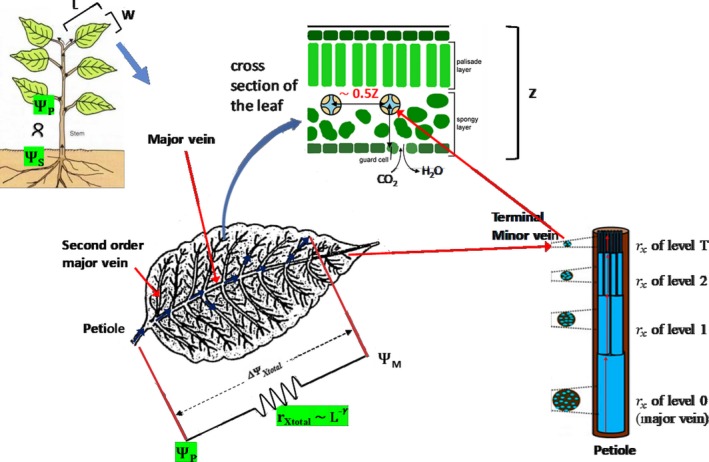
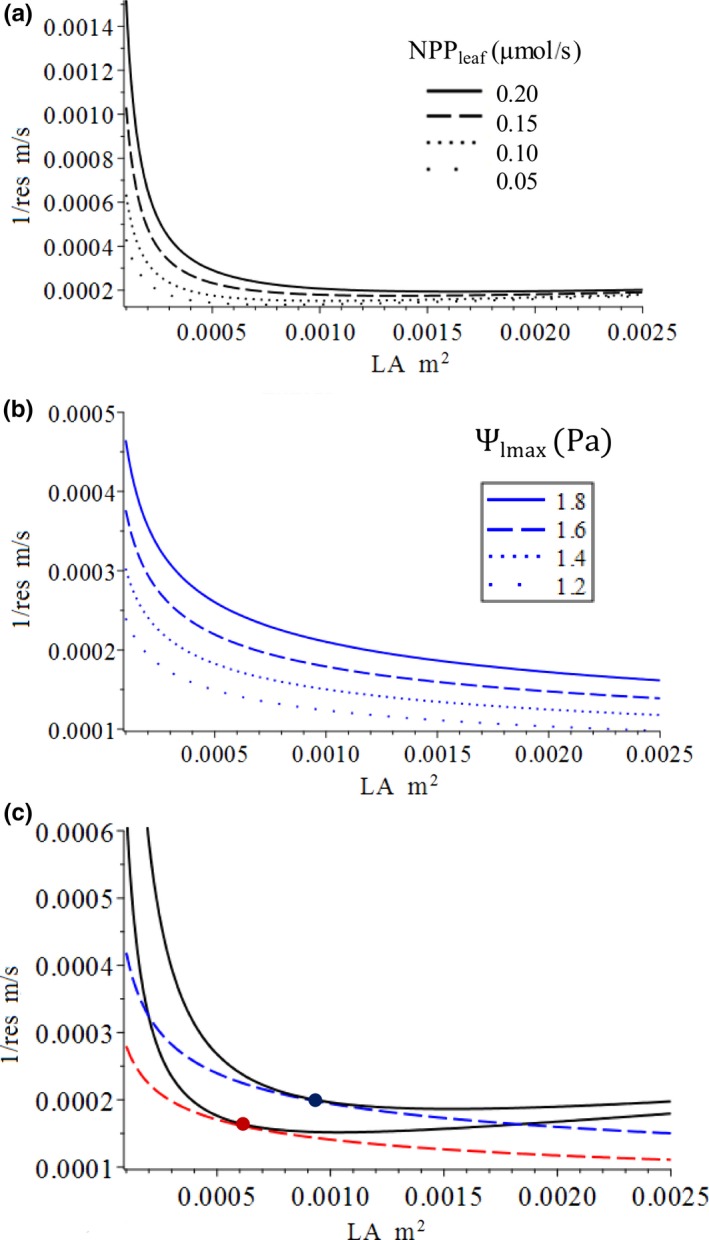
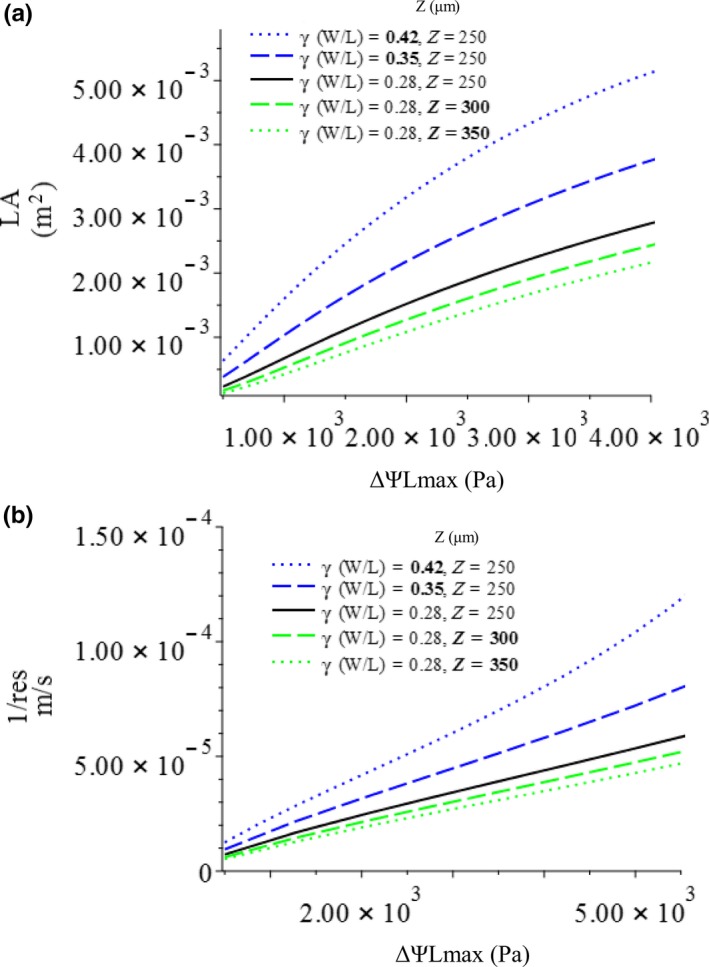
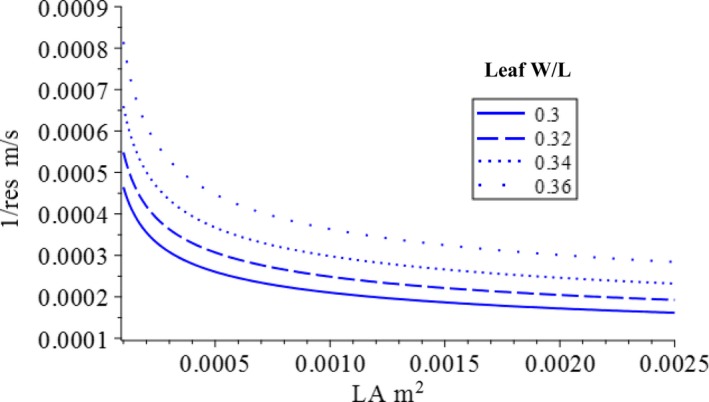
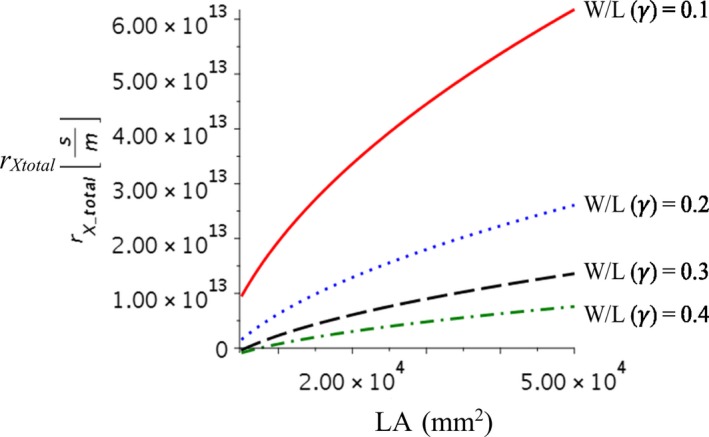
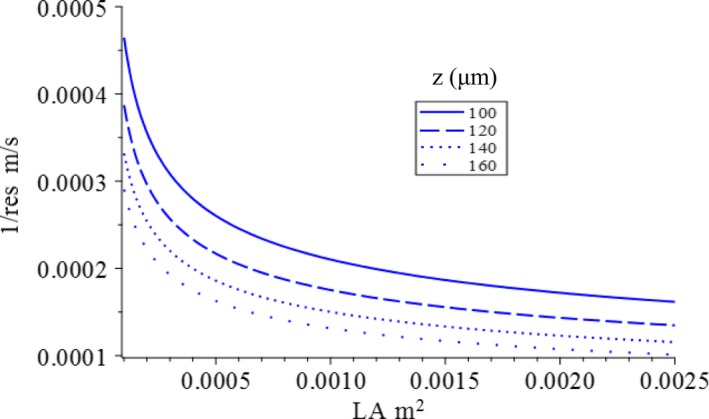
The leaf economic traits such as leaf area, maximum carbon assimilation rate, and venation are all correlated and related to water availability. Furthermore, leaves are often broad and large in humid areas and narrower in arid/semiarid and hot and cold areas. We use optimization theory to explain these patterns. We have created a constrained optimization leaf model linking leaf shape to vein structure that is integrated into coupled transpiration and carbon assimilation processes. The model maximizes net leaf carbon gain (NPP) over the loss of xylem water potential. Modeled relations between leaf traits are consistent with empirically observed patterns. As the results of the leaf shape-venation relation, our model further predicts that a broadleaf has overall higher NPP compared to a narrowleaf. In addition, a broadleaf has a lower stomatal resistance compared to a narrowleaf under the same level of constraint. With the same leaf area, a broadleaf will have, on average, larger conduits and lower total leaf xylem resistance and thus be more efficient in water transportation but less resistant to cavitation. By linking venation structure to leaf shape and using water potential as the constraint, our model provides a physical explanation for the general pattern of the covariance of leaf traits through the safety-efficiency trade-off of leaf hydraulic design.
叶面积、最大碳同化率和叶脉等叶片经济性状都相互关联,且与水分可利用性有关。此外,在湿润地区叶片通常宽大,而在干旱/半干旱地区以及炎热和寒冷地区则较窄。我们运用优化理论来解释这些模式。我们构建了一个将叶片形状与叶脉结构相联系的约束优化叶片模型,该模型被整合到蒸腾作用和碳同化过程的耦合之中。该模型在木质部水势损失的情况下使叶片净碳增益(NPP)最大化。模拟的叶片性状之间的关系与实际观察到的模式一致。作为叶片形状 - 叶脉关系的结果,我们的模型进一步预测,与窄叶相比,阔叶总体上具有更高的NPP。此外,在相同的约束水平下,阔叶的气孔阻力比窄叶更低。在叶面积相同的情况下,阔叶平均而言会有更大的导管和更低的叶片总木质部阻力,因此在水分运输方面更高效,但抗空化能力较弱。通过将叶脉结构与叶片形状相联系,并以水势作为约束条件,我们的模型通过叶片水力设计的安全 - 效率权衡,为叶片性状协方差的一般模式提供了物理解释。