Department of Chemistry, University of Central Florida, Orlando, FL 32816, USA.
NanoScience Technology Center, University of Central Florida, Orlando, FL 32826, USA.
Sci Adv. 2020 Jan 22;6(4):eaax2642. doi: 10.1126/sciadv.aax2642. eCollection 2020 Jan.
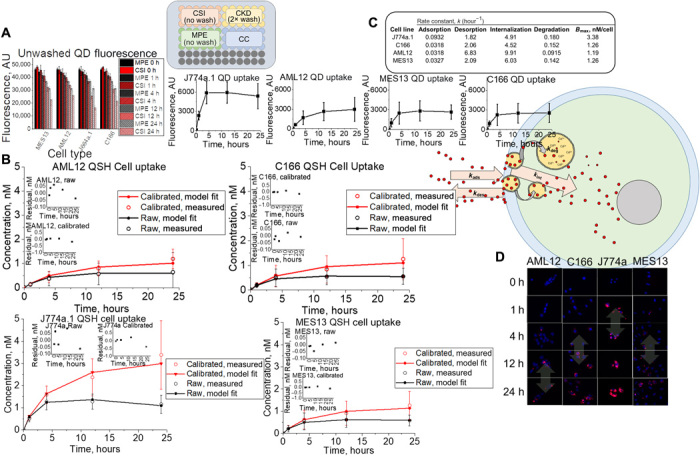
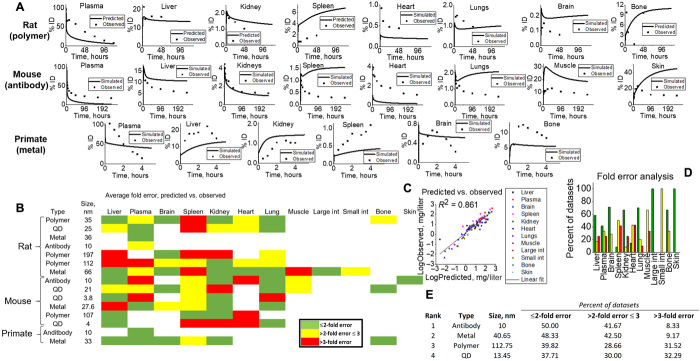
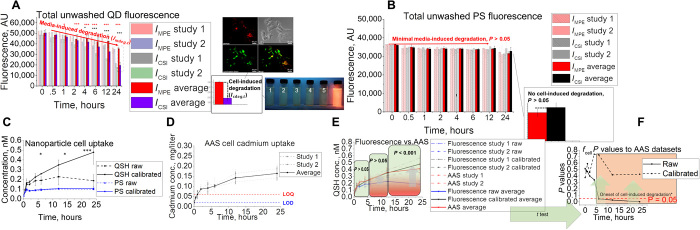
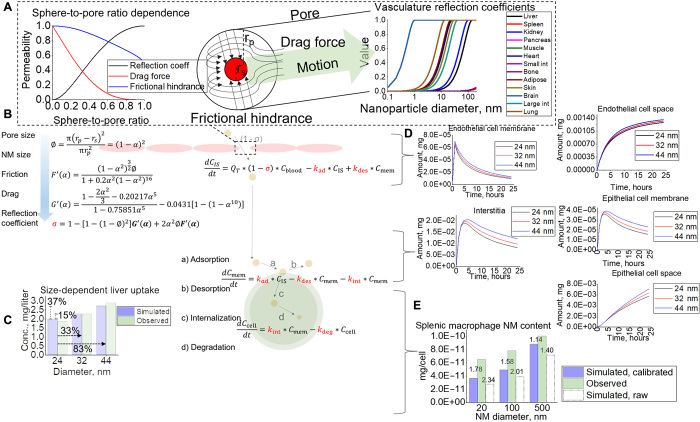
Smart drug design for antibody and nanomaterial-based therapies allows optimization of drug efficacy and more efficient early-stage preclinical trials. The ideal drug must display maximum efficacy at target tissue sites, with transport from tissue vasculature to the cellular environment being critical. Biological simulations, when coupled with in vitro approaches, can predict this exposure in a rapid and efficient manner. As a result, it becomes possible to predict drug biodistribution within single cells of live animal tissue without the need for animal studies. Here, we successfully utilized an in vitro assay and a computational fluid dynamic model to translate in vitro cell kinetics (accounting for cell-induced degradation) to whole-body simulations for multiple species as well as nanomaterial types to predict drug distribution into individual tissue cells. We expect this work to assist in refining, reducing, and replacing animal testing, while providing scientists with a new perspective during the drug development process.
智能药物设计在抗体和纳米材料治疗中,可以优化药物的疗效,并在更有效的早期临床前试验中发挥作用。理想的药物必须在靶组织部位显示出最大的疗效,从组织血管到细胞环境的输送是至关重要的。当生物模拟与体外方法结合使用时,可以快速有效地预测这种暴露。因此,有可能在不需要动物研究的情况下,预测活体动物组织中单细胞内的药物生物分布。在这里,我们成功地利用体外分析和计算流体动力学模型,将体外细胞动力学(考虑细胞诱导的降解)转化为多物种的整体模拟,以及纳米材料类型,以预测药物分布到单个组织细胞中。我们希望这项工作有助于改进、减少和替代动物测试,同时为科学家在药物开发过程中提供一个新的视角。