NanoScience Technology Center, University of Central Florida, Orlando, FL, 32826, USA.
Department of Chemistry, University of Central Florida, Orlando, FL, 32816, USA.
Sci Rep. 2019 Sep 26;9(1):13943. doi: 10.1038/s41598-019-50208-x.
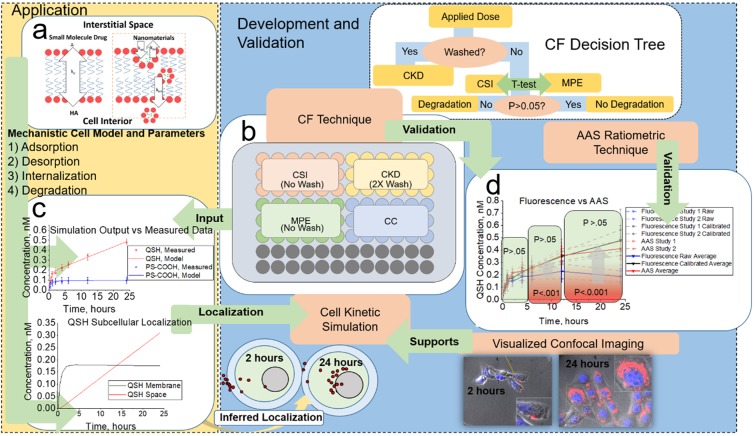
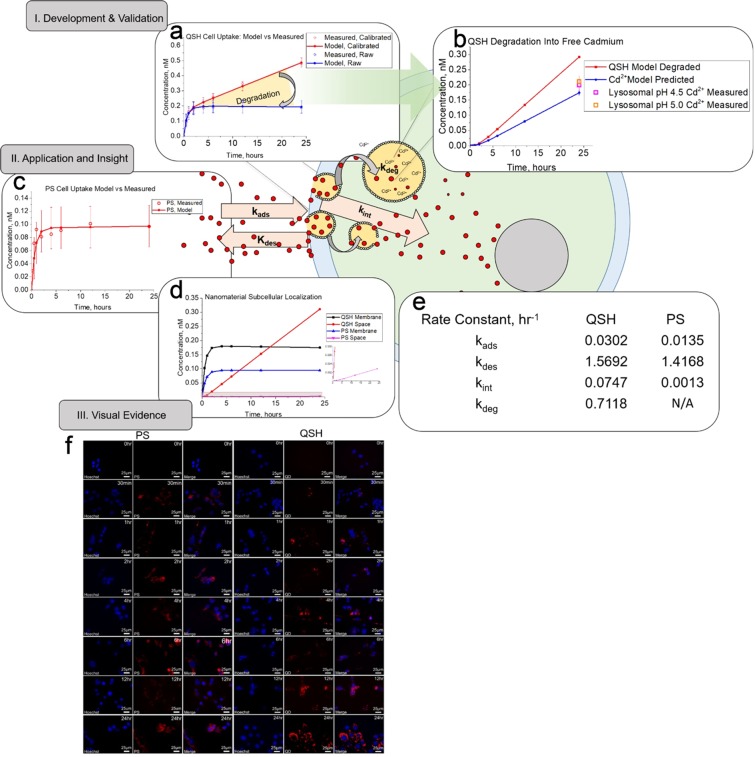
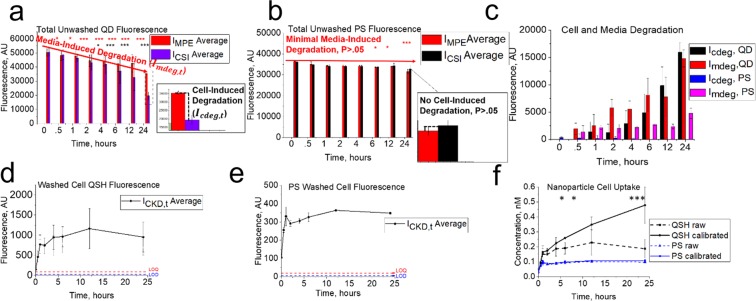
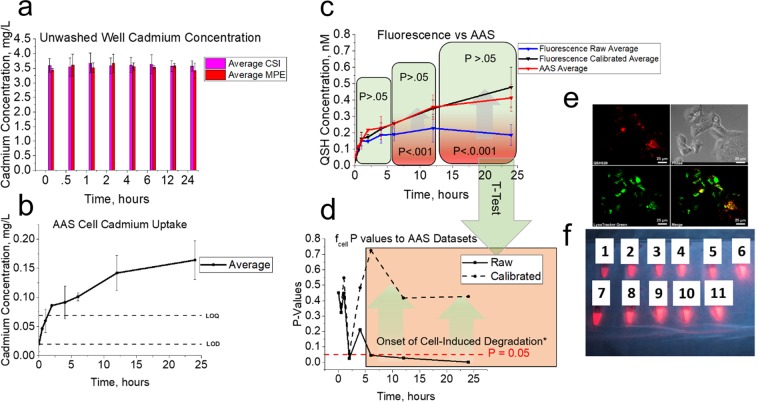
In vitro assays and simulation technologies are powerful methodologies that can inform scientists of nanomaterial (NM) distribution and fate in humans or pre-clinical species. For small molecules, less animal data is often needed because there are a multitude of in vitro screening tools and simulation-based approaches to quantify uptake and deliver data that makes extrapolation to in vivo studies feasible. Small molecule simulations work because these materials often diffuse quickly and partition after reaching equilibrium shortly after dosing, but this cannot be applied to NMs. NMs interact with cells through energy dependent pathways, often taking hours or days to become fully internalized within the cellular environment. In vitro screening tools must capture these phenomena so that cell simulations built on mechanism-based models can deliver relationships between exposure dose and mechanistic biology, that is biology representative of fundamental processes involved in NM transport by cells (e.g. membrane adsorption and subsequent internalization). Here, we developed, validated, and applied the FORECAST method, a combination of a calibrated fluorescence assay (CF) with an artificial intelligence-based cell simulation to quantify rates descriptive of the time-dependent mechanistic biological interactions between NMs and individual cells. This work is expected to provide a means of extrapolation to pre-clinical or human biodistribution with cellular level resolution for NMs starting only from in vitro data.
体外分析和模拟技术是强大的方法,可以为科学家提供纳米材料(NM)在人类或临床前物种中的分布和命运信息。对于小分子,通常需要较少的动物数据,因为有大量的体外筛选工具和基于模拟的方法来量化摄取并提供可外推到体内研究的数据。小分子模拟之所以有效,是因为这些材料通常会迅速扩散,并在给药后短时间内达到平衡后分配,但这不适用于 NM。NM 通过能量依赖途径与细胞相互作用,通常需要数小时或数天才能完全在细胞环境中内化。体外筛选工具必须捕获这些现象,以便基于机制模型构建的细胞模拟能够提供暴露剂量与机制生物学之间的关系,即生物学代表 NM 通过细胞运输所涉及的基本过程(例如,膜吸附和随后的内化)。在这里,我们开发、验证并应用了 FORECAST 方法,这是一种校准荧光测定法(CF)与基于人工智能的细胞模拟的结合,用于量化描述 NM 与单个细胞之间随时间变化的机制生物学相互作用的速率。这项工作有望为 NM 从仅基于体外数据的临床前或人类生物分布提供具有细胞水平分辨率的外推手段。