Department of Biomedical Engineering, Worcester Polytechnic Institute, Worcester, MA 01609, USA.
Molecules. 2020 Feb 17;25(4):890. doi: 10.3390/molecules25040890.
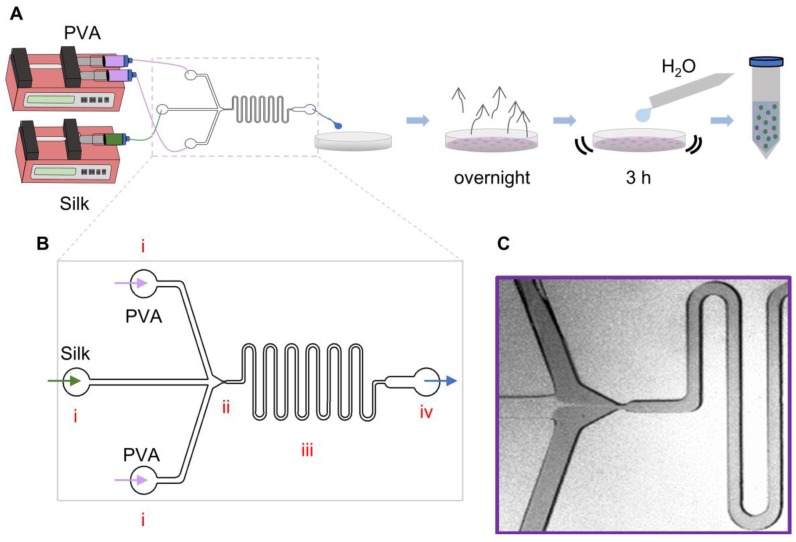
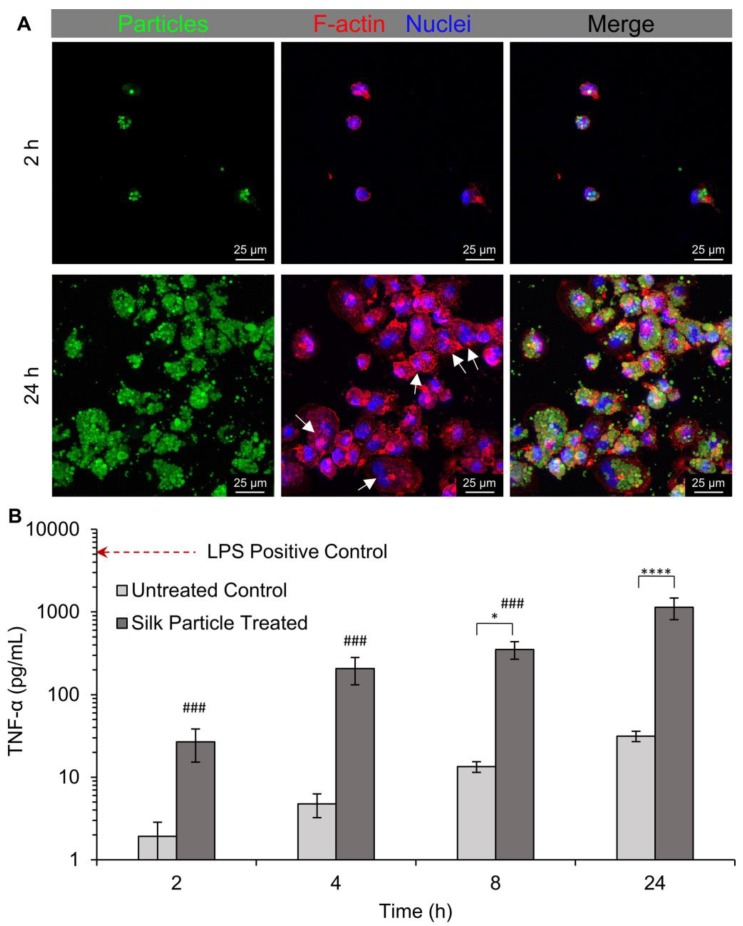
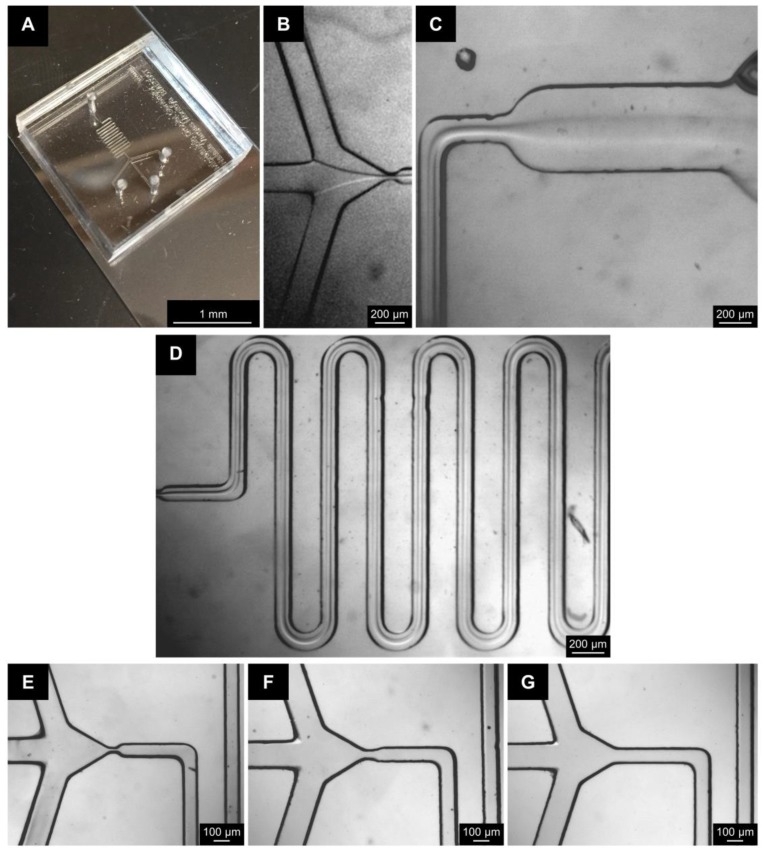
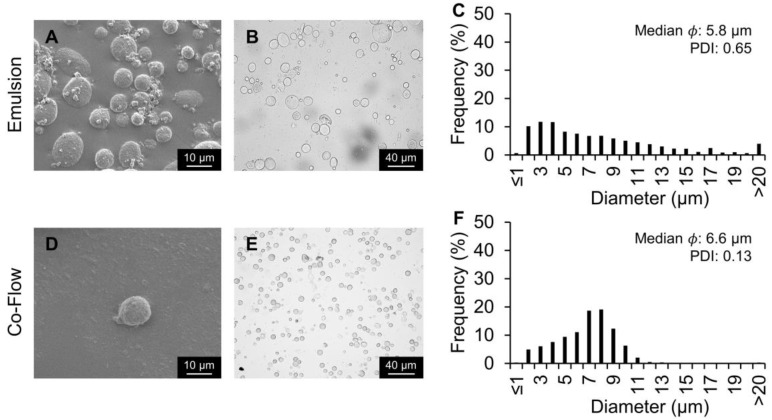
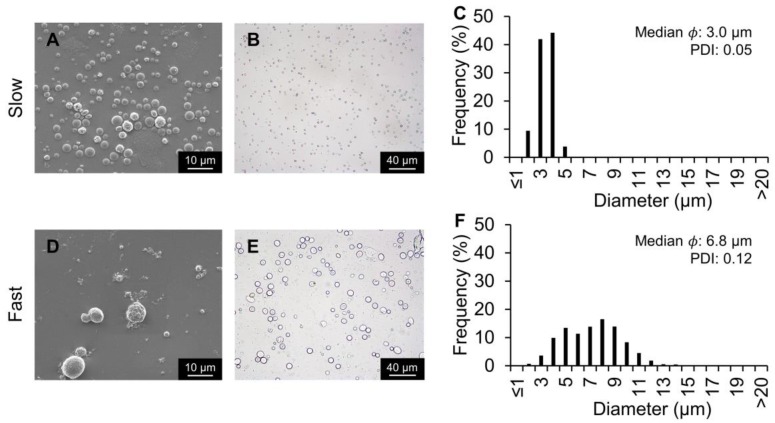
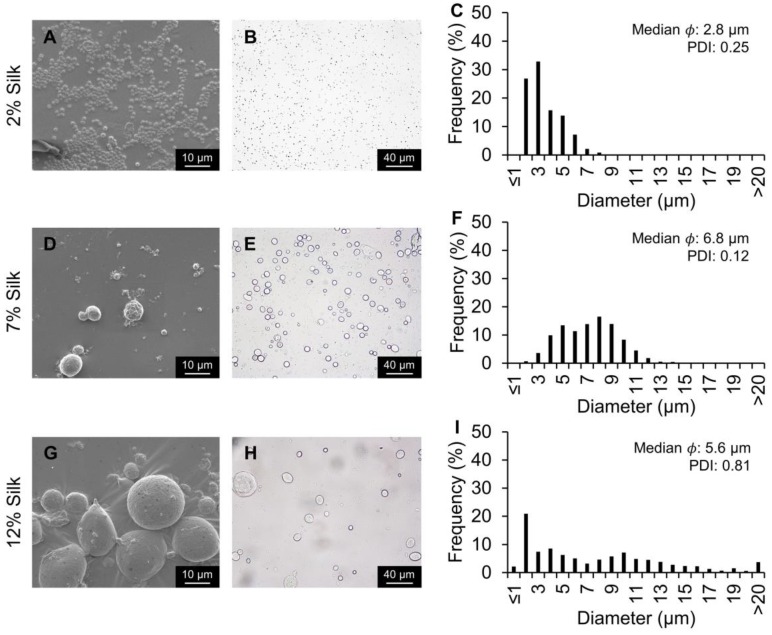
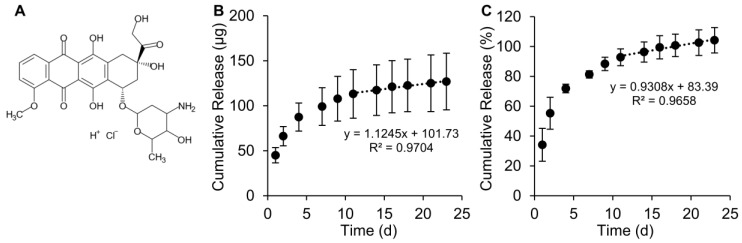
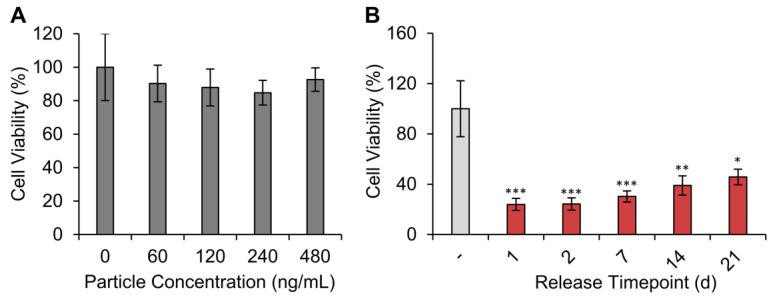
Polymeric particles are ideal drug delivery systems due to their cellular uptake-relevant size. Microparticles could be developed for direct injection of drug formulations into a diseased site, such as a tumor, allowing for drug retention and slow drug exposure over time through sustained release mechanisms. silk fibroin has shown promise as a biocompatible biomaterial both in research and the clinic. Silk has been previously used to make particles using an emulsion-based method with poly(vinyl alcohol) (PVA). In this study, polydimethylsiloxane-based microfluidic devices were designed, fabricated, and characterized to produce silk particles through self-association of silk when exposed to PVA. Three main variables resulted in differences in particle size and size distribution, or polydispersity index (PDI). Utilizing a co-flow microfluidic device decreased the PDI of the silk particles as compared to an emulsion-based method (0.13 versus 0.65, respectively). With a flow-focusing microfluidics device, lowering the silk flow rate from 0.80 to 0.06 mL/h resulted in a decrease in the median particle size from 6.8 to 3.0 μm and the PDI from 0.12 to 0.05, respectively. Lastly, decreasing the silk concentration from 12% to 2% resulted in a decrease in the median particle size from 5.6 to 2.8 μm and the PDI from 0.81 to 0.25, respectively. Binding and release of doxorubicin, a cytotoxic drug commonly used for cancer treatment, with the fabricated silk particles was evaluated. Doxorubicin loading in the silk particles was approximately 41 µg/mg; sustained doxorubicin release occurred over 23 days. When the cytotoxicity of the released doxorubicin was tested on KELLY neuroblastoma cells, significant cell death was observed. To demonstrate the potential for internalization of the silk particles, both KELLY and THP-1-derived macrophages were exposed to fluorescently labelled silk particles for up to 24 h. With the macrophages, internalization of the silk particles was observed. Additionally, THP-1 derived macrophages exposure to silk particles increased TNF-α secretion. Overall, this microfluidics-based approach for fabricating silk particles utilizing PVA as a means to induce phase separation and silk self-assembly is a promising approach to control particle size and size distribution. These silk particles may be utilized for a variety of biomedical applications including drug delivery to multiple cell types within a tumor microenvironment.
聚合物颗粒是理想的药物传递系统,因为它们具有与细胞摄取相关的尺寸。可以开发用于将药物制剂直接注射到患病部位(例如肿瘤)的微颗粒,通过持续释放机制允许药物保留和随着时间的推移缓慢药物暴露。丝素蛋白在研究和临床中都显示出作为生物相容的生物材料的潜力。以前曾使用基于乳液的方法用聚乙烯醇(PVA)制造丝素颗粒。在这项研究中,设计、制造和表征了基于聚二甲基硅氧烷的微流控装置,以通过暴露于 PVA 时丝素的自组装来产生丝素颗粒。三个主要变量导致粒径和粒径分布或多分散指数(PDI)的差异。与基于乳液的方法相比,使用共流微流控装置可降低丝素颗粒的 PDI(分别为 0.13 与 0.65)。使用流聚焦微流控装置,将丝素流速从 0.80 降低至 0.06 mL/h 可分别使中值粒径从 6.8 降低至 3.0 µm 和 PDI 从 0.12 降低至 0.05。最后,将丝素浓度从 12%降低至 2%可使中值粒径从 5.6 降低至 2.8 µm 和 PDI 从 0.81 降低至 0.25。评估了用制造的丝素颗粒结合和释放阿霉素,一种常用于癌症治疗的细胞毒性药物。丝素颗粒中的阿霉素负载量约为 41 µg/mg;阿霉素的持续释放持续了 23 天。当在 KELLY 神经母细胞瘤细胞上测试释放的阿霉素的细胞毒性时,观察到明显的细胞死亡。为了证明丝素颗粒内化的潜力,将荧光标记的丝素颗粒暴露于 KELLY 和 THP-1 衍生的巨噬细胞中长达 24 小时。用巨噬细胞观察到丝素颗粒的内化。此外,THP-1 衍生的巨噬细胞暴露于丝素颗粒会增加 TNF-α 的分泌。总的来说,这种基于微流控的方法利用 PVA 作为诱导相分离和丝素自组装的手段来制造丝素颗粒是控制粒径和粒径分布的有前途的方法。这些丝素颗粒可用于多种生物医学应用,包括向肿瘤微环境中的多种细胞类型递药。