Qi Yu, Wang Hui, Wei Kai, Yang Ya, Zheng Ru-Yue, Kim Ick Soo, Zhang Ke-Qin
National Engineering Laboratory for Modern Silk, College of Textile and Clothing Engineering, Soochow University, Suzhou 215123, China.
Nano Fusion Technology Research Lab, Interdisciplinary Cluster for Cutting Edge Research (ICCER), Division of Frontier Fibers, Institute for Fiber Engineering (IFES), Shinshu University, Ueda, Nagano 386 8567, Japan.
Int J Mol Sci. 2017 Mar 3;18(3):237. doi: 10.3390/ijms18030237.
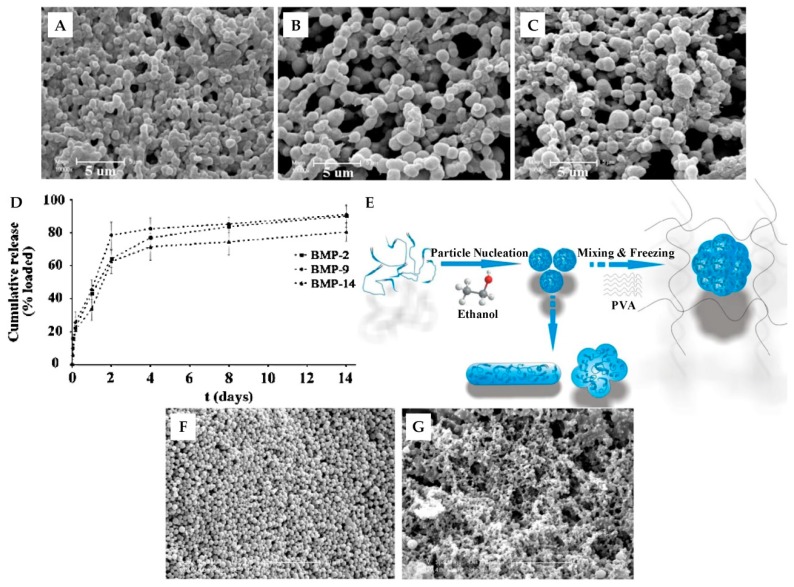
The biological performance of artificial biomaterials is closely related to their structure characteristics. Cell adhesion, migration, proliferation, and differentiation are all strongly affected by the different scale structures of biomaterials. Silk fibroin (SF), extracted mainly from silkworms, has become a popular biomaterial due to its excellent biocompatibility, exceptional mechanical properties, tunable degradation, ease of processing, and sufficient supply. As a material with excellent processability, SF can be processed into various forms with different structures, including particulate, fiber, film, and three-dimensional (3D) porous scaffolds. This review discusses and summarizes the various constructions of SF-based materials, from single structures to multi-level structures, and their applications. In combination with single structures, new techniques for creating special multi-level structures of SF-based materials, such as micropatterning and 3D-printing, are also briefly addressed.
人工生物材料的生物学性能与其结构特征密切相关。细胞的黏附、迁移、增殖和分化都受到生物材料不同尺度结构的强烈影响。主要从蚕茧中提取的丝素蛋白(SF),因其优异的生物相容性、卓越的力学性能、可调节的降解性、易于加工以及充足的供应,已成为一种广受欢迎的生物材料。作为一种具有出色加工性能的材料,SF可以被加工成具有不同结构的各种形式,包括颗粒、纤维、薄膜以及三维(3D)多孔支架。本文综述讨论并总结了基于SF的材料从单一结构到多级结构的各种构建方式及其应用。同时,结合单一结构,还简要介绍了用于创建基于SF的材料特殊多级结构的新技术,如微图案化和3D打印。