School of Environment, Tsinghua University, Beijing, 100084, China.
Nat Commun. 2020 Feb 20;11(1):981. doi: 10.1038/s41467-020-14805-z.
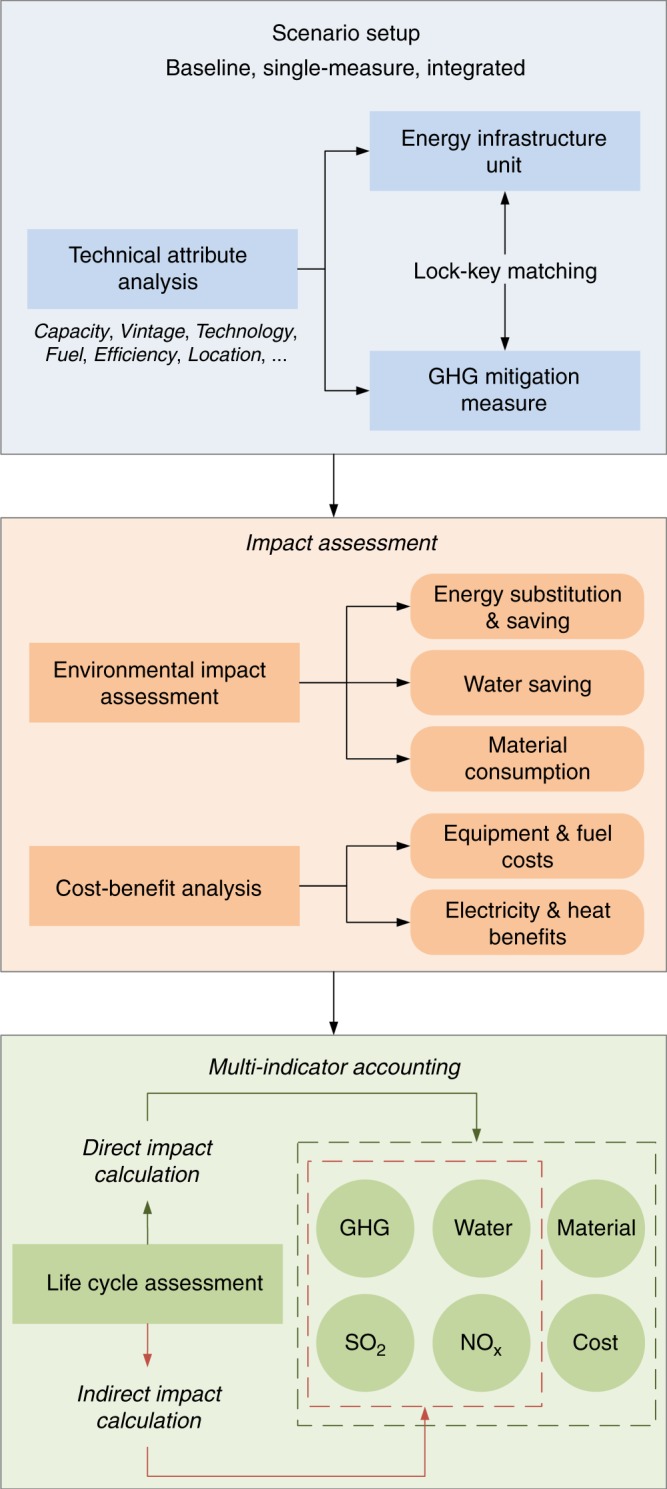
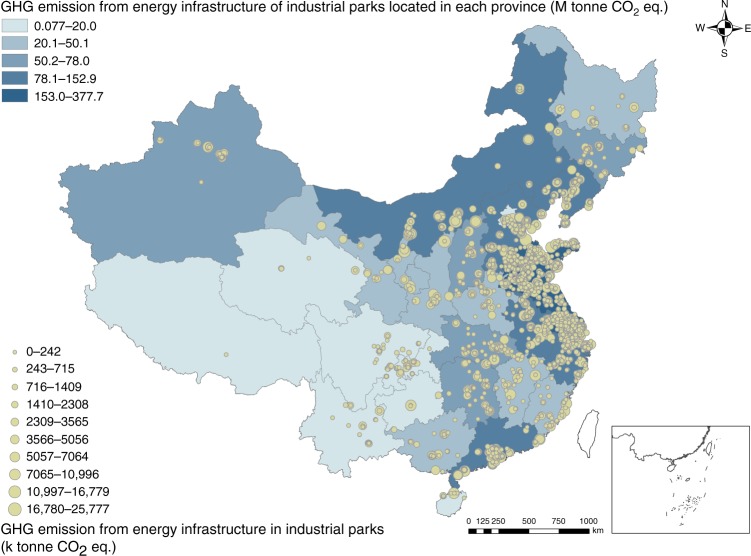
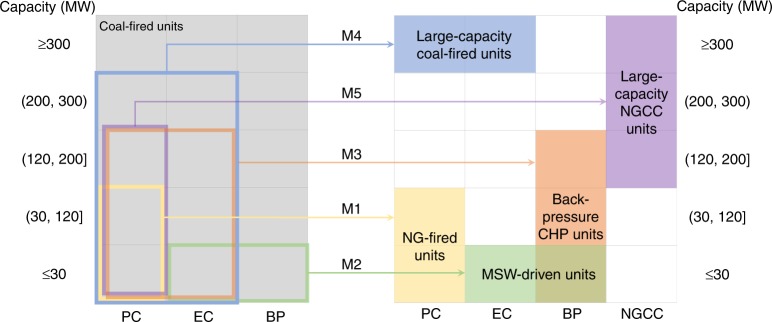
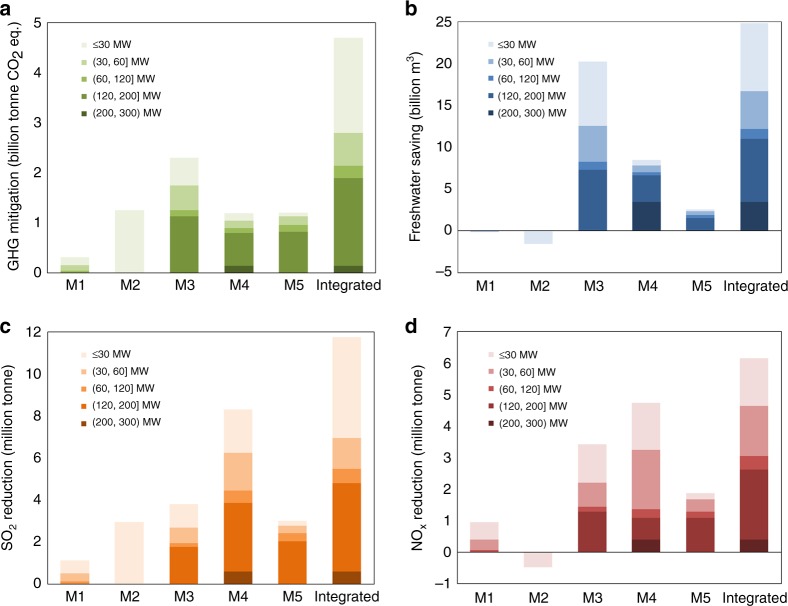
Industrial parks are flourishing globally and are mostly equipped with a shareable energy infrastructure, which has a long service lifetime and thus locks in greenhouse gas (GHG) emissions. We conducted a two-phase study to decarbonize Chinese industrial parks by targeting energy infrastructure. Firstly, a high-resolution geodatabase of energy infrastructure in 1604 industrial parks was established. These energy infrastructures largely featured heavy coal dependence, small capacities, cogeneration of heat and power, and were young in age. Cumulative GHG emissions, during their remaining lifetime, will reach 46.2 Gt CO equivalent(eq.); comparable to the 11% of the 1.5 °C global carbon budget. Secondly, a vintage stock model was developed by tailoring countermeasures for each unit and implementing a cost-benefit analysis and life cycle assessment. Total GHG mitigation potential was quantified as 8%16% relative to the baseline scenario with positive economic benefits. The synergistic reductions in freshwater consumption, SO emissions, and NO emissions will stand at rates of 3439%, 24%31% and 10%14%, respectively.
工业园区在全球范围内蓬勃发展,并且大多配备了可共享的能源基础设施,这些基础设施具有很长的使用寿命,因此锁定了温室气体(GHG)排放。我们通过针对能源基础设施进行了两阶段研究,以实现中国工业园区的脱碳。首先,建立了 1604 个工业园区能源基础设施的高分辨率地理数据库。这些能源基础设施主要以大量煤炭依赖、容量小、热电联产和年轻为特征。在其剩余寿命内,累计温室气体排放量将达到 462 亿吨二氧化碳当量(eq.);相当于 1.5°C 全球碳预算的 11%。其次,通过为每个单元定制对策,并进行成本效益分析和生命周期评估,开发了一个老式库存模型。与基准情景相比,总温室气体减排潜力为 8%16%,具有积极的经济效益。淡水消耗、SO 排放和 NO 排放的协同减少率分别为 34%39%、24%31%和 10%14%。