Department of Applied Physics, University of Eastern Finland, Kuopio, Finland.
NeuroMuscular Research Center, Unit of Biology of Physical Activity, Faculty of Sport and Health Sciences, University of Jyväskylä, Jyväskylä, Finland.
Sci Rep. 2020 Feb 20;10(1):3026. doi: 10.1038/s41598-020-59602-2.
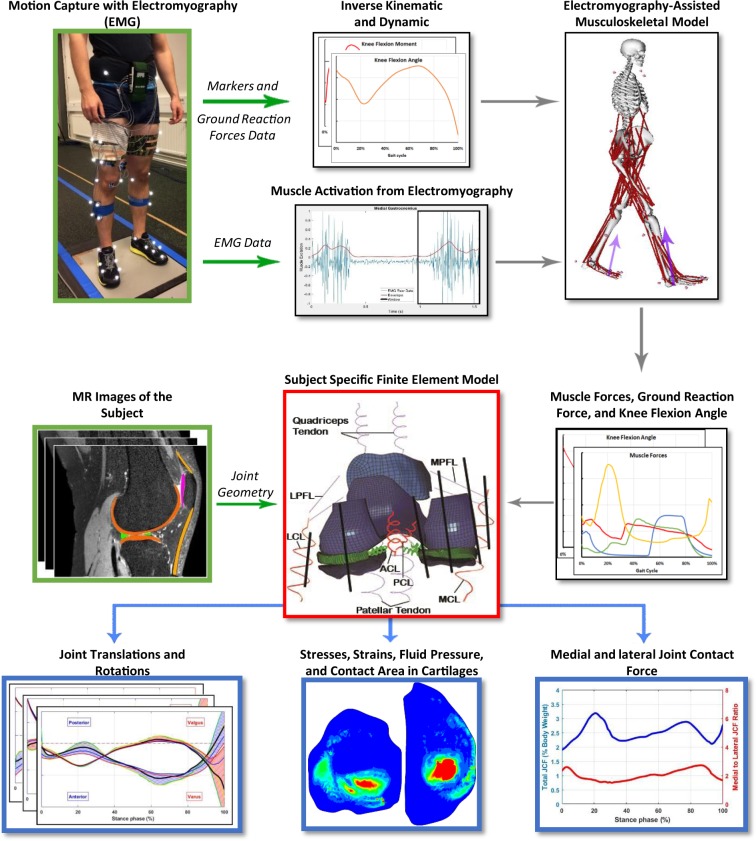
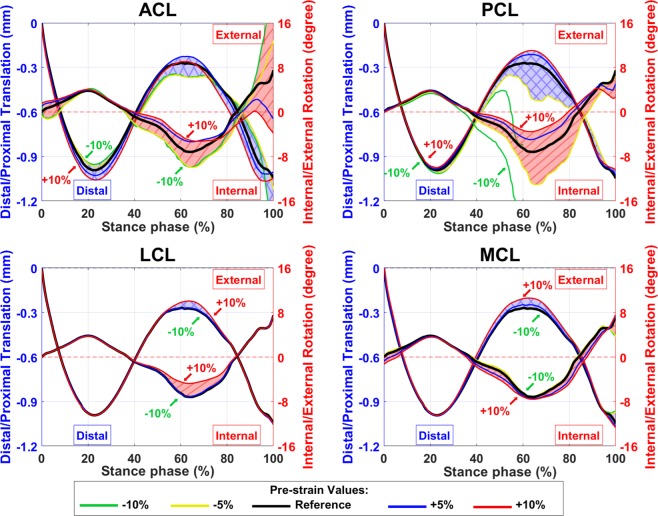
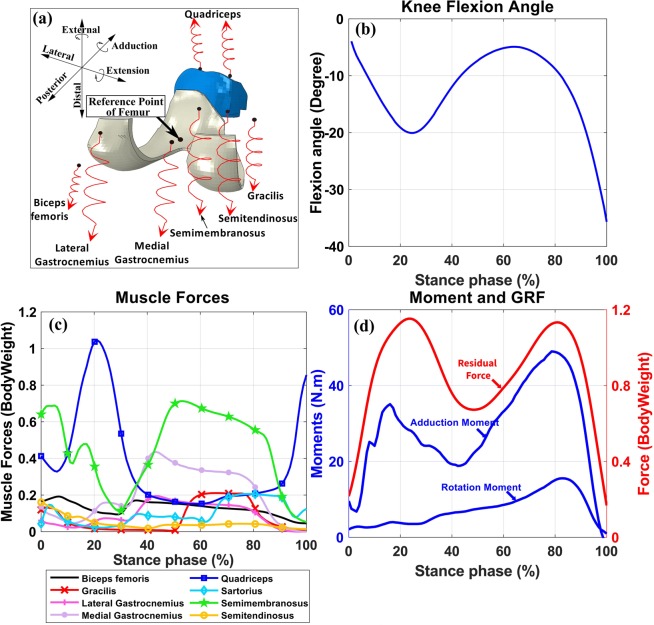
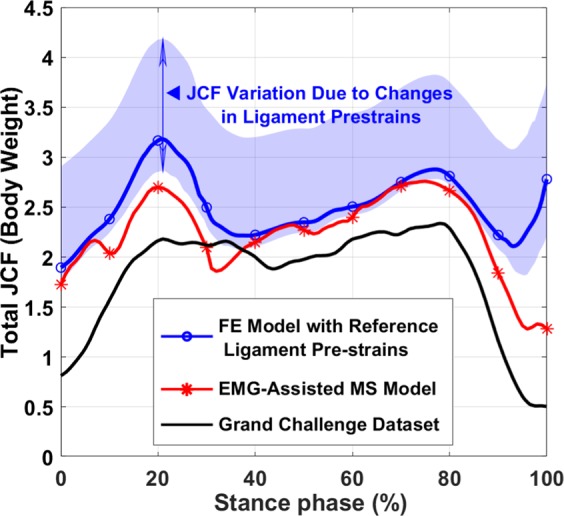
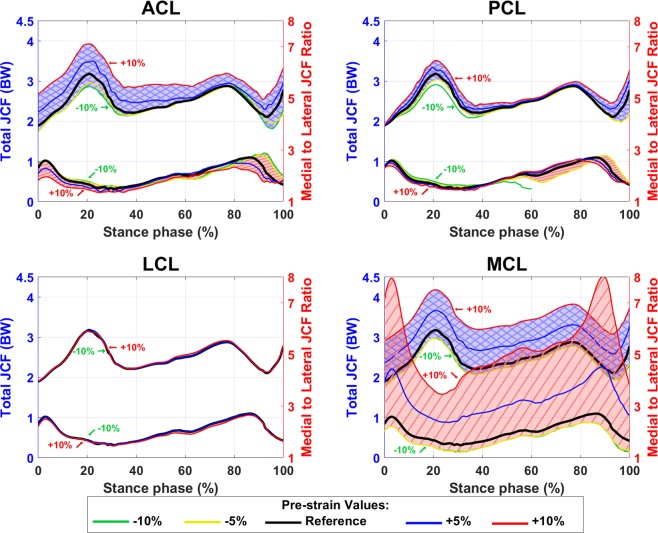
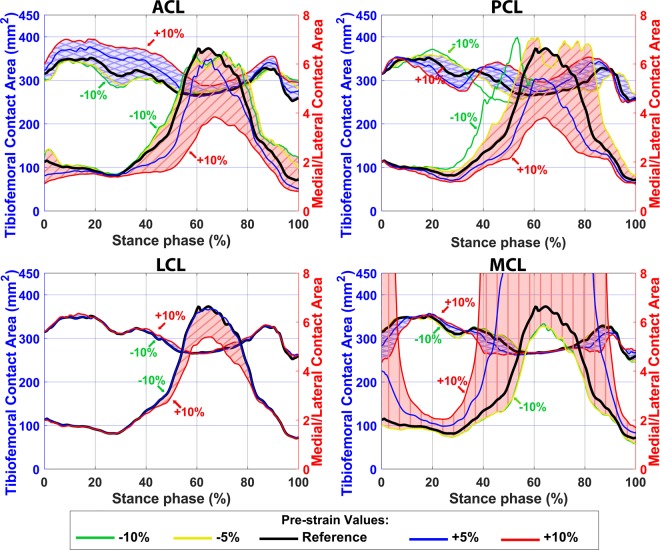
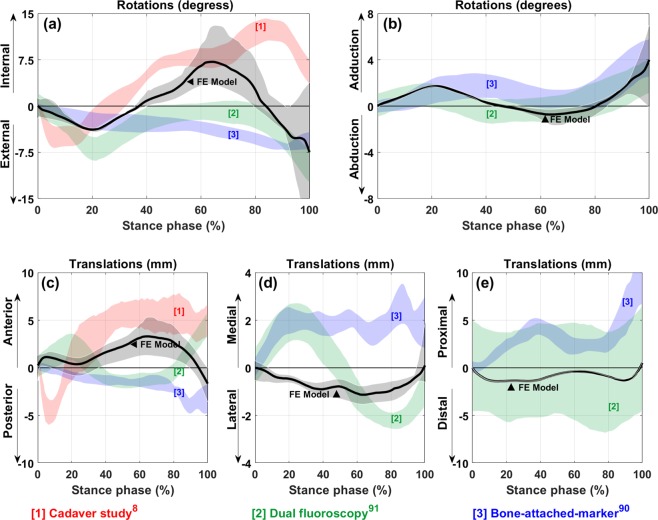
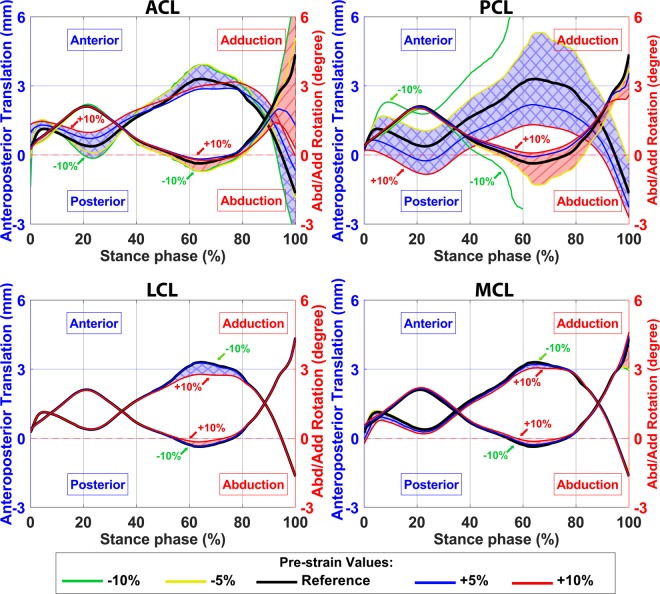
Abnormal mechanical loading is essential in the onset and progression of knee osteoarthritis. Combined musculoskeletal (MS) and finite element (FE) modeling is a typical method to estimate load distribution and tissue responses in the knee joint. However, earlier combined models mostly utilize static-optimization based MS models and muscle force driven FE models typically use elastic materials for soft tissues or analyze specific time points of gait. Therefore, here we develop an electromyography-assisted muscle force driven FE model with fibril-reinforced poro(visco)elastic cartilages and menisci to analyze knee joint loading during the stance phase of gait. Moreover, since ligament pre-strains are one of the important uncertainties in joint modeling, we conducted a sensitivity analysis on the pre-strains of anterior and posterior cruciate ligaments (ACL and PCL) as well as medial and lateral collateral ligaments (MCL and LCL). The model produced kinematics and kinetics consistent with previous experimental data. Joint contact forces and contact areas were highly sensitive to ACL and PCL pre-strains, while those changed less cartilage stresses, fibril strains, and fluid pressures. The presented workflow could be used in a wide range of applications related to the aetiology of cartilage degeneration, optimization of rehabilitation exercises, and simulation of knee surgeries.
异常的机械负荷是膝关节骨关节炎发病和进展的关键因素。综合肌肉骨骼(MS)和有限元(FE)模型是一种典型的方法,可以估计膝关节的负荷分布和组织响应。然而,早期的综合模型大多利用基于静态优化的 MS 模型,而肌肉力驱动的 FE 模型通常使用弹性材料来模拟软组织,或者分析步态的特定时间点。因此,我们在这里开发了一种肌电图辅助的肌肉力驱动的 FE 模型,其中包含纤维增强的多孔(黏弹)弹性软骨和半月板,以分析步态站立阶段膝关节的负荷情况。此外,由于韧带预应变是关节建模中的一个重要不确定性因素,我们对前交叉韧带(ACL)和后交叉韧带(PCL)以及内侧和外侧副韧带(MCL 和 LCL)的预应变进行了敏感性分析。该模型产生的运动学和动力学与先前的实验数据一致。关节接触力和接触面积对 ACL 和 PCL 的预应变高度敏感,而对软骨应力、纤维应变和流体压力的影响较小。所提出的工作流程可用于与软骨退化的病因学、康复运动的优化以及膝关节手术模拟等广泛的相关应用。