Department of Technical Physics, University of Eastern Finland, Kuopio, Finland.
Department of Biomedical Engineering, Lund University, Lund, Sweden.
PLoS Comput Biol. 2023 Jan 26;19(1):e1010337. doi: 10.1371/journal.pcbi.1010337. eCollection 2023 Jan.
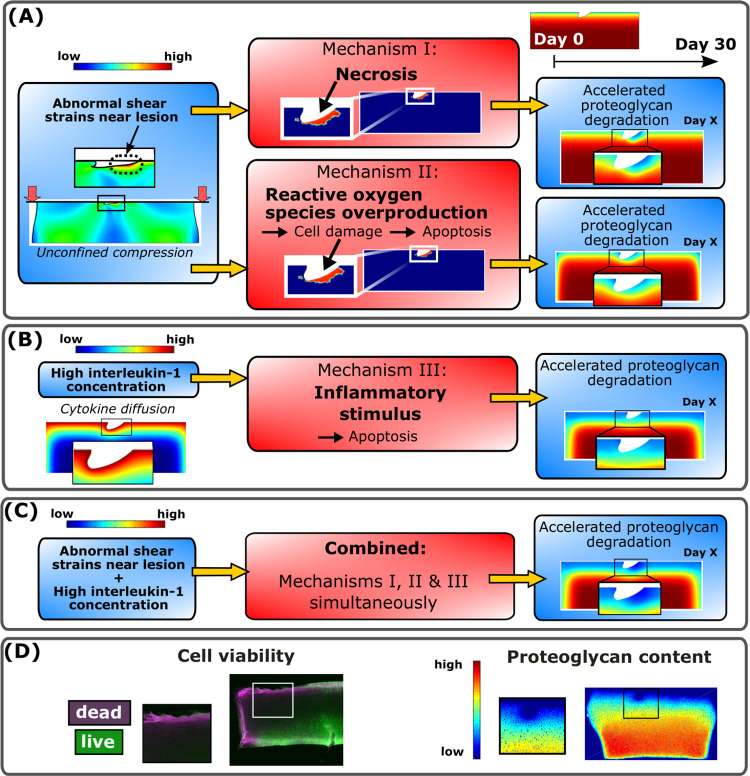
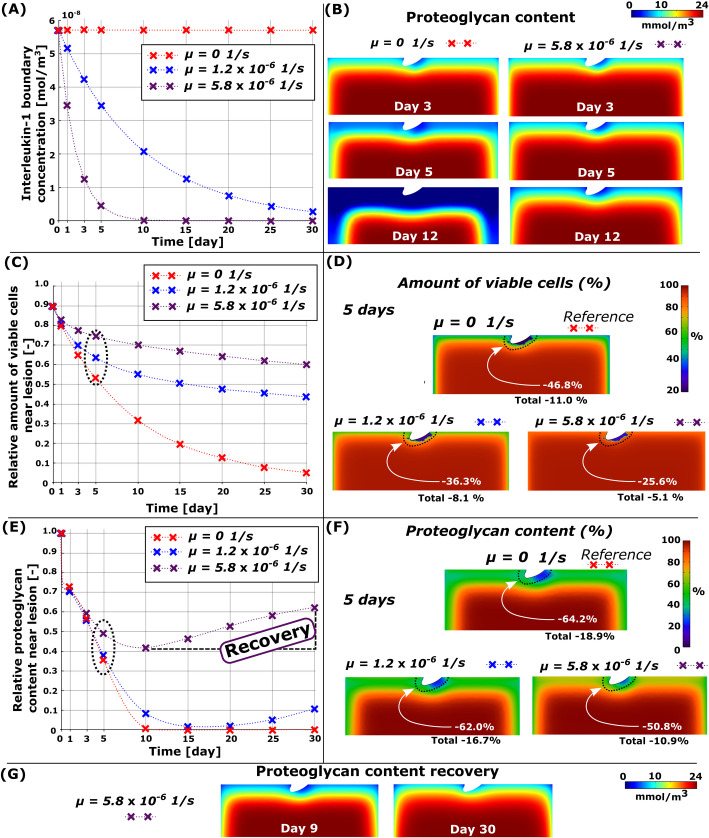
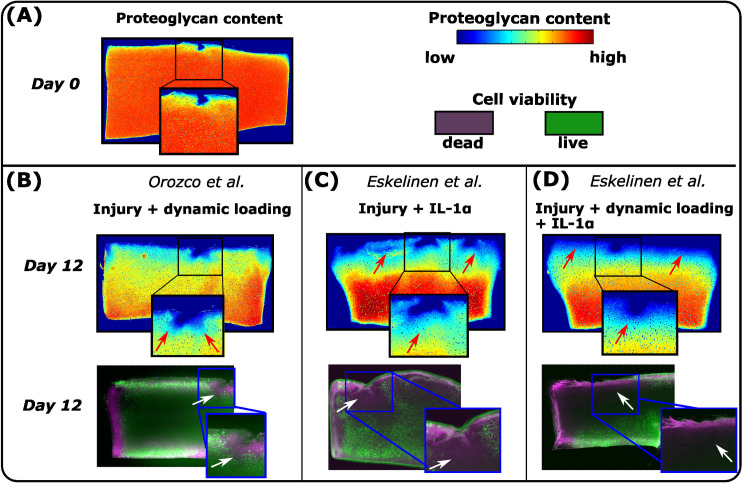
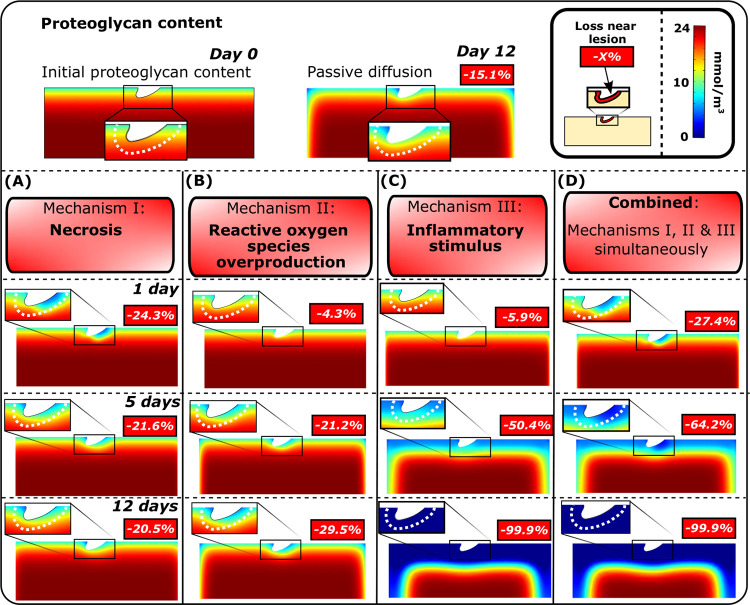
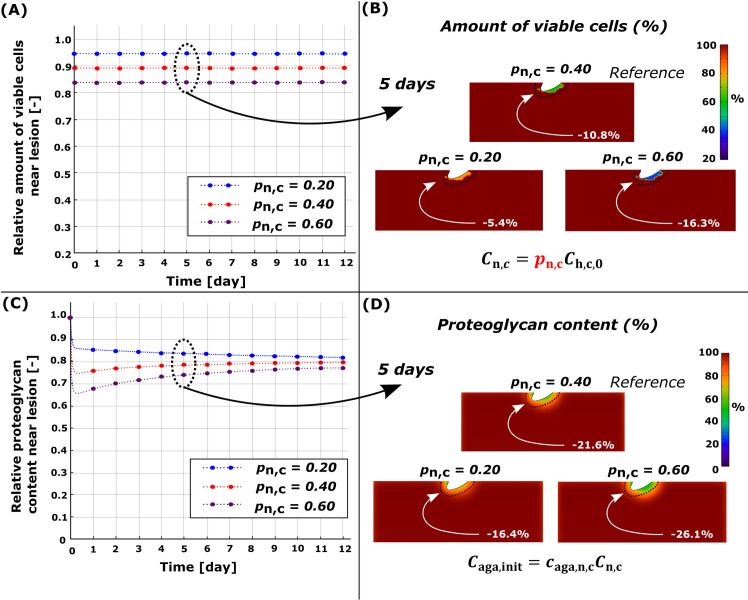
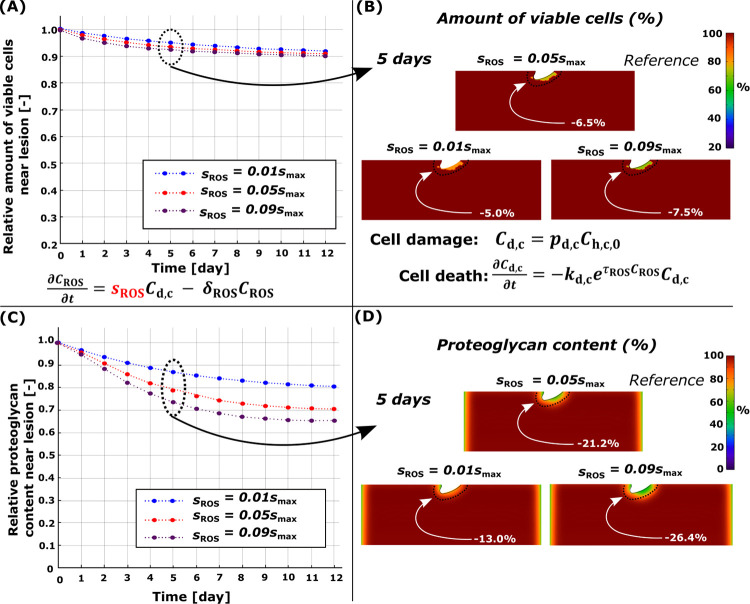
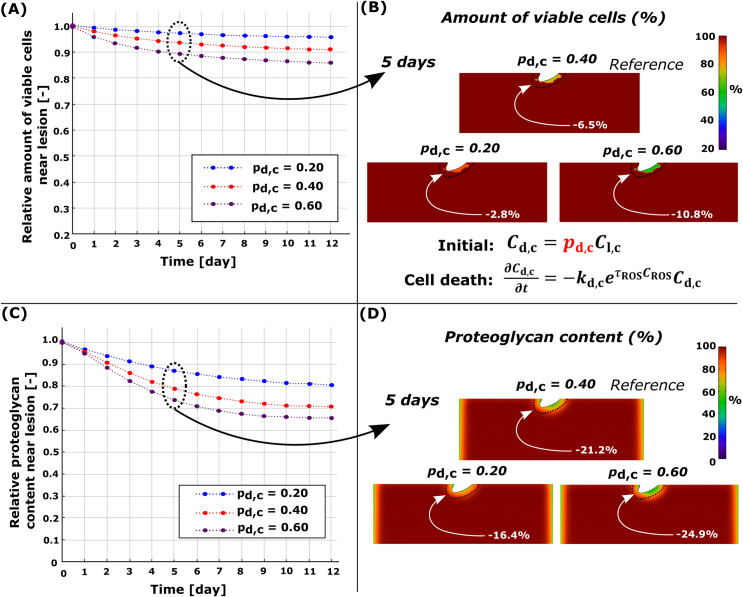
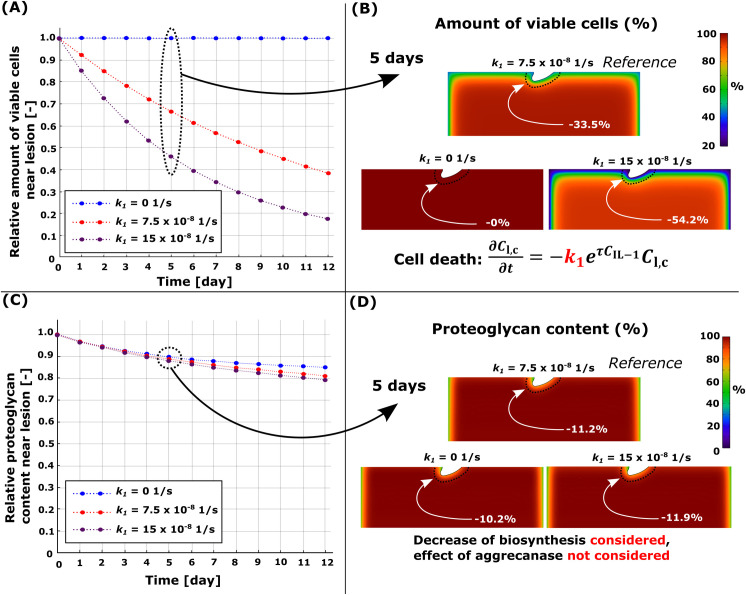
Osteoarthritis (OA) is a common musculoskeletal disease that leads to deterioration of articular cartilage, joint pain, and decreased quality of life. When OA develops after a joint injury, it is designated as post-traumatic OA (PTOA). The etiology of PTOA remains poorly understood, but it is known that proteoglycan (PG) loss, cell dysfunction, and cell death in cartilage are among the first signs of the disease. These processes, influenced by biomechanical and inflammatory stimuli, disturb the normal cell-regulated balance between tissue synthesis and degeneration. Previous computational mechanobiological models have not explicitly incorporated the cell-mediated degradation mechanisms triggered by an injury that eventually can lead to tissue-level compositional changes. Here, we developed a 2-D mechanobiological finite element model to predict necrosis, apoptosis following excessive production of reactive oxygen species (ROS), and inflammatory cytokine (interleukin-1)-driven apoptosis in cartilage explant. The resulting PG loss over 30 days was simulated. Biomechanically triggered PG degeneration, associated with cell necrosis, excessive ROS production, and cell apoptosis, was predicted to be localized near a lesion, while interleukin-1 diffusion-driven PG degeneration was manifested more globally. Interestingly, the model also showed proteolytic activity and PG biosynthesis closer to the levels of healthy tissue when pro-inflammatory cytokines were rapidly inhibited or cleared from the culture medium, leading to partial recovery of PG content. The numerical predictions of cell death and PG loss were supported by previous experimental findings. Furthermore, the simulated ROS and inflammation mechanisms had longer-lasting effects (over 3 days) on the PG content than localized necrosis. The mechanobiological model presented here may serve as a numerical tool for assessing early cartilage degeneration mechanisms and the efficacy of interventions to mitigate PTOA progression.
骨关节炎(OA)是一种常见的肌肉骨骼疾病,可导致关节软骨恶化、关节疼痛和生活质量下降。当关节损伤后发生 OA 时,将其指定为创伤后 OA(PTOA)。PTOA 的病因仍知之甚少,但已知软骨中蛋白聚糖(PG)的丢失、细胞功能障碍和细胞死亡是疾病的最初迹象之一。这些过程受生物力学和炎症刺激的影响,扰乱了组织合成和退化之间正常的细胞调节平衡。以前的计算力学生物学模型没有明确纳入由损伤引发的细胞介导的降解机制,而这些损伤最终可能导致组织水平的成分变化。在这里,我们开发了一个二维力学生物学有限元模型,以预测软骨外植体中活性氧(ROS)过度产生引发的坏死和细胞凋亡,以及炎症细胞因子(白细胞介素 1)驱动的细胞凋亡。模拟了 30 天内 PG 的损失。预测生物力学触发的 PG 退化与细胞坏死、ROS 过度产生和细胞凋亡相关,局部发生在病变附近,而白细胞介素 1 扩散驱动的 PG 退化则表现得更为广泛。有趣的是,当促炎细胞因子从培养基中迅速被抑制或清除时,模型还显示出靠近健康组织水平的蛋白水解活性和 PG 生物合成,从而导致 PG 含量部分恢复。细胞死亡和 PG 损失的数值预测得到了先前实验结果的支持。此外,与局部坏死相比,模拟的 ROS 和炎症机制对 PG 含量的影响持续时间更长(超过 3 天)。本文提出的力学生物学模型可以作为评估早期软骨退化机制和减轻 PTOA 进展的干预措施疗效的数值工具。