Theunissen Frances, Flynn Loren L, Anderton Ryan S, Mastaglia Frank, Pytte Julia, Jiang Leanne, Hodgetts Stuart, Burns Daniel K, Saunders Ann, Fletcher Sue, Wilton Steve D, Akkari Patrick Anthony
Perron Institute for Neurological and Translational Science, Nedlands, WA, Australia.
School of Human Sciences, University of Western Australia, Nedlands, WA, Australia.
Front Neurosci. 2020 Jan 31;14:47. doi: 10.3389/fnins.2020.00047. eCollection 2020.
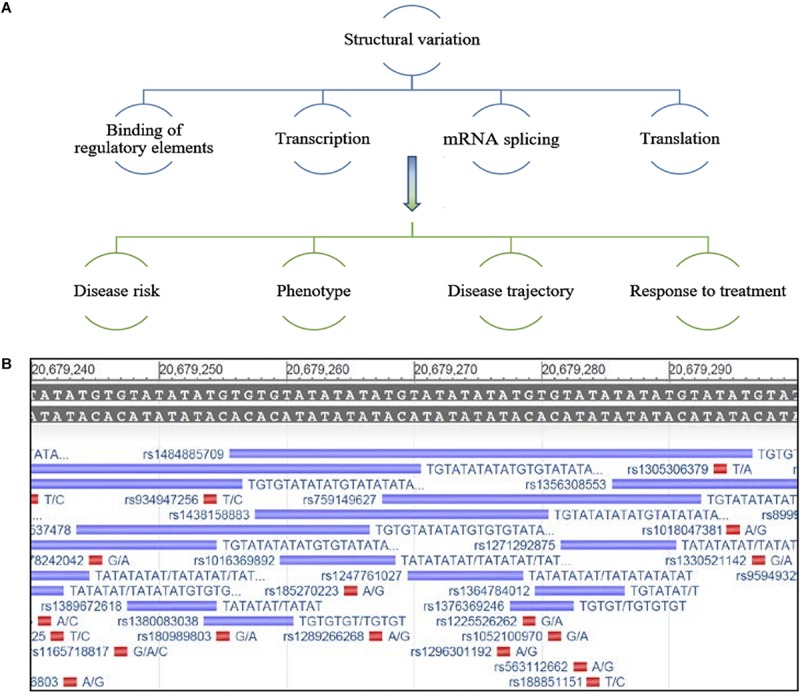
The underlying genetic and molecular mechanisms that drive amyotrophic lateral sclerosis (ALS) remain poorly understood. Structural variants within the genome can play a significant role in neurodegenerative disease risk, such as the repeat expansion in and the tri-nucleotide repeat in , both of which are associated with familial and sporadic ALS. Many such structural variants reside in uncharacterized regions of the human genome, and have been under studied. Therefore, characterization of structural variants located in and around genes associated with ALS could provide insight into disease pathogenesis, and lead to the discovery of highly informative genetic tools for stratification in clinical trials. Such genomic variants may provide a deeper understanding of how gene expression can affect disease etiology, disease severity and trajectory, patient response to treatment, and may hold the key to understanding the genetics of sporadic ALS. This article outlines the current understanding of amyotrophic lateral sclerosis genetics and how structural variations may underpin some of the missing heritability of this disease.
驱动肌萎缩侧索硬化症(ALS)的潜在遗传和分子机制仍未得到充分了解。基因组中的结构变异在神经退行性疾病风险中可能起重要作用,例如[具体基因1]中的重复扩增和[具体基因2]中的三核苷酸重复,这两者都与家族性和散发性ALS相关。许多此类结构变异位于人类基因组的未表征区域,且研究不足。因此,对位于与ALS相关基因及其周围的结构变异进行表征,可为疾病发病机制提供见解,并有助于发现用于临床试验分层的高信息量遗传工具。此类基因组变异可能有助于更深入地了解基因表达如何影响疾病病因、疾病严重程度和病程、患者对治疗的反应,并且可能是理解散发性ALS遗传学的关键。本文概述了目前对肌萎缩侧索硬化症遗传学的理解,以及结构变异如何可能构成该疾病一些缺失遗传力的基础。