Cocoș Relu, Popescu Bogdan Ovidiu
Department of Medical Genetics, 'Carol Davila' University of Medicine and Pharmacy, Bucharest, Romania.
Genomics Research and Development Institute, Bucharest, Romania.
Hum Genomics. 2024 Dec 31;18(1):141. doi: 10.1186/s40246-024-00704-7.
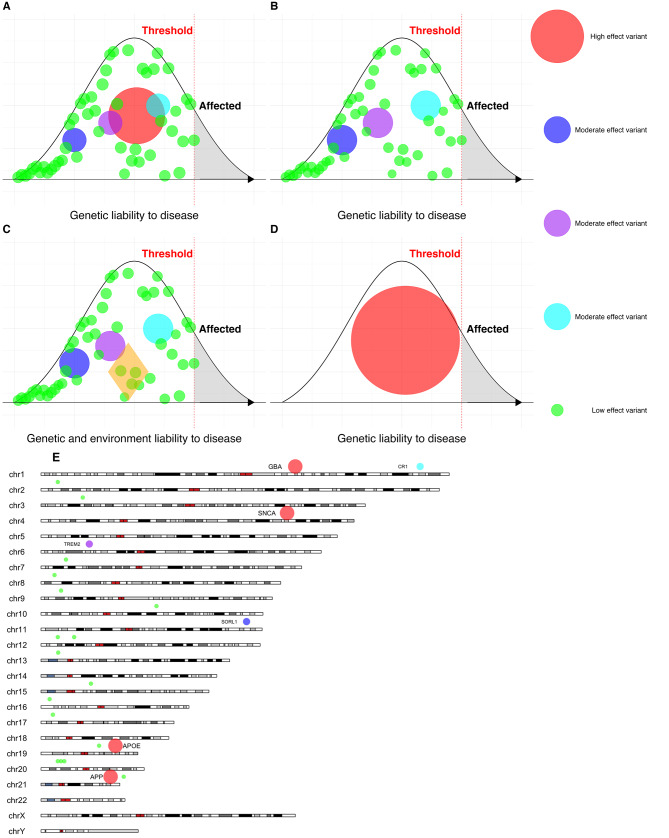
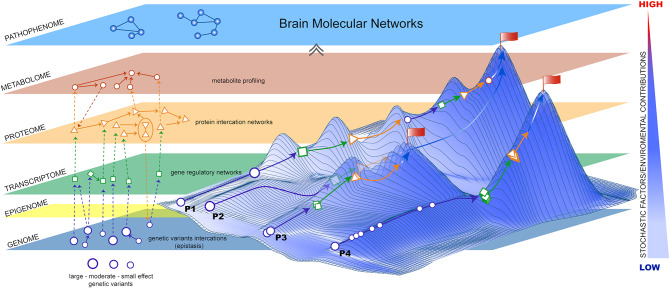
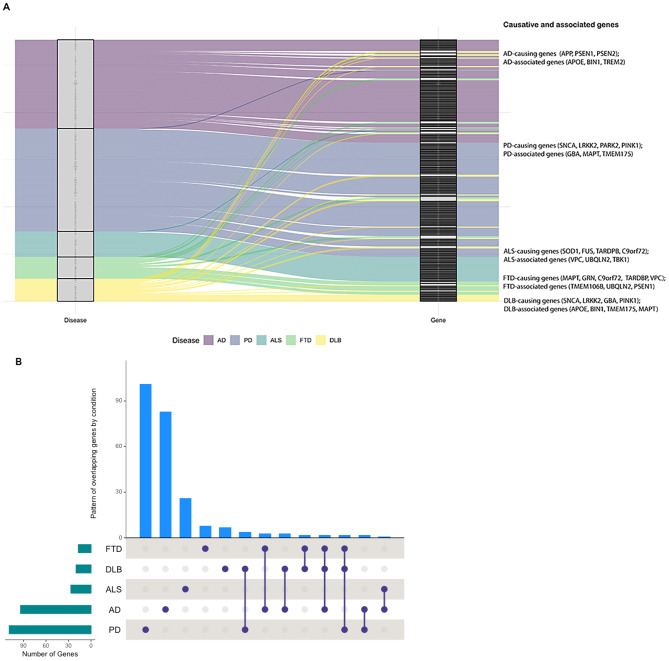
Neurodegenerative diseases present complex genetic architectures, reflecting a continuum from monogenic to oligogenic and polygenic models. Recent advances in multi-omics data, coupled with systems genetics, have significantly refined our understanding of how these data impact neurodegenerative disease mechanisms. To contextualize these genetic discoveries, we provide a comprehensive critical overview of genetic architecture concepts, from Mendelian inheritance to the latest insights from oligogenic and omnigenic models. We explore the roles of common and rare genetic variants, gene-gene and gene-environment interactions, and epigenetic influences in shaping disease phenotypes. Additionally, we emphasize the importance of multi-omics layers including genomic, transcriptomic, proteomic, epigenetic, and metabolomic data in elucidating the molecular mechanisms underlying neurodegeneration. Special attention is given to missing heritability and the contribution of rare variants, particularly in the context of pleiotropy and network pleiotropy. We examine the application of single-cell omics technologies, transcriptome-wide association studies, and epigenome-wide association studies as key approaches for dissecting disease mechanisms at tissue- and cell-type levels. Our review introduces the OmicPeak Disease Trajectory Model, a conceptual framework for understanding the genetic architecture of neurodegenerative disease progression, which integrates multi-omics data across biological layers and time points. This review highlights the critical importance of adopting a systems genetics approach to unravel the complex genetic architecture of neurodegenerative diseases. Finally, this emerging holistic understanding of multi-omics data and the exploration of the intricate genetic landscape aim to provide a foundation for establishing more refined genetic architectures of these diseases, enhancing diagnostic precision, predicting disease progression, elucidating pathogenic mechanisms, and refining therapeutic strategies for neurodegenerative conditions.
神经退行性疾病呈现出复杂的遗传结构,反映了从单基因到寡基因和多基因模型的连续变化。多组学数据的最新进展,结合系统遗传学,显著深化了我们对这些数据如何影响神经退行性疾病机制的理解。为了将这些遗传学发现置于背景中,我们对遗传结构概念进行了全面的批判性综述,从孟德尔遗传到寡基因和泛基因模型的最新见解。我们探讨了常见和罕见遗传变异、基因-基因和基因-环境相互作用以及表观遗传影响在塑造疾病表型中的作用。此外,我们强调了包括基因组、转录组、蛋白质组、表观基因组和代谢组数据在内的多组学层面在阐明神经退行性变潜在分子机制方面的重要性。特别关注了缺失遗传力和罕见变异的贡献,尤其是在多效性和网络多效性的背景下。我们研究了单细胞组学技术、全转录组关联研究和全表观基因组关联研究作为在组织和细胞类型水平剖析疾病机制的关键方法的应用。我们的综述介绍了OmicPeak疾病轨迹模型,这是一个用于理解神经退行性疾病进展遗传结构的概念框架,它整合了跨生物层面和时间点的多组学数据。本综述强调了采用系统遗传学方法来揭示神经退行性疾病复杂遗传结构的至关重要性。最后,这种对多组学数据的新兴整体理解以及对复杂遗传景观的探索旨在为建立这些疾病更精细的遗传结构、提高诊断准确性、预测疾病进展、阐明致病机制以及完善神经退行性疾病的治疗策略提供基础。