Xia Han, Liu Ran, Zhao Lu, Sun Xiang, Zheng Zhong, Atoni Evans, Hu Xiaomin, Zhang Bo, Zhang Guilin, Yuan Zhiming
Key Laboratory of Special Pathogens and Biosafety, Wuhan Institute of Virology, Chinese Academy of Sciences, Wuhan, China.
Illumina (China), Beijing, China.
Front Microbiol. 2020 Jan 30;10:3111. doi: 10.3389/fmicb.2019.03111. eCollection 2019.
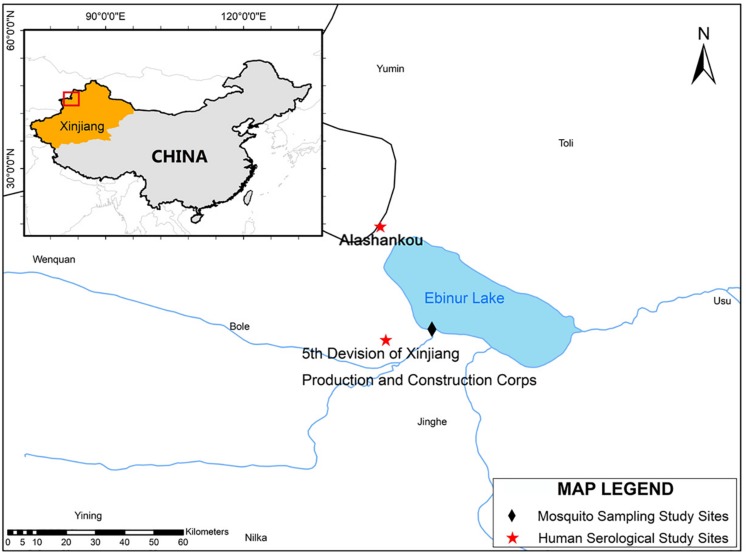
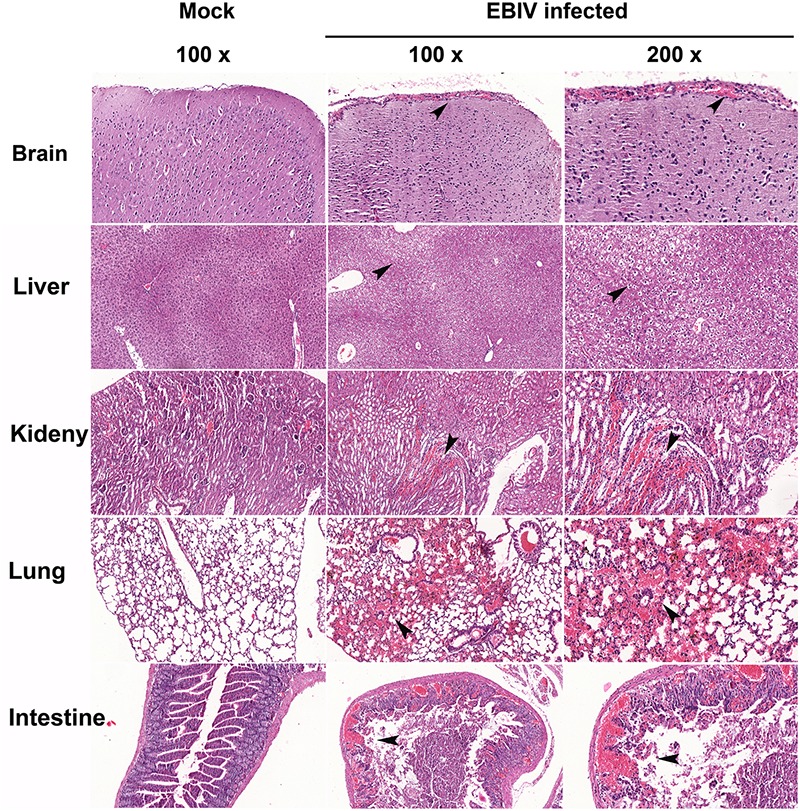
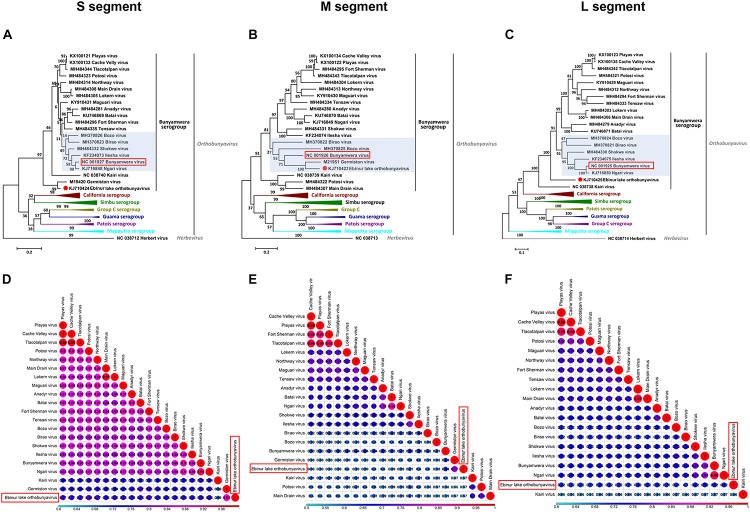
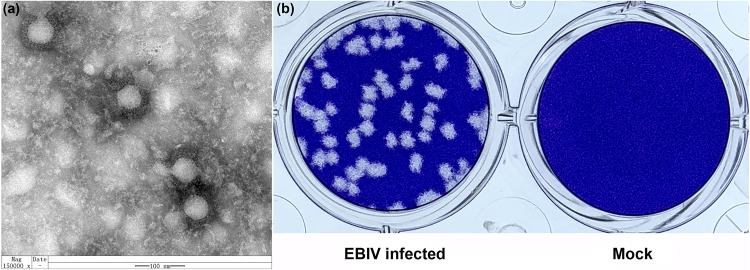
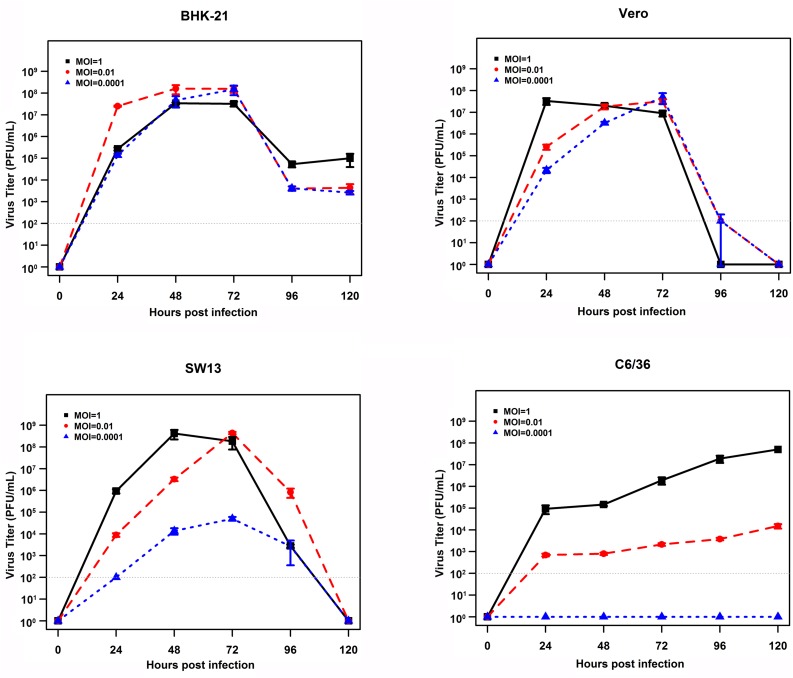
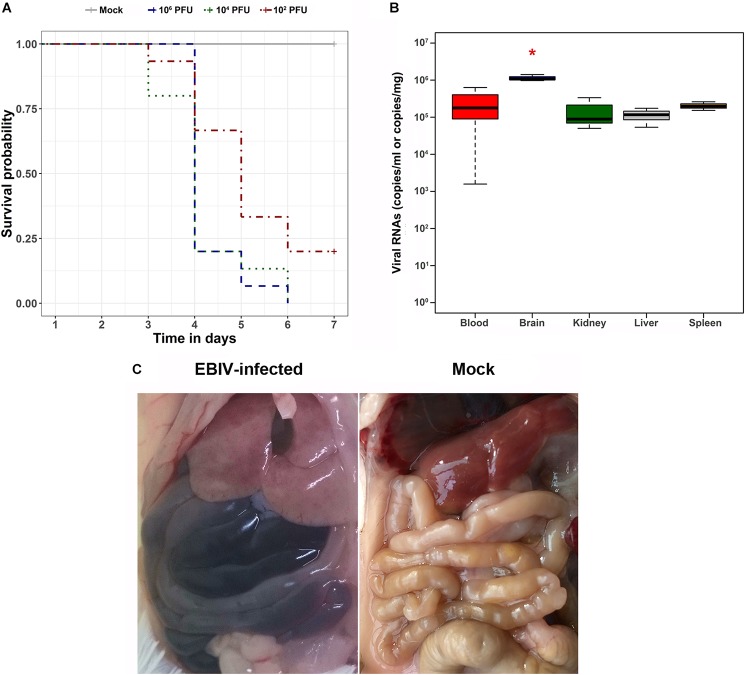
In recent years, rapidly increasing trade and travel across the China-Kazakhstan border has increased the potential risk of the introduction and exportation of vectors and their related diseases. The Ebinur Lake Nature Reserve is located in Xinjiang Uygur Autonomous Region, near the China-Kazakhstan border, with a suitable ecosystem for mosquito breeding. In our previous work, a novel species named Ebinur Lake virus (EBIV) was isolated in the reserve. To gain insights into the potential risk of EBIV in this region, we conducted a study that aimed to clearly outline EBIV's biological characteristics and its human seroprevalence in this region. Phylogenetically, the analysis of all three segments of EBIV demonstrated that it belongs to the genus , which is clustered in the Bunyamwera serogroup. EBIV replicated efficiently and caused cytopathic effects (CPEs) in vertebrate cells. The survival rates of the EBIV-challenged mice were 0 and 20% when inoculated with viral concentrations ≥10 or 10 plaque-forming units, respectively. For EBIV-infected mice, internal bleeding and pathological changes were observed. In addition, the overall immunoglobulin M (IgM) antibody [1:4 by immunofluorescence assay (IFA)], immunoglobulin G (IgG) antibody (1:10 by IFA), and neutralizing antibody [90% plaque reduction neutralization test (PRNT)] prevalence was 8.05, 12.3, and 0.95%, respectively, in the studied residents. In summary, EBIV is a new member of the Bunyamwera serogroup and is able to competently infect cells derived from mosquitoes, rodents, monkeys, or humans. Furthermore, EBIV caused severe disease and even death in challenged Kunming mice, and the antibodies against EBIV have been detected in local residents, indicating that the virus is a potential animal or human pathogen.
近年来,中国与哈萨克斯坦边境贸易和人员往来迅速增加,增加了病媒及其相关疾病传入和传出的潜在风险。艾比湖自然保护区位于新疆维吾尔自治区,靠近中国与哈萨克斯坦边境,拥有适合蚊子繁殖的生态系统。在我们之前的工作中,在该保护区分离出一种名为艾比湖病毒(EBIV)的新病毒。为深入了解该地区EBIV的潜在风险,我们开展了一项研究,旨在明确EBIV的生物学特性及其在该地区人群中的血清流行率。系统发育分析显示,EBIV的所有三个基因片段均表明它属于 属,聚集在布尼亚病毒属血清群中。EBIV在脊椎动物细胞中能高效复制并引起细胞病变效应(CPE)。当接种病毒浓度≥10或10个空斑形成单位时,受EBIV攻击的小鼠存活率分别为0和20%。对于EBIV感染的小鼠,观察到内出血和病理变化。此外,在所研究的居民中,总体免疫球蛋白M(IgM)抗体[免疫荧光试验(IFA)为1:4]、免疫球蛋白G(IgG)抗体(IFA为1:10)和中和抗体[90%蚀斑减少中和试验(PRNT)]的流行率分别为8.05%、12.3%和0.95%。总之,EBIV是布尼亚病毒属血清群的新成员,能够有效感染源自蚊子、啮齿动物、猴子或人类的细胞。此外,EBIV在受攻击的昆明小鼠中引起严重疾病甚至死亡,并且在当地居民中检测到了针对EBIV的抗体,表明该病毒是一种潜在的动物或人类病原体。