Jacob Cristián, Melotto Maeli
Department of Plant Sciences, University of California, Davis, Davis, CA, United States.
Horticulture and Agronomy Graduate Group, University of California, Davis, Davis, CA, United States.
Front Plant Sci. 2020 Jan 30;10:1769. doi: 10.3389/fpls.2019.01769. eCollection 2019.
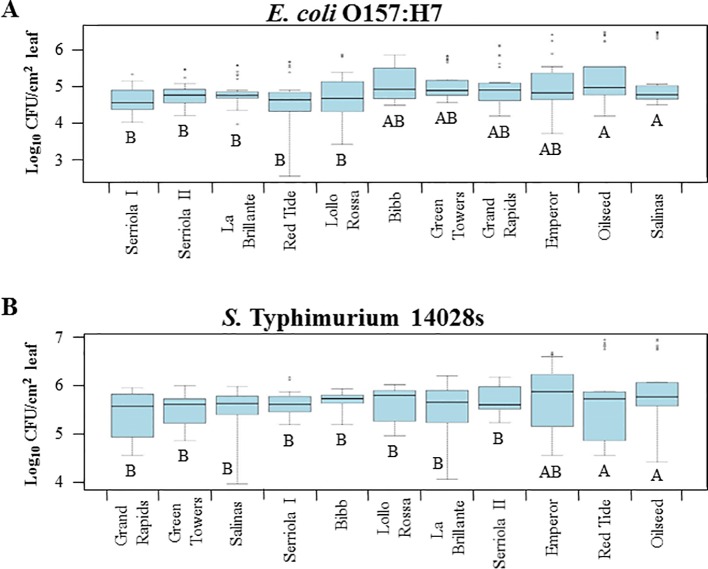
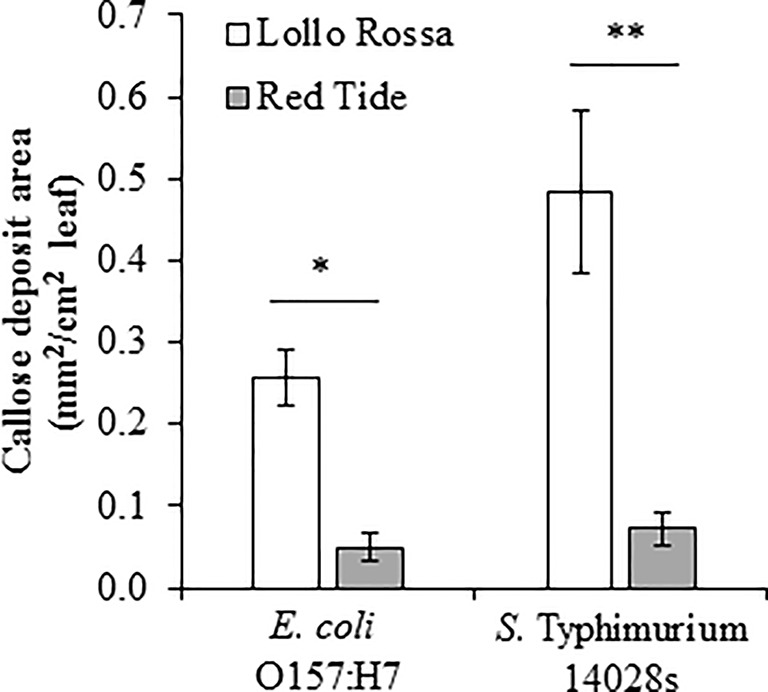
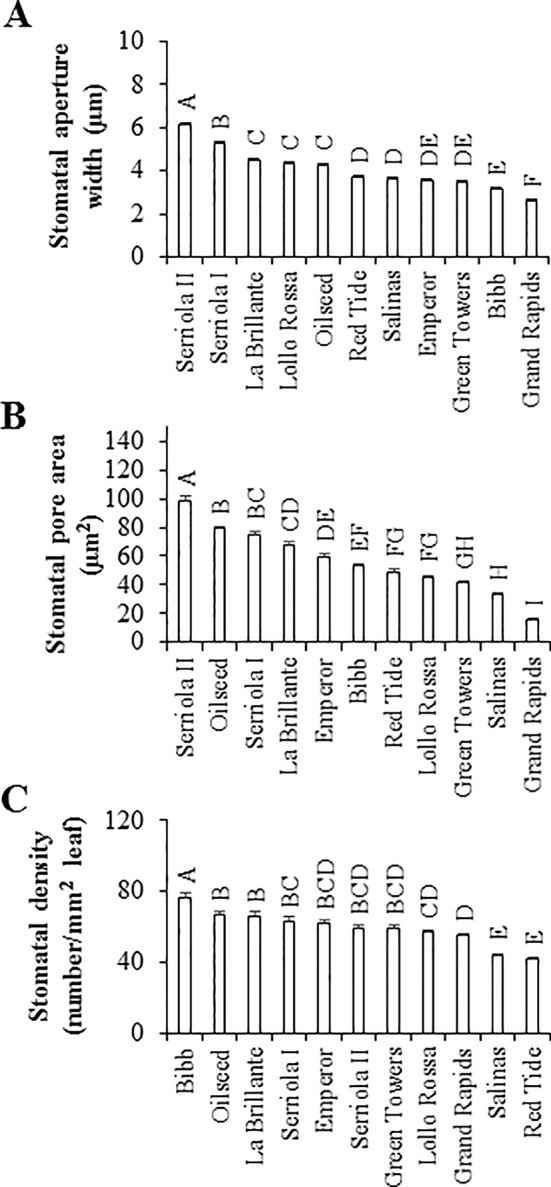
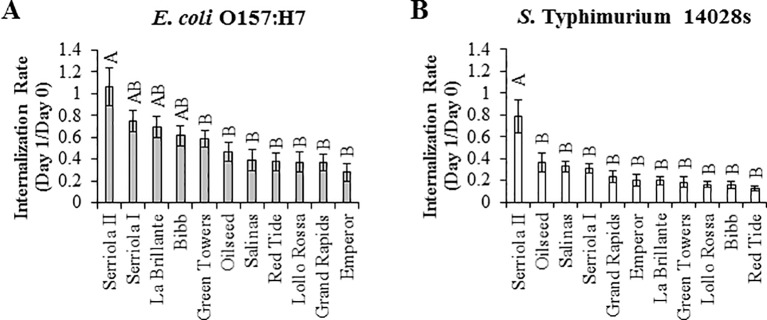
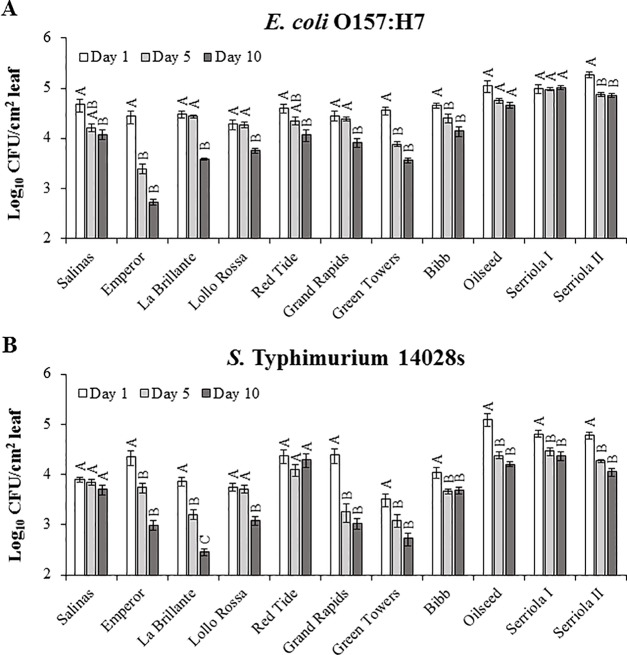
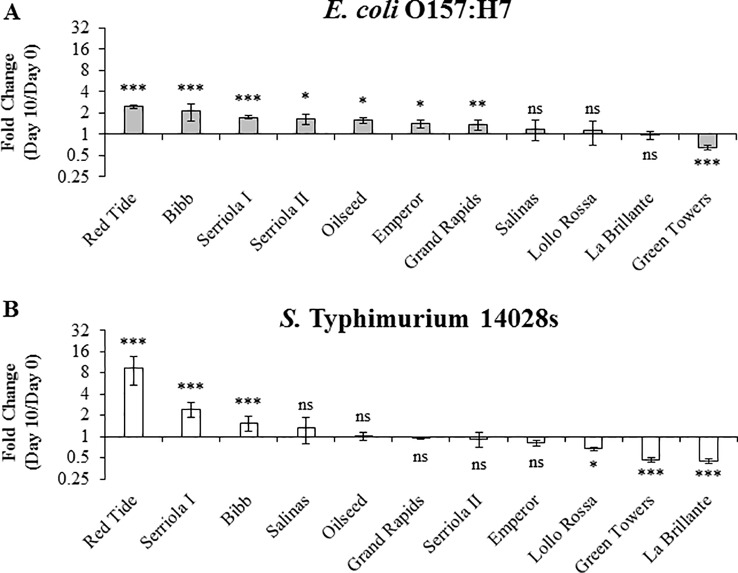
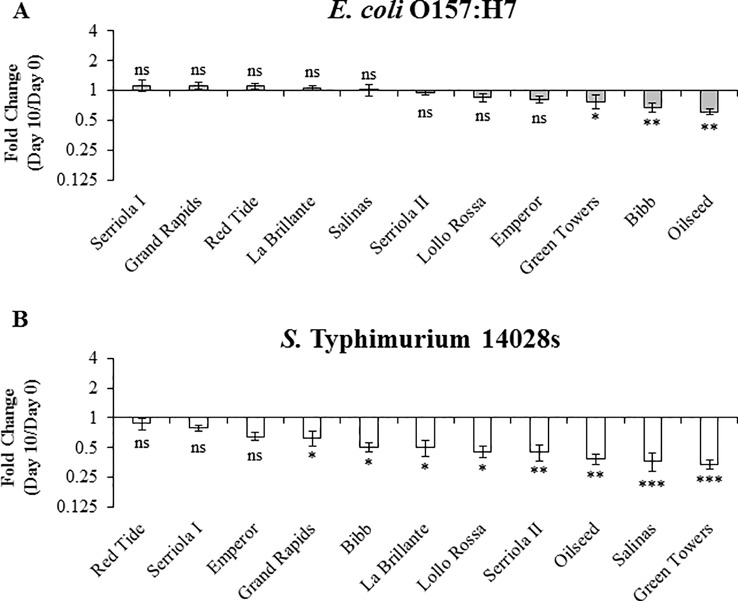
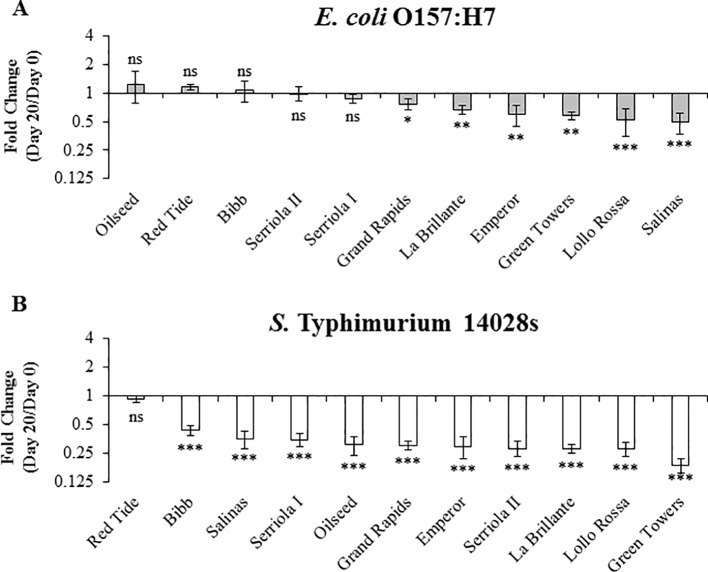
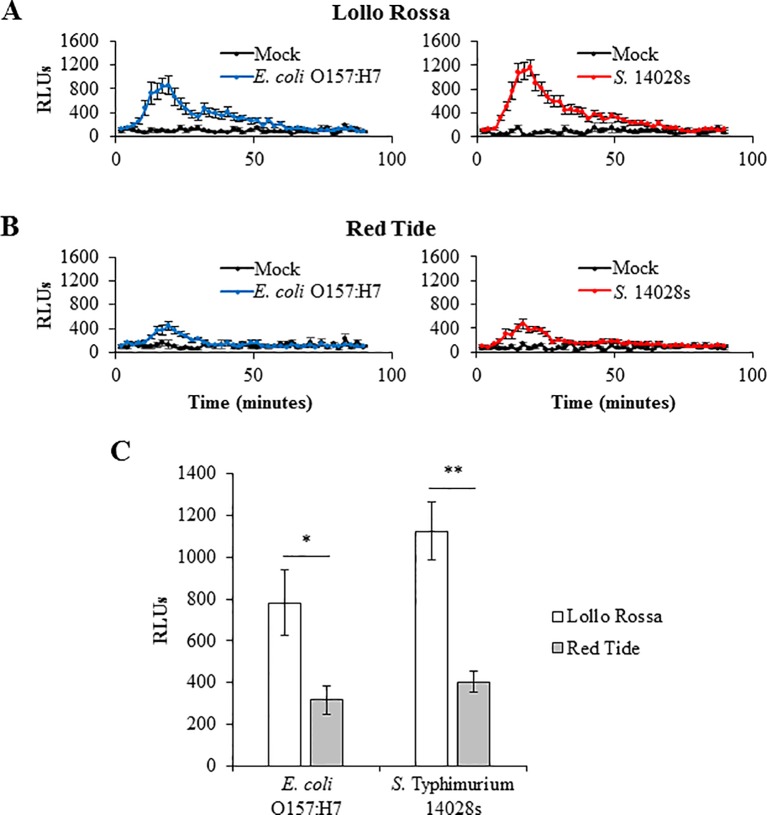
Fresh produce contaminated with human pathogens may result in foodborne disease outbreaks that cause a significant number of illnesses, hospitalizations, and death episodes affecting both public health and the agribusiness every year. The ability of these pathogens to survive throughout the food production chain is remarkable. Using a genetic approach, we observed that leaf colonization by serovar Typhimurium 14028s ( Typhimurium 14028s) and O157:H7 was significantly affected by genetic diversity of lettuce ( L. and L.). In particular, there was a significant variation among 11 lettuce genotypes in bacterial attachment, internalization, and apoplastic persistence after surface- and syringe-inoculation methods. We observed a significant correlation of the bacterial leaf internalization rate with stomatal pore traits (width and area). Moreover, bacterial apoplastic populations significantly decreased in 9 out of 11 lettuce genotypes after 10 days of surface inoculation. However, after syringe infiltration, populations of O157:H7 and Typhimurium 14028s showed positive, neutral, or negative net growth in a 10-day experimental period among seedlings of different lettuce types. The relative ability of the bacteria to persist in the apoplast of lettuce genotypes after syringe inoculation was minimally altered when assessed during a longer period (20 days) using 3.5- to 4-week-old plants. Interestingly, contrasting bacterial persistence in the lettuce genotypes Red Tide and Lollo Rossa was positively correlated with significant differences in the level of reactive oxygen species burst and callose deposition against Typhimurium 14028s and O157:H7 which are related to plant defense responses. Overall, we characterized the genetic diversity in the interaction between lettuce genotypes and enterobacteria Typhimurium 14028s and O157:H7 and discovered that this genetic diversity is linked to variations in plant immune responses towards these bacteria. These results provide opportunities to capitalize on plant genetics to reduce pathogen contamination of leaves.
受人类病原体污染的新鲜农产品可能导致食源性疾病暴发,每年造成大量疾病、住院和死亡事件,影响公众健康和农业综合企业。这些病原体在整个食品生产链中的生存能力很强。通过基因方法,我们观察到鼠伤寒血清型14028s(鼠伤寒14028s)和O157:H7在叶片上的定殖受到生菜(L.和L.)遗传多样性的显著影响。特别是,在通过表面接种和注射器接种方法后,11种生菜基因型在细菌附着、内化和质外体持久性方面存在显著差异。我们观察到细菌叶片内化率与气孔特征(宽度和面积)之间存在显著相关性。此外,在表面接种10天后,11种生菜基因型中有9种的细菌质外体数量显著减少。然而,在注射器浸润后,在不同生菜类型的幼苗中,O157:H7和鼠伤寒14028s的数量在10天的实验期内呈现正、中性或负净增长。当使用3.5至4周龄的植株在更长时间(20天)内进行评估时,注射器接种后细菌在生菜基因型质外体中持续存在的相对能力变化很小。有趣的是,生菜基因型“红潮”和“洛洛罗莎”中细菌持久性的差异与针对鼠伤寒14028s和O157:H7的活性氧爆发水平和胼胝质沉积的显著差异呈正相关,这些差异与植物防御反应有关。总体而言,我们表征了生菜基因型与肠道细菌鼠伤寒14028s和O