R.N.E Laboratory, Multidisciplinary Faculty of Taza, University Sidi Mohamed Ben Abdellah of Fez, Fez 30000, Morocco.
Science for Life Laboratory, Department of Applied Physics, KTH Royal Institute of Technology, SE100 44 Solna, Sweden.
Molecules. 2020 Feb 18;25(4):902. doi: 10.3390/molecules25040902.
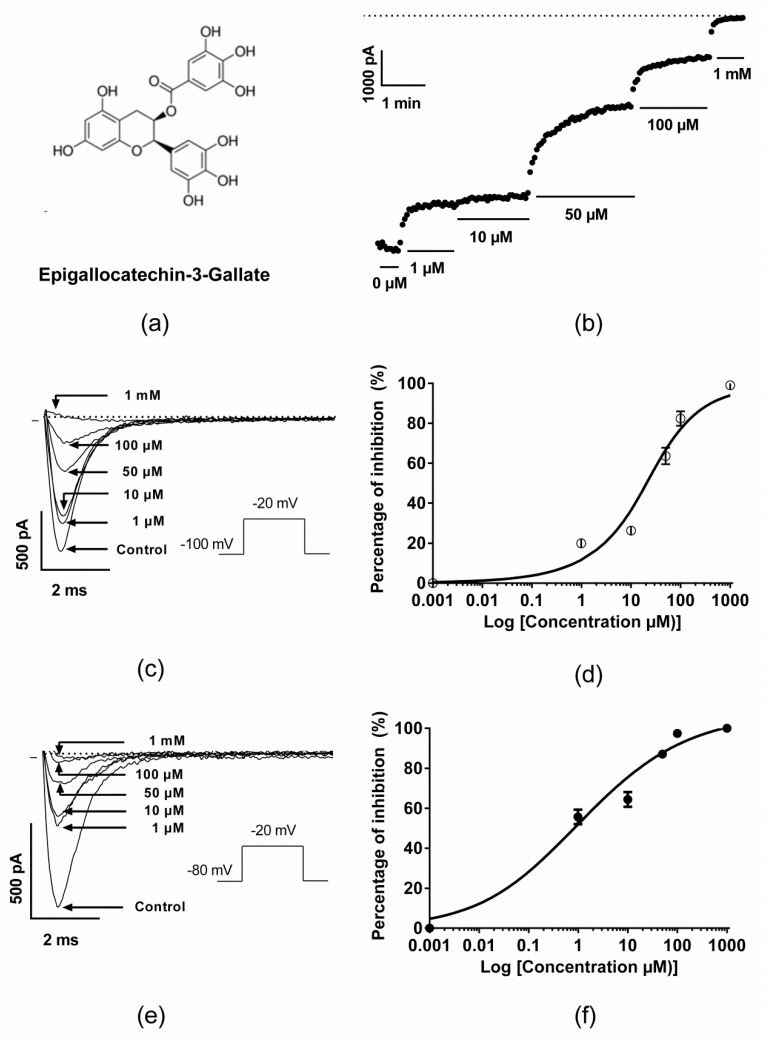
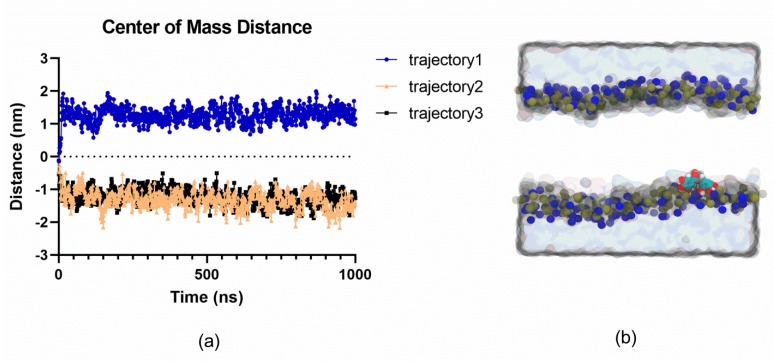
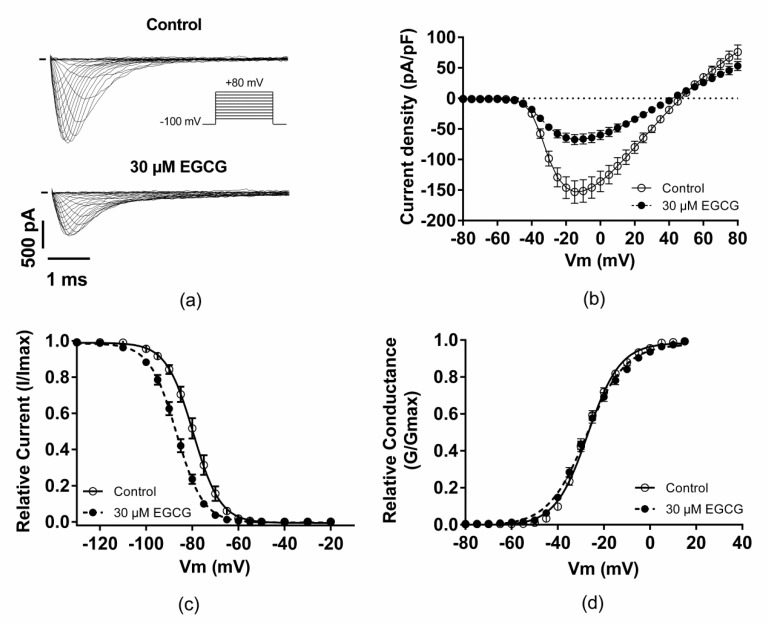
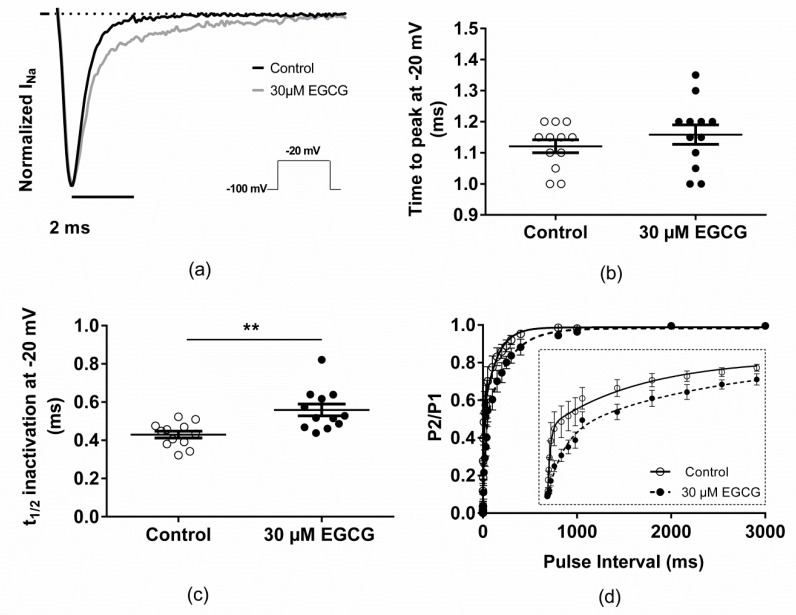
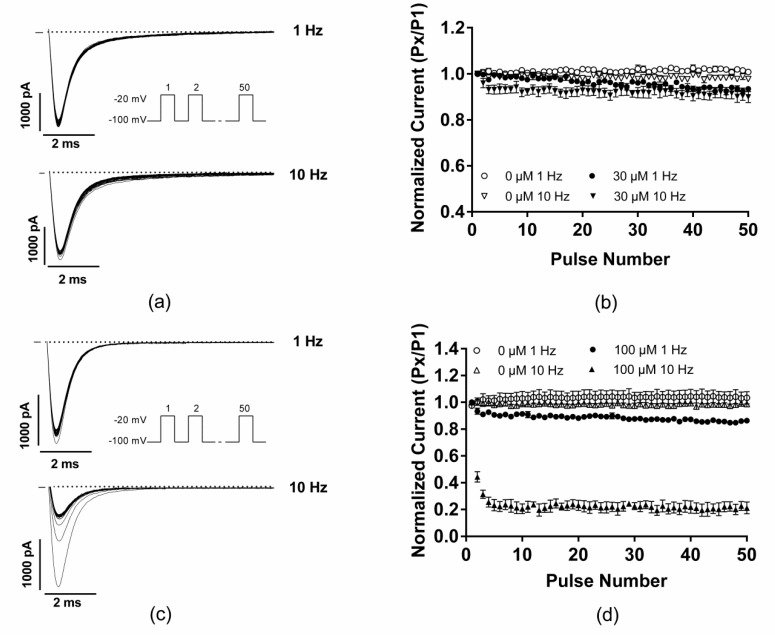
Epigallocatechin-3-Gallate (EGCG) has been extensively studied for its protective effect against cardiovascular disorders. This effect has been attributed to its action on multiple molecular pathways and transmembrane proteins, including the cardiac Na1.5 channels, which are inhibited in a dose-dependent manner. However, the molecular mechanism underlying this effect remains to be unveiled. To this aim, we have characterized the EGCG effect on Na1.5 using electrophysiology and molecular dynamics (MD) simulations. EGCG superfusion induced a dose-dependent inhibition of Na1.5 expressed in tsA201 cells, negatively shifted the steady-state inactivation curve, slowed the inactivation kinetics, and delayed the recovery from fast inactivation. However, EGCG had no effect on the voltage-dependence of activation and showed little use-dependent block on Na1.5 Finally, MD simulations suggested that EGCG does not preferentially stay in the center of the bilayer, but that it spontaneously relocates to the membrane headgroup region. Moreover, no sign of spontaneous crossing from one leaflet to the other was observed, indicating a relatively large free energy barrier associated with EGCG transport across the membrane. These results indicate that EGCG may exert its biophysical effect via access to its binding site through the cell membrane or via a bilayer-mediated mechanism.
没食子酸表没食子儿茶素酯(EGCG)因其对心血管疾病的保护作用而被广泛研究。这种作用归因于其对多种分子途径和跨膜蛋白的作用,包括心脏 Na1.5 通道,该通道以剂量依赖性方式被抑制。然而,这种作用的分子机制仍有待揭示。为此,我们使用电生理学和分子动力学(MD)模拟对 EGCG 对 Na1.5 的作用进行了表征。EGCG 灌流诱导 tsA201 细胞中表达的 Na1.5 呈剂量依赖性抑制,使稳态失活曲线负移,使失活动力学减慢,并延迟从快速失活中恢复。然而,EGCG 对激活的电压依赖性没有影响,对 Na1.5 表现出很小的使用依赖性阻滞。最后,MD 模拟表明,EGCG 不会优先留在双层的中心,而是自发地重新定位到膜头部区域。此外,没有观察到从一个叶层自发穿越到另一个叶层的迹象,表明 EGCG 跨膜转运存在相对较大的自由能障碍。这些结果表明,EGCG 可能通过细胞膜上的结合位点进入或通过双层介导的机制发挥其生物物理作用。