State Key Laboratory for Conservation and Utilization of Subtropical Agro-Bioresources, South China Agricultural University, Guangzhou, 510642, China.
Guangdong Provincial Key Laboratory of Plant Molecular Breeding, South China Agricultural University, Guangzhou, 510642, China.
BMC Plant Biol. 2020 Feb 21;20(1):83. doi: 10.1186/s12870-020-2291-z.
Neo-tetraploid rice, which is a new germplasm developed from autotetraploid rice, has a powerful biological and yield potential and could be used for commercial utilization. The length of panicle, as a part of rice panicle architecture, contributes greatly to high yield. However, little information about long panicle associated with heterosis or hybrid vigor is available in neo-tetraploid rice.
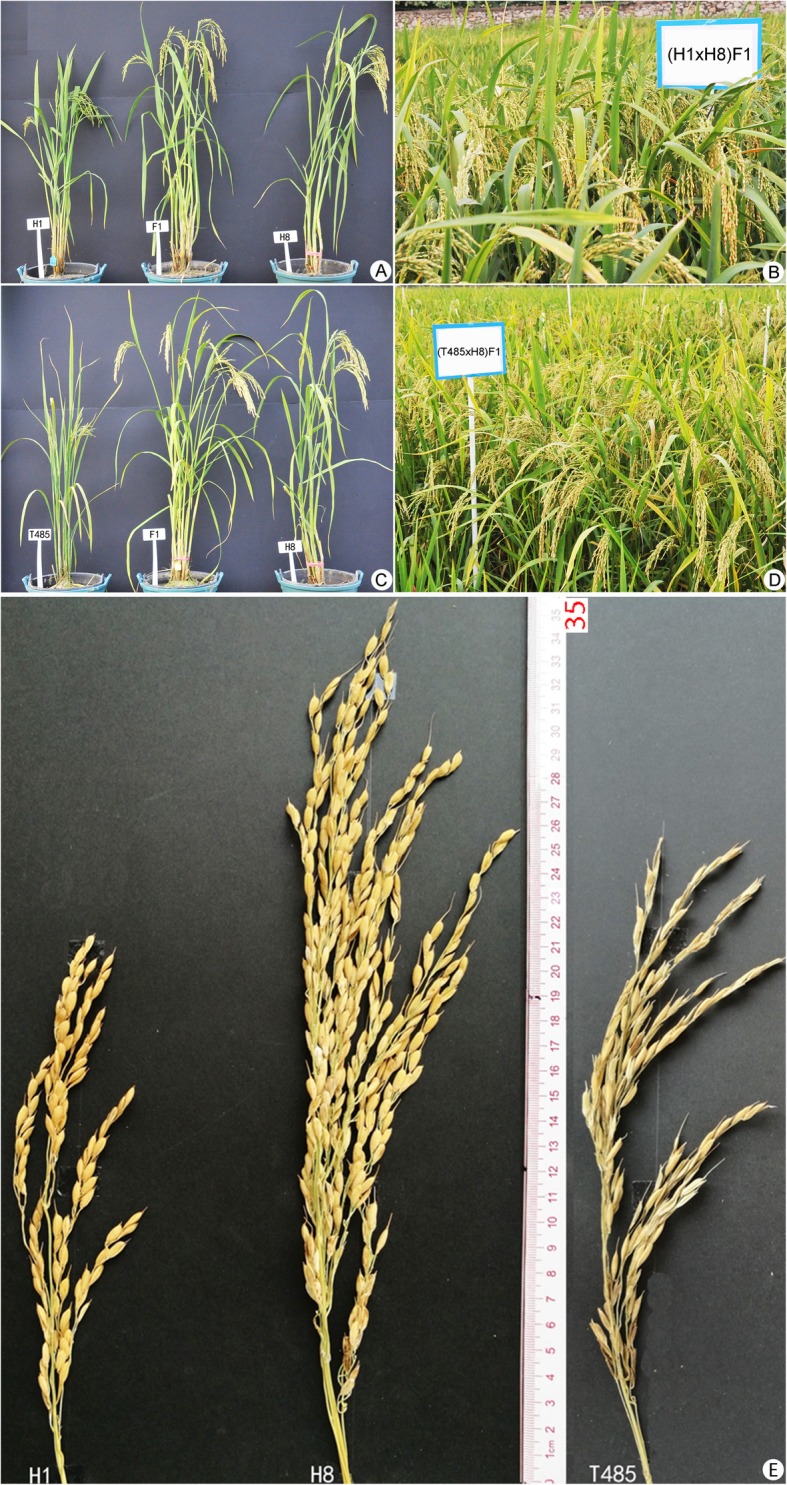
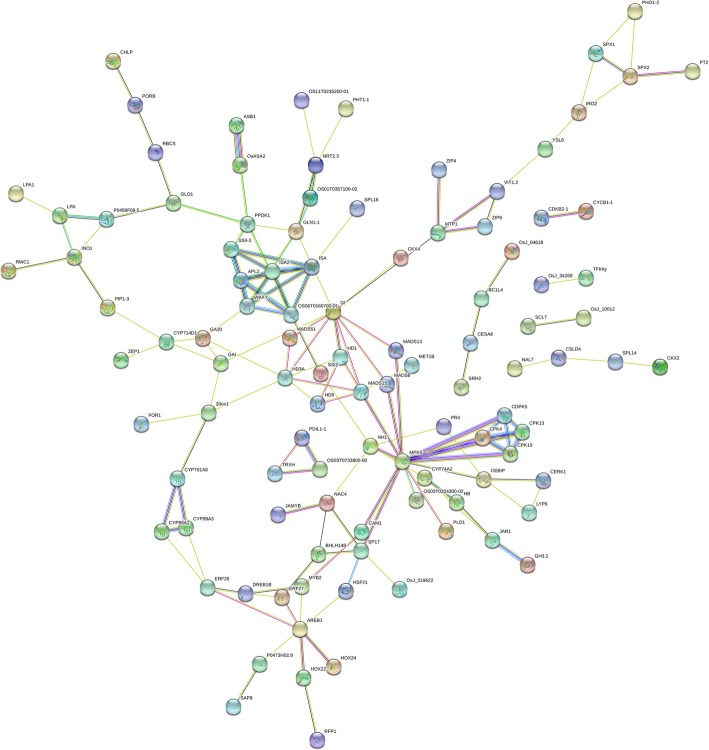
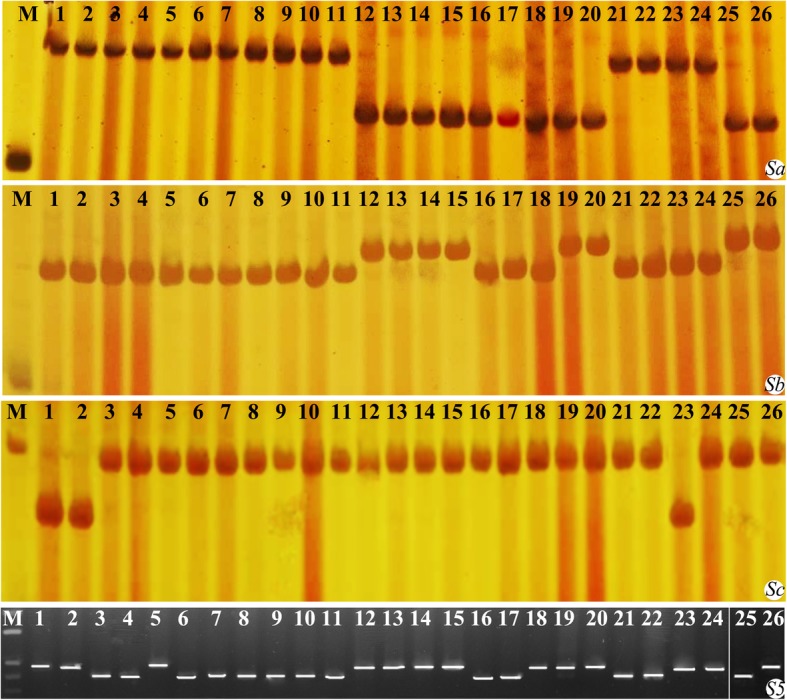
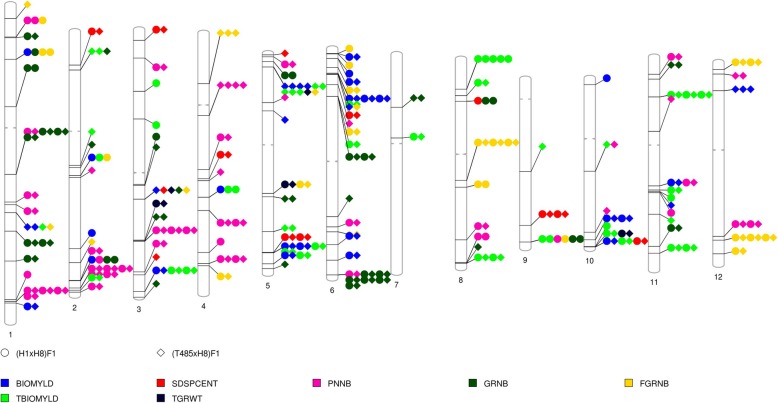
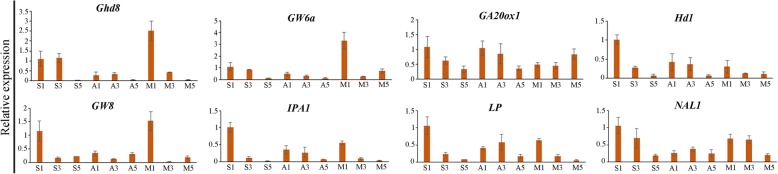
In the present study, we developed a neo-tetraploid rice line, Huaduo 8 (H8), with long panicles and harboring wide-compatibility genes for pollen and embryo sac fertility. All the hybrids generated by H8 produced significant high-parent yield heterosis and displayed long panicles similar to H8. RNA-seq analysis detected a total of 4013, 7050, 6787 and 6195 differentially expressed genes uniquely belonging to F and specifically (DEGFu-sp) associated with leaf, sheath, main panicle axis and spikelet in the two hybrids, respectively. Of these DEGFu-sp, 279 and 89 genes were involved in kinase and synthase, and 714 cloned genes, such as GW8, OsGA20ox1, Ghd8, GW6a, and LP1, were identified and validated by qRT-PCR. A total of 2925 known QTLs intervals, with an average of 1~100 genes per interval, were detected in both hybrids. Of these, 109 yield-related QTLs were associated with seven important traits in rice. Moreover, 1393 non-additive DEGs, including 766 up-regulated and 627 down-regulated, were detected in both hybrids. Importantly, eight up-regulated genes associated with panicle were detected in young panicles of the two hybrids compared to their parents by qRT-PCR. Re-sequencing analysis depicted that LP (a gene controlling long panicle) sequence of H8 was different from many other neo-tetraploid rice and most of the diploid and autotetraploid lines. The qRT-PCR results showed that LP was up-regulated in the hybrid compared to its parents at very young stage of panicle development.
These results suggested that H8 could overcome the intersubspecific autotetraploid hybrid rice sterility caused by embryo sac and pollen sterility loci. Notably, long panicles of H8 showed dominance phenomenon and played an important role in yield heterosis, which is a complex molecular mechanism. The neo-tetraploid rice is a useful germplasm to attain high yield of polyploid rice.
同源四倍体水稻是一种新型的种质资源,由同源四倍体水稻衍生而来,具有强大的生物学和产量潜力,可用于商业利用。穗长作为水稻穗型结构的一部分,对高产有很大的贡献。然而,同源四倍体水稻中与杂种优势或杂种活力相关的长穗的信息很少。
本研究开发了一个长穗同源四倍体水稻品系 Huaduo 8(H8),该品系具有广亲和性的花粉和胚囊育性基因。H8 产生的所有杂种均表现出显著的高亲产量杂种优势,并且穗长与 H8 相似。RNA-seq 分析分别在两个杂种的叶、鞘、主穗轴和小穗中检测到总共 4013、7050、6787 和 6195 个特异表达基因(DEGFu-sp)。其中,279 和 89 个基因参与激酶和合成酶,通过 qRT-PCR 鉴定和验证了 714 个克隆基因,如 GW8、OsGA20ox1、Ghd8、GW6a 和 LP1。在两个杂种中总共检测到 2925 个已知的 QTL 区间,每个区间平均有 1-100 个基因。其中,109 个与产量相关的 QTL 与水稻的七个重要性状相关。此外,在两个杂种中检测到 1393 个非加性 DEGs,包括 766 个上调和 627 个下调。重要的是,通过 qRT-PCR 在两个杂种的幼穗中检测到 8 个与穗长相关的上调基因。重测序分析表明,H8 的 LP(控制长穗的基因)序列与许多其他同源四倍体水稻以及大多数二倍体和同源四倍体系不同。qRT-PCR 结果表明,LP 在杂种中比其父母在幼穗发育的非常早期就上调。
这些结果表明,H8 可以克服由胚囊和花粉不育基因座引起的亚种间同源四倍体杂交水稻的不育性。值得注意的是,H8 的长穗表现出显性现象,在产量杂种优势中起着重要作用,这是一个复杂的分子机制。同源四倍体水稻是获得多倍体水稻高产的有用种质资源。