Key Laboratory of Zoonosis Research, Ministry of Education, Institute of Zoonosis/College of Veterinary Medicine, Jilin University, Changchun, 130000, China.
Institute of Animal Sciences, Chinese Academy of Agricultural Sciences, Beijing, 100193, China.
Vet Res. 2020 Feb 21;51(1):17. doi: 10.1186/s13567-020-0741-0.
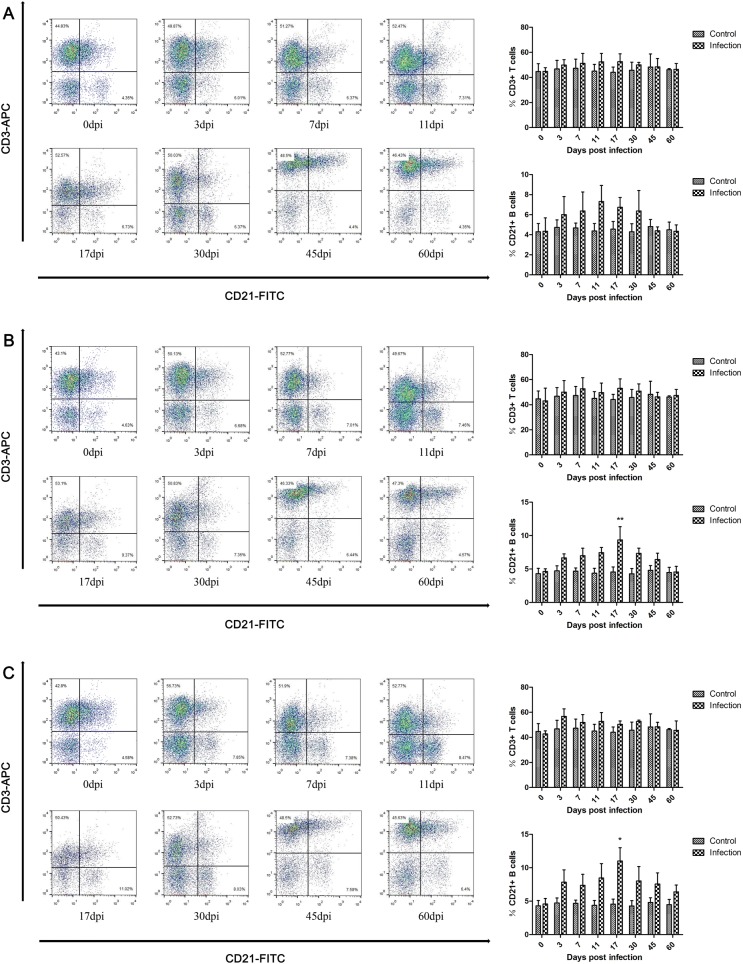
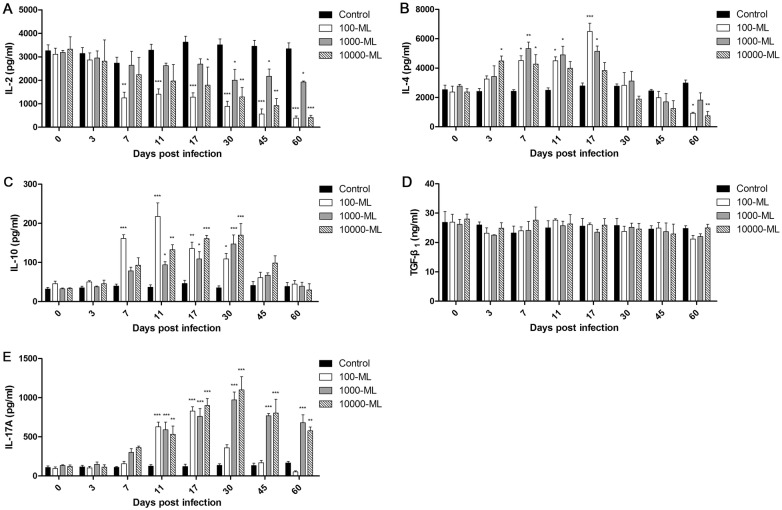
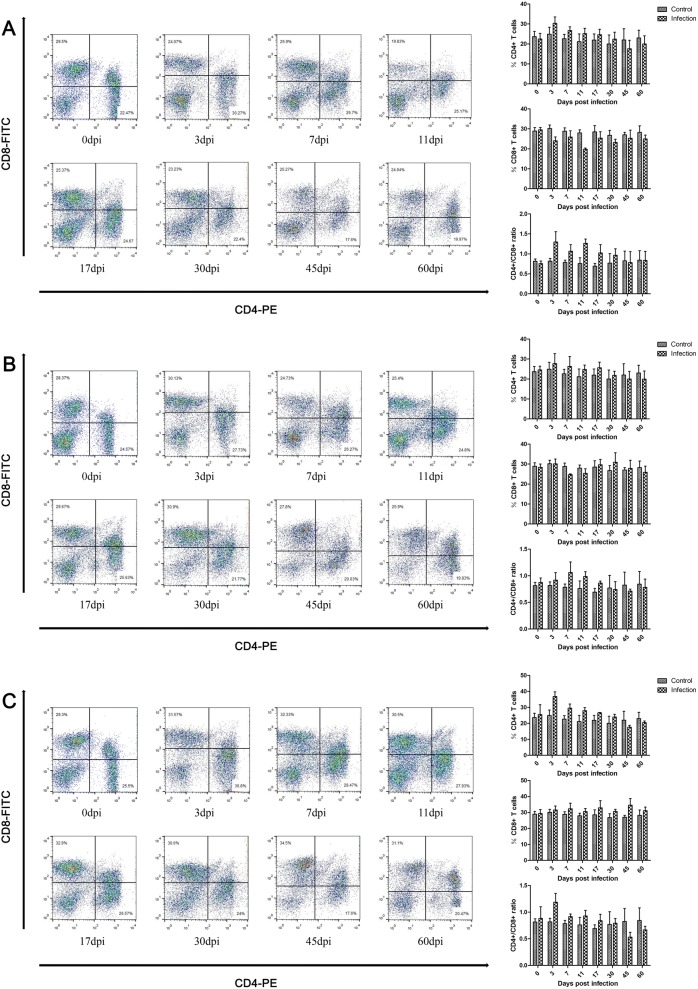
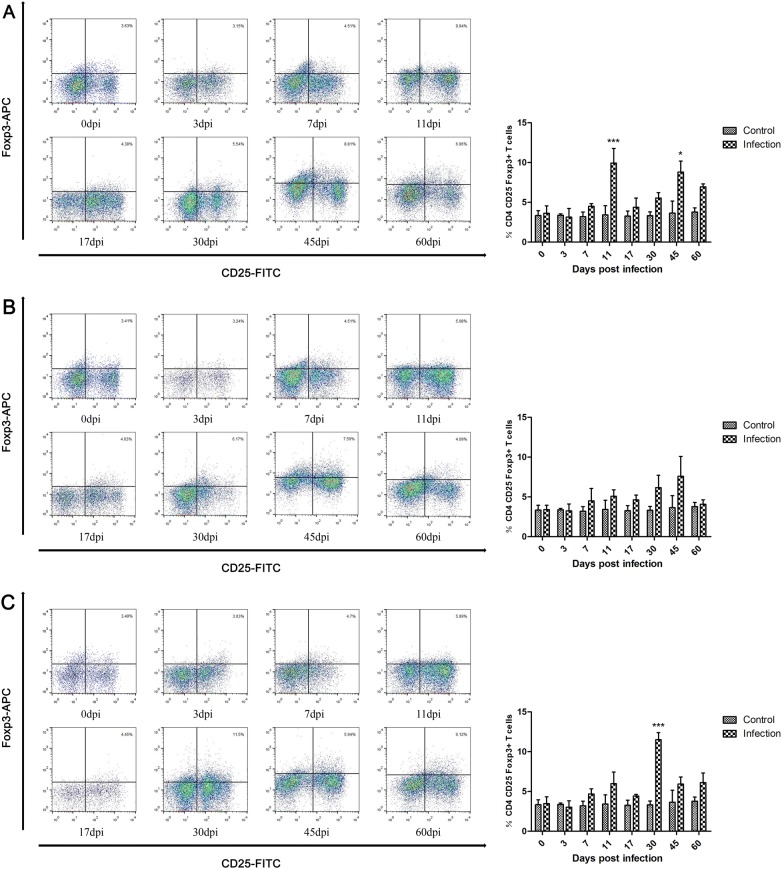
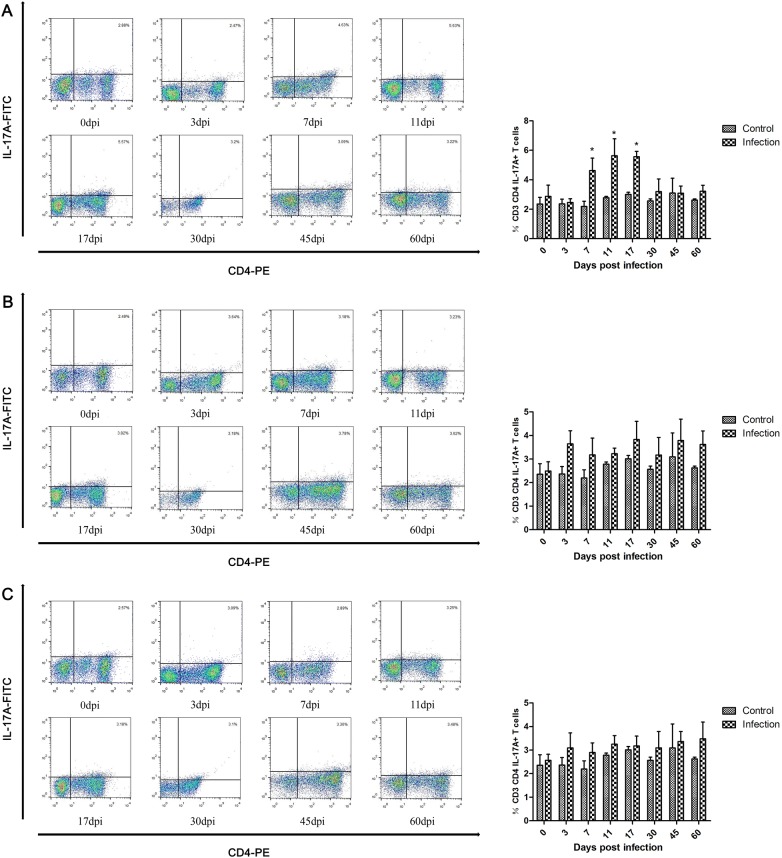
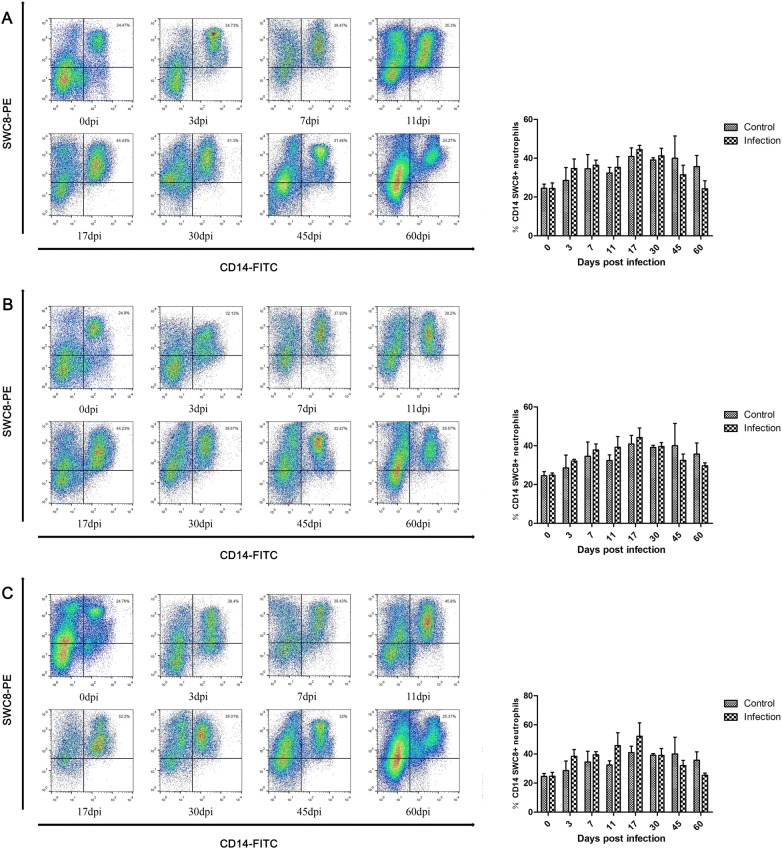
Trichinellosis, which is caused by Trichinella spiralis (T. spiralis), is a serious zoonosis. Pigs play an important role in the transmission of human trichinellosis. Characterizing the immune response to T. spiralis infection is key to elucidating host-parasite interactions. However, most studies on the immune response to T. spiralis infection have employed murine models. In this study, we investigated the immune response to T. spiralis infection in pigs. The results showed that the average numbers of larvae per gram (lpg) for the 100-muscle larvae (ML), 1000-ML, and 10 000-ML groups were 1.502, 35.947, and 398.811, respectively. The percentages of CD3+ T cells, B cells, CD4+ T cells, Treg cells, and Th17 cells were elevated in the infection groups compared to the control animals. In contrast, CD8+ T cell percentages were reduced after infection in the low-dose group. The number of neutrophils was increased at 3-17 days post-infection (dpi). Th1 cytokine IL-2 levels were significantly decreased at 7 dpi, and Th2 cytokine IL-4 levels were significantly elevated at 3 dpi. Treg cytokine IL-10 levels were significantly elevated between 7 dpi and 30 dpi. Th17 cytokine IL-17A levels were significantly increased beginning at 11 dpi. These results confirmed that pigs infected with T. spiralis predominantly induced Th2 and Treg immune responses, which suppress the Th1 immune responses. This study provides novel insights into the immune response of pigs infected with T. spiralis.
旋毛虫病是由旋毛形线虫(T. spiralis)引起的一种严重的人畜共患病。猪在人旋毛虫病的传播中起着重要作用。阐明宿主-寄生虫相互作用的关键是表征对旋毛形线虫感染的免疫反应。然而,大多数关于旋毛形线虫感染免疫反应的研究都采用了鼠模型。在这项研究中,我们研究了猪对旋毛形线虫感染的免疫反应。结果表明,100 肌肉幼虫(ML)、1000-ML 和 10000-ML 组的幼虫每克(lpg)平均数量分别为 1.502、35.947 和 398.811。与对照组相比,感染组的 CD3+T 细胞、B 细胞、CD4+T 细胞、Treg 细胞和 Th17 细胞的百分比升高。相反,在低剂量组中,感染后 CD8+T 细胞的百分比降低。感染后 3-17 天,中性粒细胞数量增加。Th1 细胞因子 IL-2 的水平在 7dpi 时显著降低,Th2 细胞因子 IL-4 的水平在 3dpi 时显著升高。Treg 细胞因子 IL-10 的水平在 7dpi 至 30dpi 之间显著升高。Th17 细胞因子 IL-17A 的水平从 11dpi 开始显著增加。这些结果证实,感染旋毛形线虫的猪主要诱导 Th2 和 Treg 免疫反应,从而抑制 Th1 免疫反应。本研究为感染旋毛形线虫的猪的免疫反应提供了新的见解。