Noh Myung Hyun, Lim Hyun Gyu, Moon Daeyeong, Park Sunghoon, Jung Gyoo Yeol
Department of Chemical Engineering, Pohang University of Science and Technology, 77 Cheongam-ro, Nam-gu, Pohang, Gyeongsangbuk-do 37673, Korea.
School of Energy and Chemical Engineering, Ulsan National Institute of Science and Technology, 50 UNIST-Ro, Ulju-gun, Ulsan, Korea.
iScience. 2020 Mar 27;23(3):100890. doi: 10.1016/j.isci.2020.100890. Epub 2020 Feb 7.
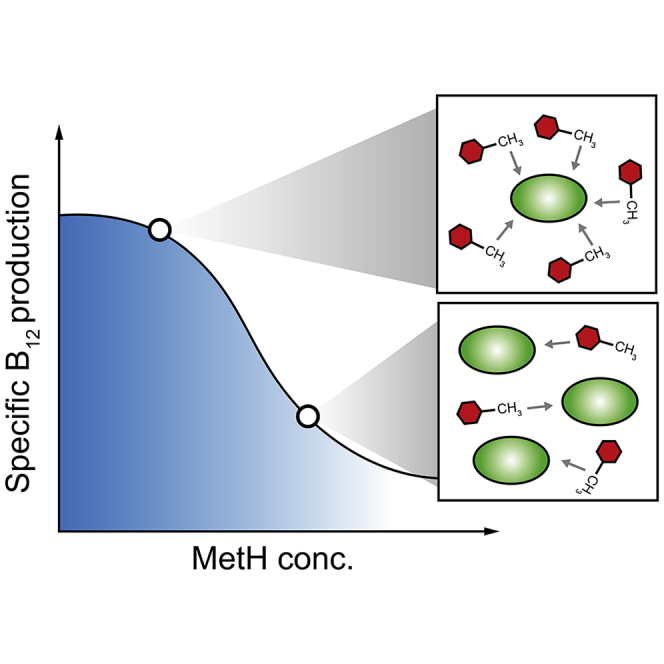
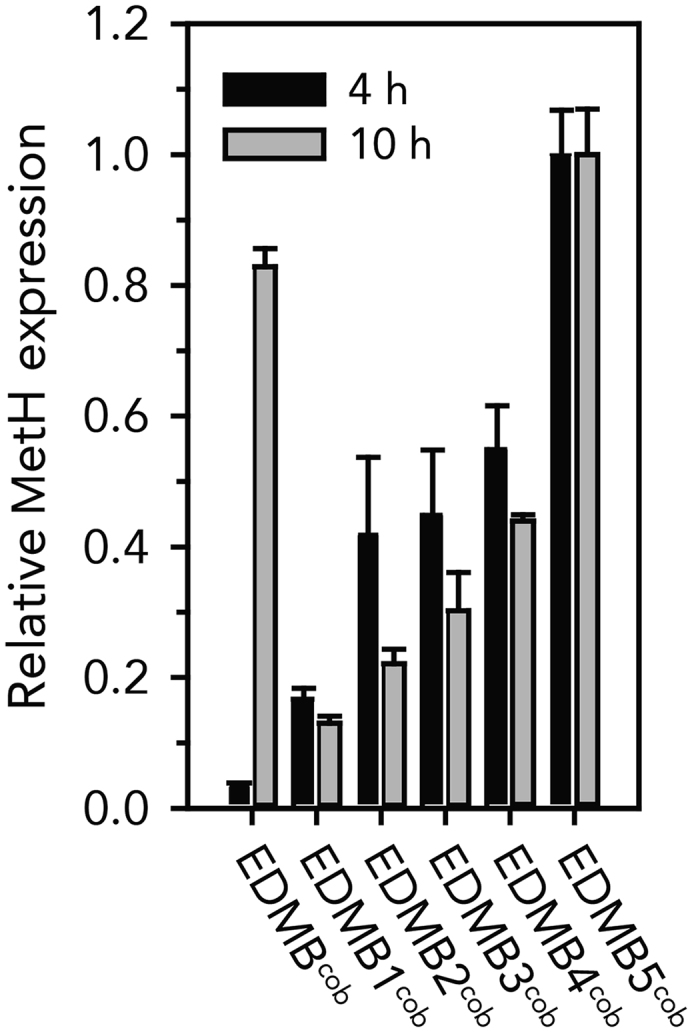
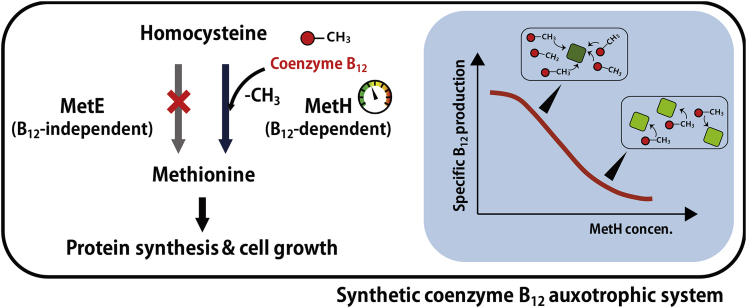
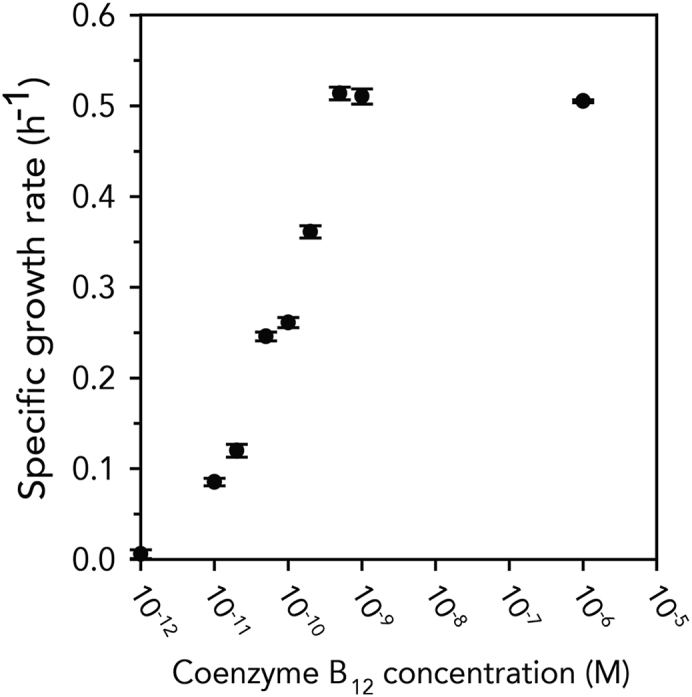
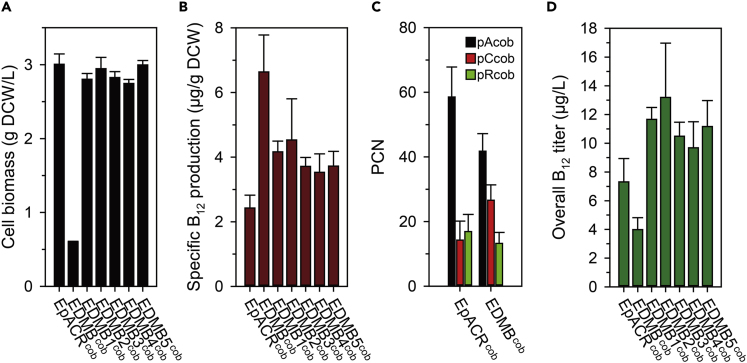
The production of coenzyme B using well-characterized microorganisms, such as Escherichia coli, has recently attracted considerable attention to meet growing demands of coenzyme B in various applications. In the present study, we designed an auxotrophic selection strategy and demonstrated the enhanced production of coenzyme B using a previously engineered coenzyme B-producing E. coli strain. To select a high producer, the coenzyme B-independent methionine synthase (metE) gene was deleted in E. coli, thus limiting its methionine synthesis to only that via coenzyme B-dependent synthase (encoded by metH). Following the deletion of metE, significantly enhanced production of the specific coenzyme B validated the coenzyme B-dependent auxotrophic growth. Further precise tuning of the auxotrophic system by varying the expression of metH substantially increased the cell biomass and coenzyme B production, suggesting that our strategy could be effectively applied to E. coli and other coenzyme B-producing strains.
利用特征明确的微生物(如大肠杆菌)生产辅酶B,最近已引起了相当大的关注,以满足各种应用中对辅酶B不断增长的需求。在本研究中,我们设计了一种营养缺陷型选择策略,并证明了使用先前工程改造的产辅酶B大肠杆菌菌株可提高辅酶B的产量。为了筛选高产菌株,在大肠杆菌中删除了不依赖辅酶B的甲硫氨酸合酶(metE)基因,从而将其甲硫氨酸合成限制为仅通过依赖辅酶B的合酶(由metH编码)进行。在删除metE后,特定辅酶B产量的显著提高验证了依赖辅酶B的营养缺陷型生长。通过改变metH的表达进一步精确调节营养缺陷型系统,显著增加了细胞生物量和辅酶B产量,这表明我们的策略可以有效地应用于大肠杆菌和其他产辅酶B的菌株。