Department of Statistcs, Data Science and Epidemiology, Swinburne University of Technology, Hawthorn, Victoria, Australia
BMJ Open. 2020 Feb 20;10(2):e034523. doi: 10.1136/bmjopen-2019-034523.
This investigation expected to validate the psychometric properties of the modified seven-item Kessler psychological distress scale (K7) for measuring psychological distress in healthy rural population of Bangladesh.
Cross-sectional study.
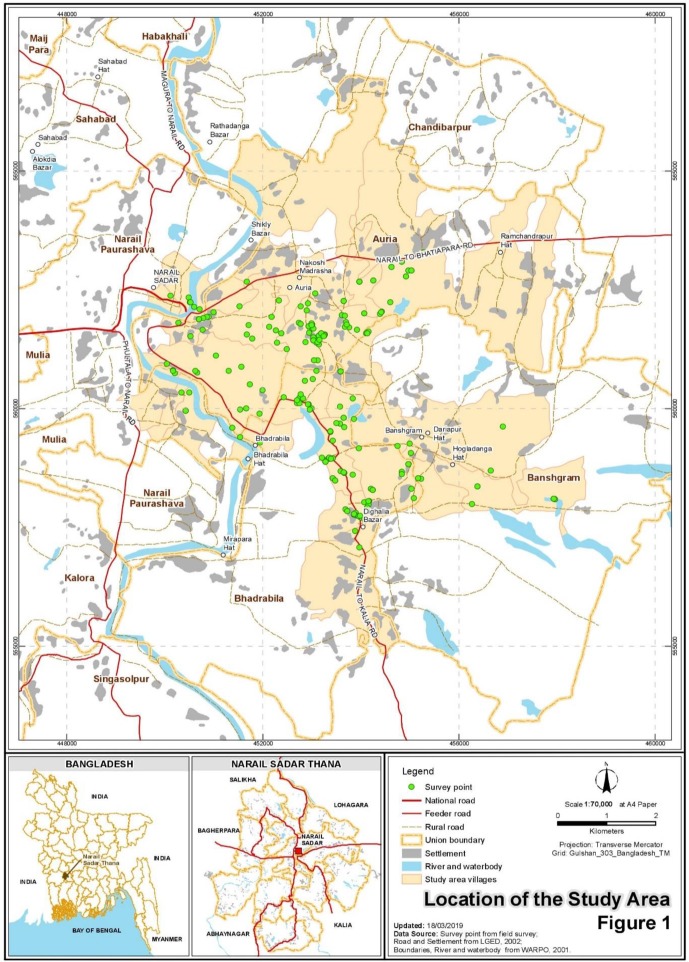
Narail district, Bangladesh.
A random sample of 300 adults of age 18-90 years were recruited. Face-to-face interviews were conducted between July and August 2018 using an Android phone installed with a mobile data collection application known as CommCare.
Validation of the K7 was the major outcome. Sociodemographic factors were measured to assess for Differential Item Functioning to check if the tool functions equally in different factors. Rasch analysis was carried out for the validation of the K7 scale in the healthy rural population of Bangladesh. RUMM2030 was used for the analyses.
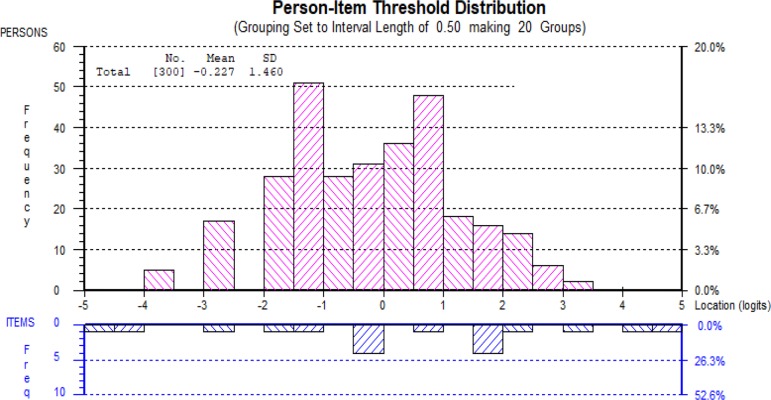
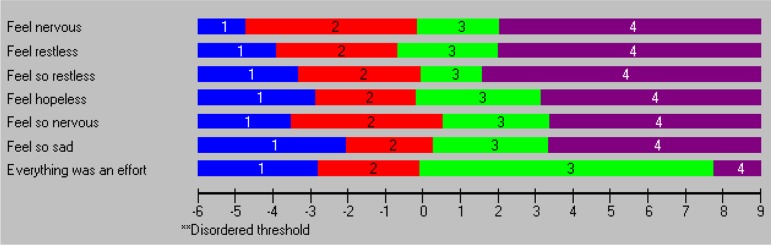
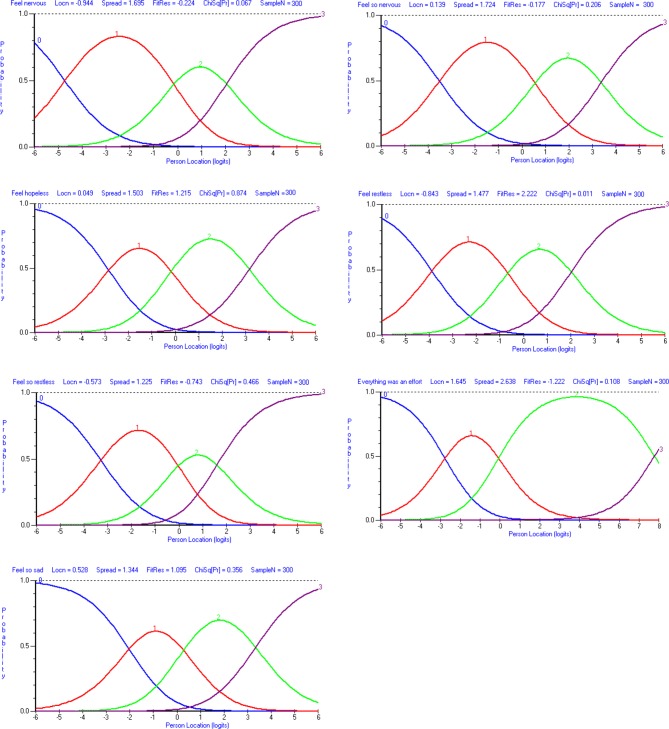
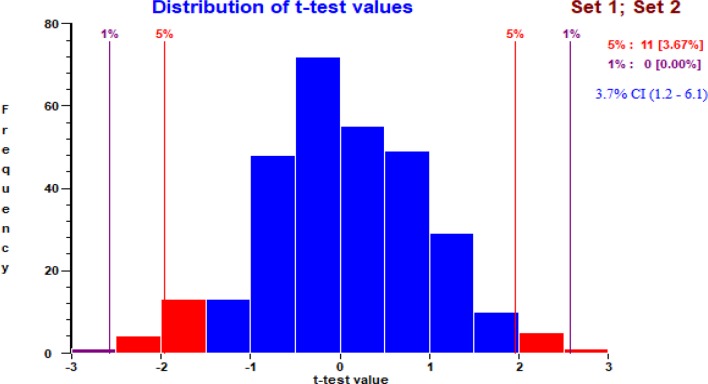
Results showed good overall fit, as indicated by a non-significant item-trait interaction (χ=44.54, df=28, p=0.0245) compared with a Bonferroni adjusted p value of 0.007. Both item fit (mean=0.30, SD 1.22) and person fit residuals (mean=-0.18, SD 0.85) showed perfect fit. Reliability was very good as indicated by a Person Separation Index=0.85 and Cronbach's alpha=0.89. All individual items were ordered thresholds. The K7 scale showed adequate reliability, unidimensionality and was free from local dependency. The K7 scale also showed similar functioning for adults and older adults, males and females, no education and any level of education, and at least some financial instability versus no financial instability.
Validation of K7 scale confirmed that the tool is suitable for measuring psychological distress among the rural Bangladeshi population. Further research should validate the K7 scale in different rural settings in Bangladesh to determine a valid cut-off score for assessment of severity levels of psychological distress. The K7 scale should also be tested in other developing countries where sociodemographic characteristics are similar to those of Bangladesh.
本研究旨在验证改良后的七项 Kessler 心理困扰量表(K7)在孟加拉国农村健康人群中测量心理困扰的心理测量特性。
横断面研究。
孟加拉国纳拉扬区。
招募了年龄在 18-90 岁之间的 300 名成年人作为随机样本。2018 年 7 月至 8 月期间,使用安装有称为 CommCare 的移动数据收集应用程序的 Android 手机进行了面对面访谈。
K7 的验证是主要结局。测量了社会人口统计学因素,以评估项目间功能差异,以检查该工具在不同因素下是否具有同等功能。对孟加拉国农村健康人群的 K7 量表进行了 Rasch 分析。使用 RUMM2030 进行分析。
结果显示,总体拟合良好,表明项目特征相互作用不显著(χ=44.54,df=28,p=0.0245),与 Bonferroni 调整的 p 值 0.007 相比具有统计学意义。项目拟合(平均值=0.30,标准差 1.22)和个体拟合残差(平均值=-0.18,标准差 0.85)均显示出完美拟合。个体分离指数为 0.85,克朗巴赫α系数为 0.89,表明可靠性非常好。所有单个项目的阈值都符合要求。K7 量表具有足够的可靠性、单维性,且无局部依赖性。K7 量表在成年人和老年人、男性和女性、无教育和任何教育水平以及至少一些财务不稳定与无财务不稳定的人群中具有相似的功能。
K7 量表的验证结果表明,该工具适用于测量孟加拉国农村人口的心理困扰。应在孟加拉国的不同农村环境中进一步验证 K7 量表,以确定评估心理困扰严重程度的有效截断值。还应在社会人口统计学特征与孟加拉国相似的其他发展中国家测试 K7 量表。