Department of Medicine, University of California, Irvine, California.
Institute for Memory Impairments and Neurological Disorders, University of California, Irvine, California.
Aging Cell. 2020 Mar;19(3):e13118. doi: 10.1111/acel.13118. Epub 2020 Feb 22.
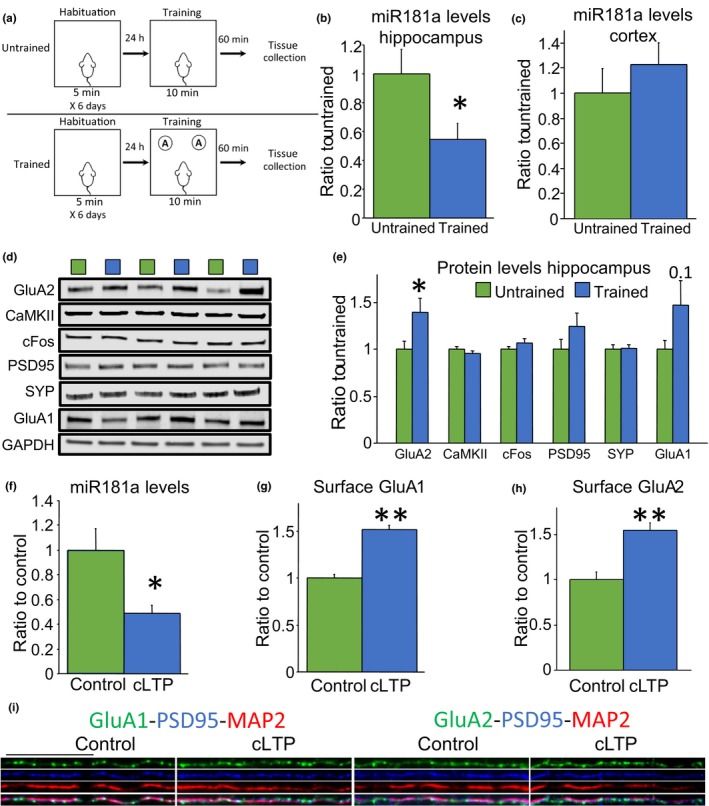
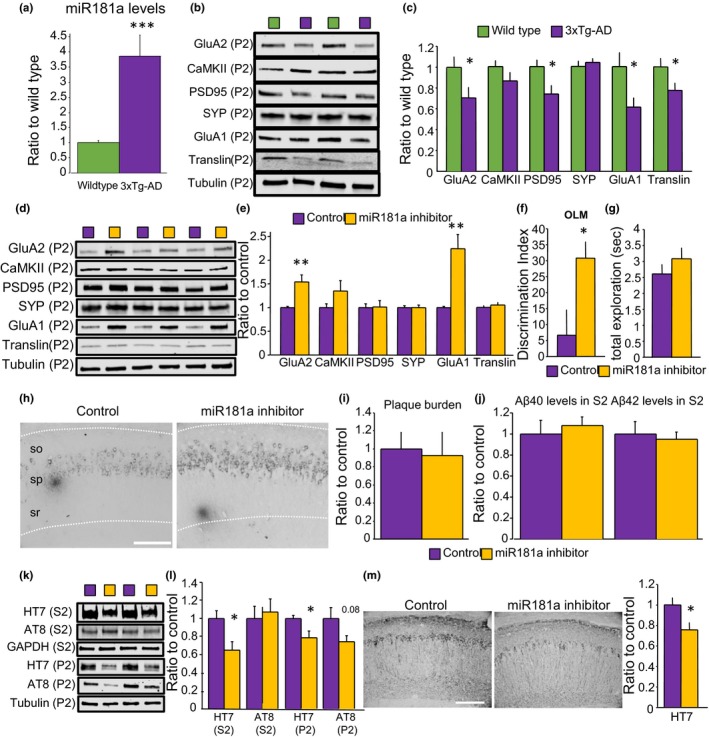
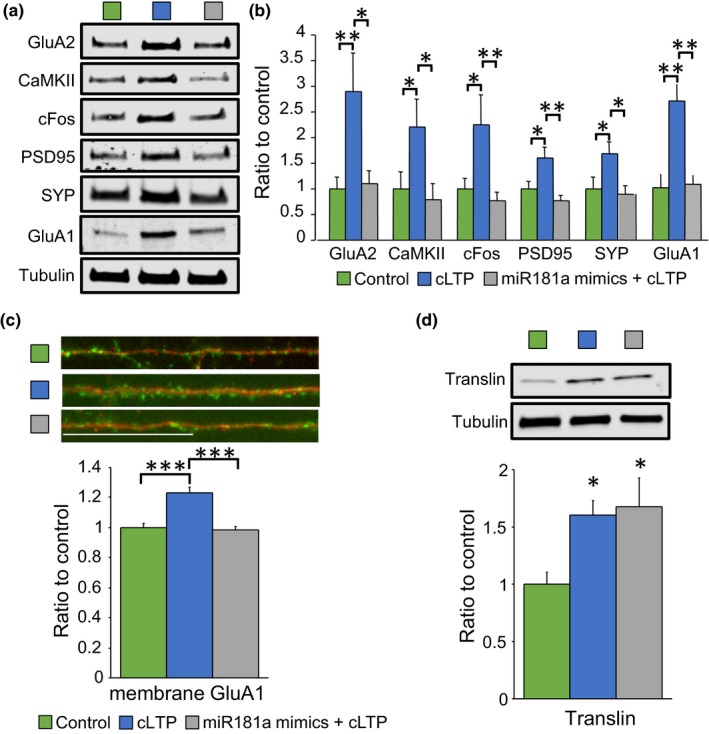
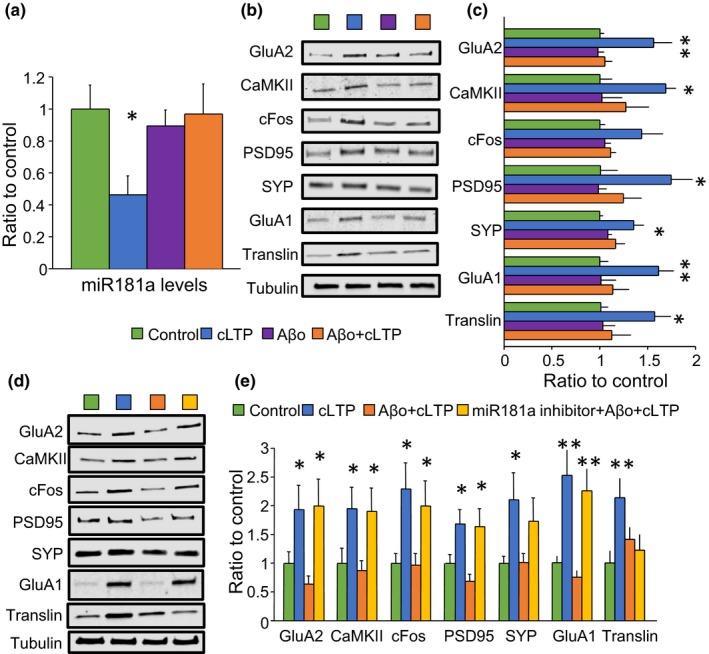
MicroRNAs play a pivotal role in rapid, dynamic, and spatiotemporal modulation of synaptic functions. Among them, recent emerging evidence highlights that microRNA-181a (miR-181a) is particularly abundant in hippocampal neurons and controls the expression of key plasticity-related proteins at synapses. We have previously demonstrated that miR-181a was upregulated in the hippocampus of a mouse model of Alzheimer's disease (AD) and correlated with reduced levels of plasticity-related proteins. Here, we further investigated the underlying mechanisms by which miR-181a negatively modulated synaptic plasticity and memory. In primary hippocampal cultures, we found that an activity-dependent upregulation of the microRNA-regulating protein, translin, correlated with reduction of miR-181a upon chemical long-term potentiation (cLTP), which induced upregulation of GluA2, a predicted target for miR-181a, and other plasticity-related proteins. Additionally, Aβ treatment inhibited cLTP-dependent induction of translin and subsequent reduction of miR-181a, and cotreatment with miR-181a antagomir effectively reversed the effects elicited by Aβ but did not rescue translin levels, suggesting that the activity-dependent upregulation of translin was upstream of miR-181a. In mice, a learning episode markedly decreased miR-181a in the hippocampus and raised the protein levels of GluA2. Lastly, we observed that inhibition of miR-181a alleviated memory deficits and increased GluA2 and GluA1 levels, without restoring translin, in the 3xTg-AD model. Taken together, our results indicate that miR-181a is a major negative regulator of the cellular events that underlie synaptic plasticity and memory through AMPA receptors, and importantly, Aβ disrupts this process by suppressing translin and leads to synaptic dysfunction and memory impairments in AD.
微小 RNA 在突触功能的快速、动态和时空调节中发挥关键作用。其中,最近出现的证据强调,微小 RNA-181a(miR-181a)在海马神经元中特别丰富,并控制突触处关键可塑性相关蛋白的表达。我们之前已经证明,阿尔茨海默病(AD)小鼠模型海马中的 miR-181a 上调,并与可塑性相关蛋白水平降低相关。在这里,我们进一步研究了 miR-181a 负调控突触可塑性和记忆的潜在机制。在原代海马培养物中,我们发现,miRNA 调节蛋白 translin 的活性依赖性上调与化学长时程增强(cLTP)时 miR-181a 的减少相关,这导致 GluA2 的上调,GluA2 是 miR-181a 的一个预测靶点,以及其他可塑性相关蛋白。此外,Aβ 处理抑制 cLTP 依赖性诱导的 translin 和随后的 miR-181a 减少,并用 miR-181a 拮抗剂共同处理可有效逆转 Aβ 引起的作用,但不能挽救 translin 水平,这表明 translin 的活性依赖性上调是 miR-181a 的上游。在小鼠中,学习事件显著降低了海马中的 miR-181a 并提高了 GluA2 的蛋白水平。最后,我们观察到抑制 miR-181a 可减轻 3xTg-AD 模型中的记忆缺陷并增加 GluA2 和 GluA1 水平,而不会恢复 translin。总之,我们的结果表明,miR-181a 是通过 AMPA 受体调节突触可塑性和记忆的细胞事件的主要负调节剂,重要的是,Aβ 通过抑制 translin 破坏了这一过程,导致 AD 中的突触功能障碍和记忆损伤。