Complex Systems Research Center, Shanxi University, Taiyuan 030006, China.
Department of Mathematical and Statistical Sciences, University of Alberta, Edmonton, Alberta T6G 2G1, Canada.
Comput Math Methods Med. 2020 Jan 31;2020:6820608. doi: 10.1155/2020/6820608. eCollection 2020.
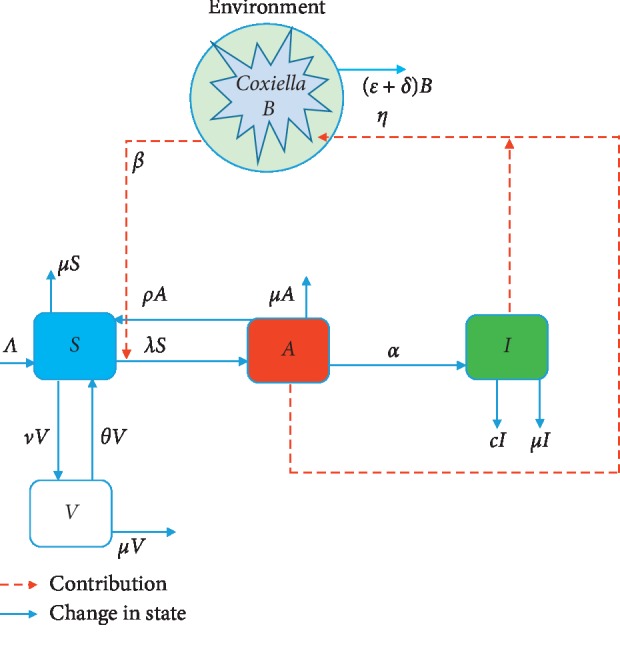
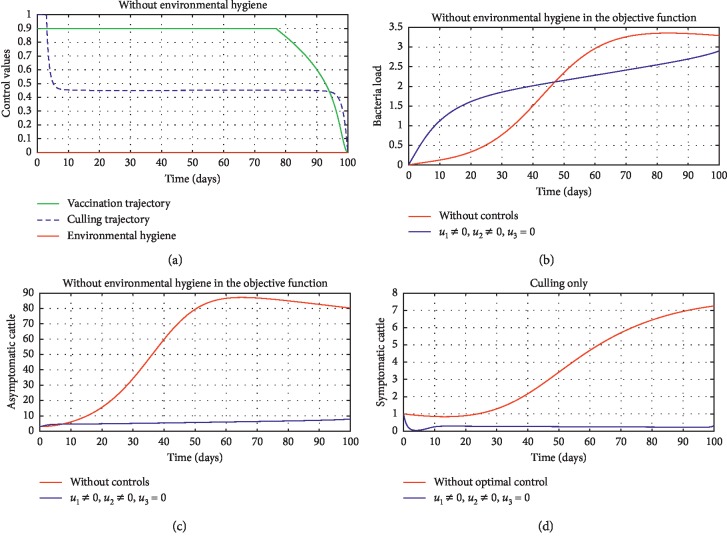
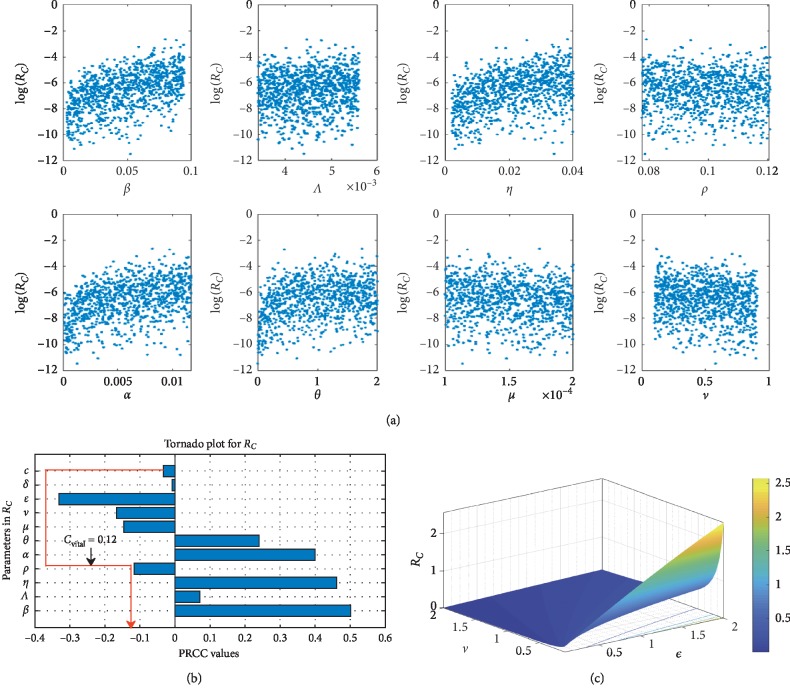
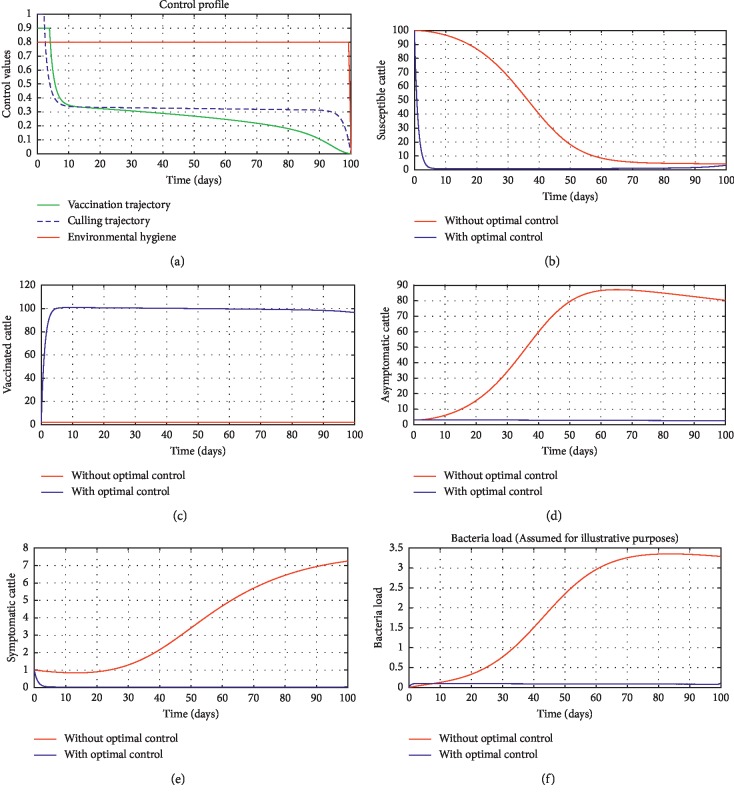
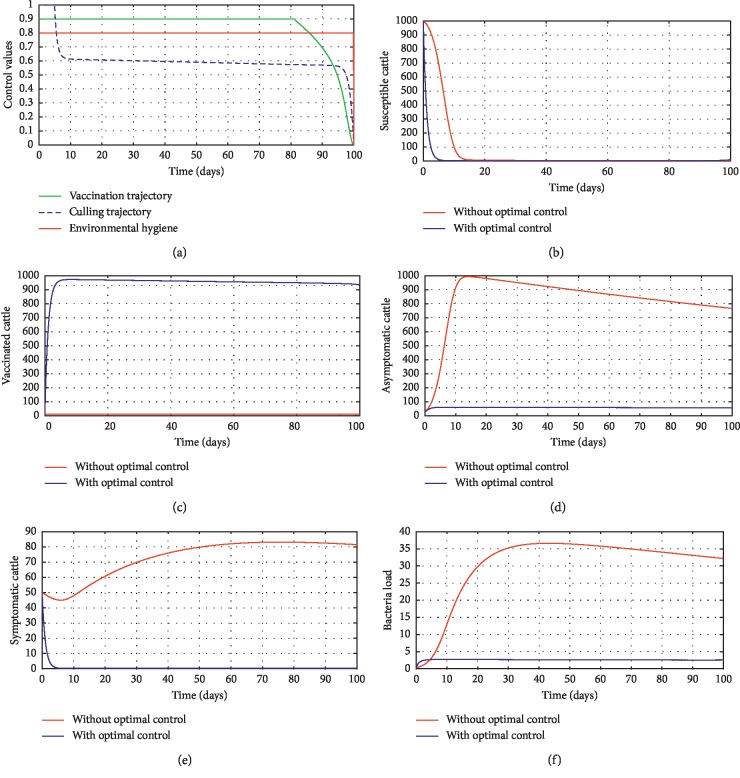
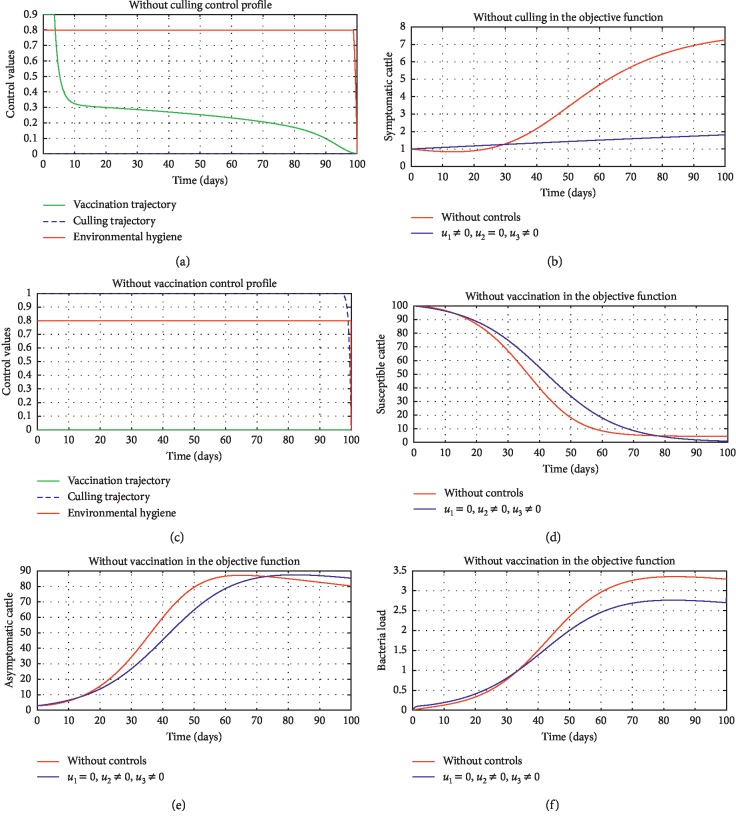
This paper presents a differential equation model which describes a possible transmission route for Q fever dynamics in cattle herds. The model seeks to ascertain epidemiological and theoretical inferences in understanding how to avert an outbreak of Q fever in dairy cattle herds (livestock). To prove the stability of the model's equilibria, we use a matrix-theoretic method and a Lyapunov function which establishes the local and global asymptotic behaviour of the model. We introduce time-dependent vaccination, environmental hygiene, and culling and then solve for optimal strategies. The optimal control strategies are necessary management practices that may increase animal health in a -induced environment and may also reduce the transmission of the disease from livestock into the human population. The sensitivity analysis presents the relative importance of the various generic parameters in the model. We hope that the description of the results and the optimality trajectories provides some guidelines for animal owners and veterinary officers on how to effectively minimize the bacteria and control cost before/during an outbreak.
本文提出了一个微分方程模型,用于描述牛群中 Q 热动态的可能传播途径。该模型旨在确定流行病学和理论推论,以了解如何避免奶牛群(牲畜)中 Q 热的爆发。为了证明模型平衡点的稳定性,我们使用矩阵理论方法和李雅普诺夫函数来确定模型的局部和全局渐近行为。我们引入了时变疫苗接种、环境卫生和扑杀,并随后求解了最优策略。最优控制策略是必要的管理实践,可以在 - 诱导的环境中提高动物健康水平,也可以减少疾病从牲畜向人类传播的风险。敏感性分析展示了模型中各种通用参数的相对重要性。我们希望对结果和最优轨迹的描述为动物饲养者和兽医官员提供了一些指导,说明如何在爆发前/期间有效地最小化细菌数量和控制成本。