Miguez Maria Jose, Bueno Diego, Perez Caroline
Health Behavior and Policy Initiative, School of Integrated Science and Humanity, Florida International University, Miami, FL, USA.
Sleep Disord. 2020 Jan 28;2020:5316364. doi: 10.1155/2020/5316364. eCollection 2020.
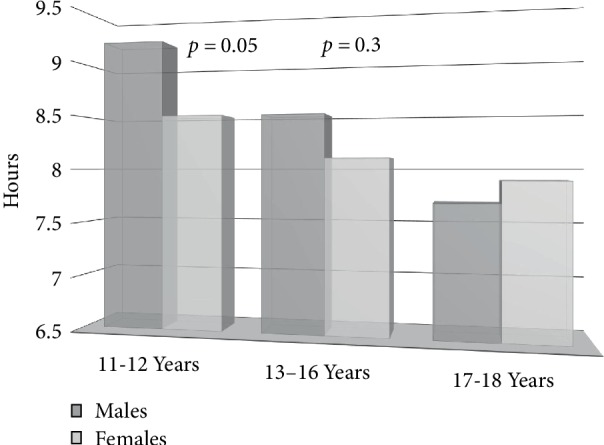
Disparities in sleep disturbances have been described in adults; nevertheless, among adolescents, data have yielded conflicting results. Therefore, analyses of our cohort study of 500 urban, normally developed Hispanic adolescents (10-18 years), aim to determine if rates of sleep debt differ between: (a) male and female adolescents, (b) US-born Hispanics and first-generation immigrant ethnic counterparts, and (c) specific activities that these teens trade for sleep. Participants' weekday and weekend sleep patterns, along with the reasons for sleeping less than the recommended hours were recorded. Standardized surveys were used to gather information regarding sociodemographics, migration, acculturation, and medical history. Using the criteria set forth by the National Sleep Foundation, analyses indicated that sleep deprivation is a pervasive problem, with 75% in the preadolescents and 45% of the late adolescents exhibiting sleep problems. Females slept on average at least one hour less per day than their male counterparts (7 vs. 8 hours). The sleep problems were rooted in several overlapping causes, including use of technology, video games, studying, and employment. Nevertheless, reasons for sleep loss differed by gender and by immigrant status. Multivariable adjusted logistic regression analyses showed that females, US-born teens, and preadolescents had higher odds of being sleep deprived. Pediatricians and sleep experts should be aware of gender-specific causes and responses of sleep problems. Cultural ecological frameworks need to be considered, and clearly indicate that findings may not generalize to youth from other cultural backgrounds.
睡眠障碍方面的差异在成年人中已有描述;然而,在青少年中,数据得出了相互矛盾的结果。因此,我们对500名城市中正常发育的西班牙裔青少年(10 - 18岁)进行的队列研究分析,旨在确定睡眠债发生率在以下方面是否存在差异:(a)青少年男性和女性之间;(b)在美国出生的西班牙裔与第一代移民的同种族同龄人之间;(c)这些青少年为了睡眠而放弃的特定活动。记录了参与者平日和周末的睡眠模式,以及睡眠时间少于推荐时长的原因。使用标准化调查收集有关社会人口统计学、移民、文化适应和病史的信息。根据美国国家睡眠基金会制定的标准进行分析,结果表明睡眠剥夺是一个普遍存在的问题,青春期前青少年中有75%、青少年后期中有45%存在睡眠问题。女性平均每天比男性少睡至少一小时(7小时对8小时)。睡眠问题源于几个相互重叠的原因,包括使用科技产品、玩电子游戏、学习和工作。然而,睡眠不足的原因因性别和移民身份而异。多变量调整后的逻辑回归分析表明,女性、在美国出生的青少年和青春期前青少年睡眠剥夺的几率更高。儿科医生和睡眠专家应了解睡眠问题的性别特异性原因及应对措施。需要考虑文化生态框架,并明确指出研究结果可能不适用于其他文化背景的青少年。