School of Nursing, Guangdong Pharmaceutical University, Guangzhou 510006, China.
Guangzhou Key Laboratory of Construction and Application of New Drug Screening Model Systems, Guangdong Pharmaceutical University, Guangzhou 510006, China.
Molecules. 2020 Feb 19;25(4):920. doi: 10.3390/molecules25040920.
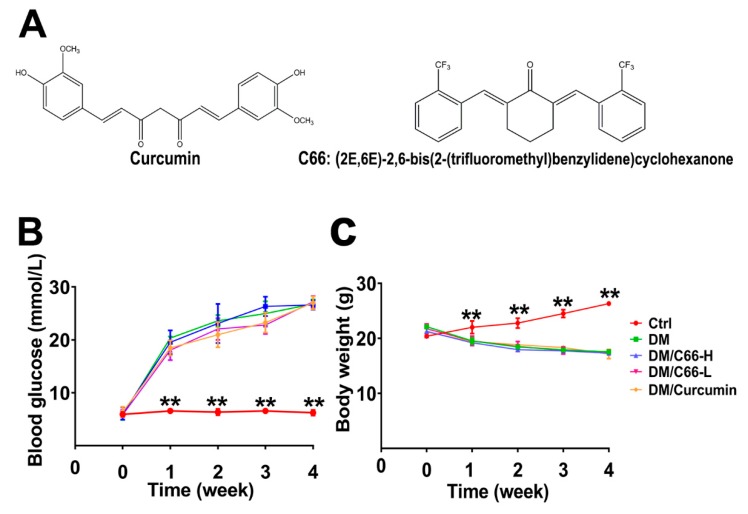
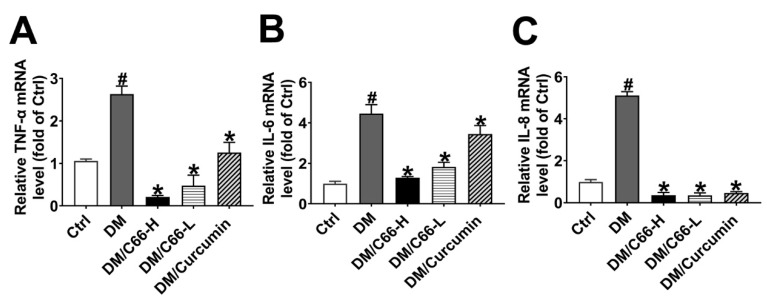
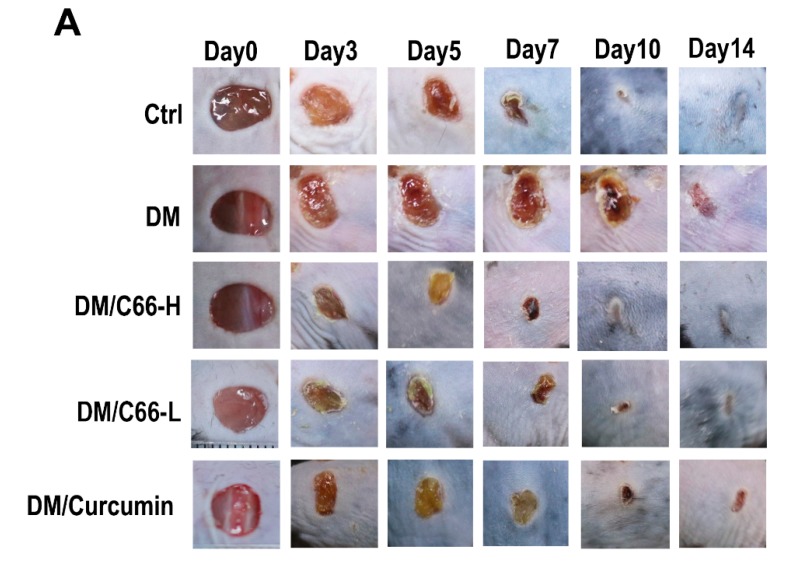
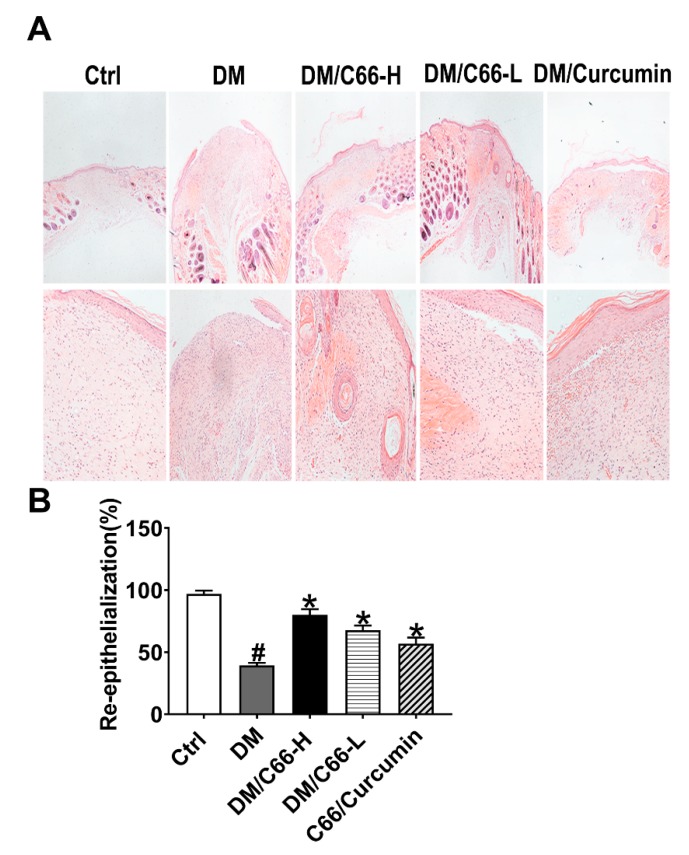
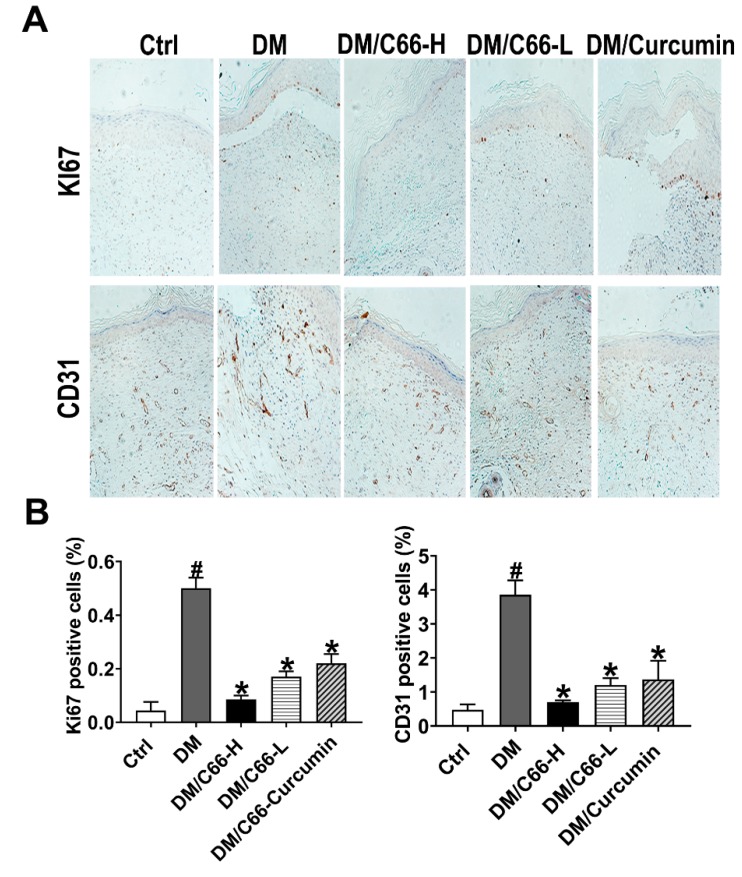
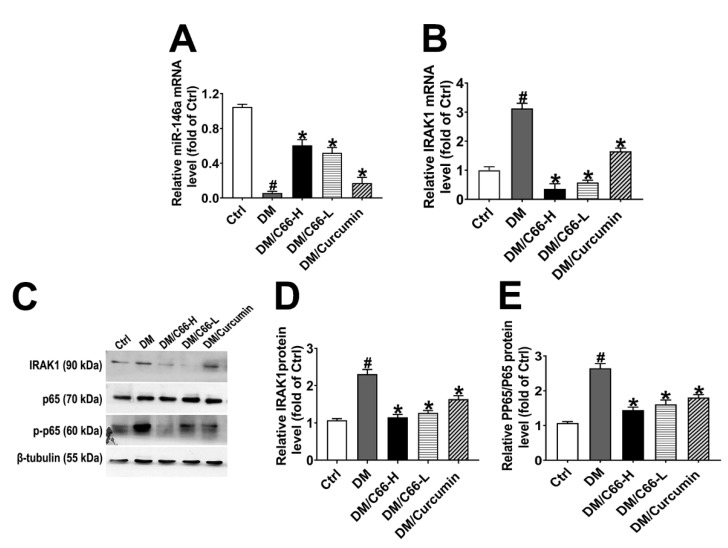
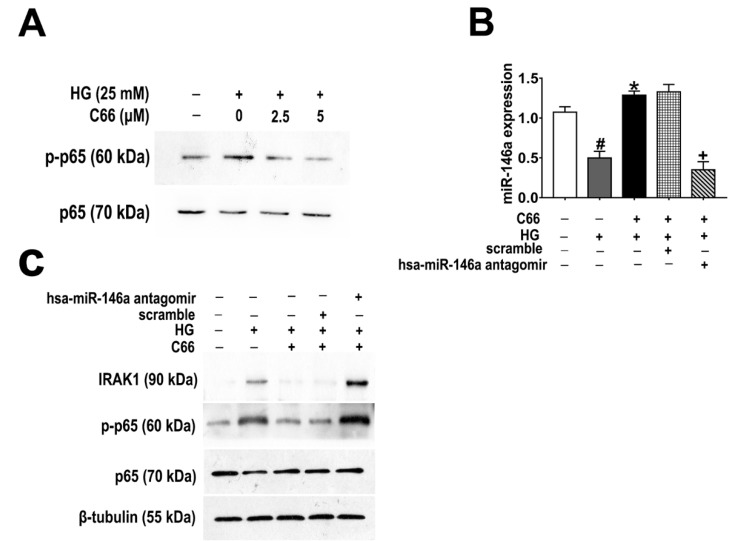
The impairment in diabetic wound healing represents a significant clinical problem, with no efficient targeted treatments for these wound disorders. Curcumin is well confirmed to improve diabetic wound healing, however, its low bioavailability and poor solubility severely limit its clinical application. This study aims to provide the pharmacological basis for the use of (2,6)-2,6-bis(2-(trifluoromethyl)benzylidene)cyclohexanone (C66). The results showed that topically applied C66 improved cutaneous wound healing in vivo. Further studies showed that C66 treatment increased the level of microRNA-146a (miR-146a) in the wounds in streptozotocin (STZ)-induced diabetic mice, downregulated the expression of interleukin-1 receptor-associated kinase 1 (IRAK1) and phosphorylated nuclear factor-κB (NF-κB) p65 subunit (p-p65) (both < 0.05), and suppressed the mRNA expression of inflammation-related cytokines, tumor necrosis factor-α (TNF-α), interleukin-8 (IL-8), and interleukin-6 (IL-6). The in vitro data obtained in human umbilical vein endothelial cells (HUVECs) showed that C66 could reverse high glucose (HG)-induced NF-κB activation due to upregulation of miR-146a expression, which matched the in vivo findings. In conclusion, the present study indicates that C66 exerts anti-inflammation activity and accelerates skin wound healing of diabetic mice, probably via increasing miR-146a and inhibiting the NF-κB-mediated inflammation pathway. Therefore, C66 may be a promising alternative for the treatment of diabetic wounds.
糖尿病创面愈合受损是一个重大的临床问题,目前针对这些创面疾病还没有有效的靶向治疗方法。姜黄素已被充分证实可改善糖尿病创面愈合,但由于其生物利用度低和溶解度差,严重限制了其临床应用。本研究旨在为(2,6)-2,6-双(2-(三氟甲基)苄叉)环己酮(C66)的应用提供药理学依据。结果表明,局部应用 C66 可改善体内皮肤创面愈合。进一步的研究表明,C66 治疗可增加链脲佐菌素(STZ)诱导的糖尿病小鼠创面中小鼠微 RNA-146a(miR-146a)的水平,下调白细胞介素-1 受体相关激酶 1(IRAK1)和磷酸化核因子-κB(NF-κB)p65 亚基(p-p65)的表达(均 < 0.05),并抑制炎症相关细胞因子肿瘤坏死因子-α(TNF-α)、白细胞介素-8(IL-8)和白细胞介素-6(IL-6)的 mRNA 表达。在人脐静脉内皮细胞(HUVECs)中获得的体外数据表明,C66 可以通过上调 miR-146a 的表达来逆转高糖(HG)诱导的 NF-κB 激活,这与体内研究结果一致。综上所述,本研究表明 C66 通过增加 miR-146a 的表达和抑制 NF-κB 介导的炎症通路发挥抗炎作用并加速糖尿病小鼠皮肤伤口愈合,因此 C66 可能是治疗糖尿病创面的一种有前途的替代方法。