Liu Wei, Krump Nathan A, Herlyn Meenhard, You Jianxin
Department of Microbiology, Perelman School of Medicine, University of Pennsylvania, Philadelphia, PA 19104, USA.
The Wistar Institute, 3601 Spruce Street, Philadelphia, PA 19104, USA.
Biology (Basel). 2020 Feb 19;9(2):35. doi: 10.3390/biology9020035.
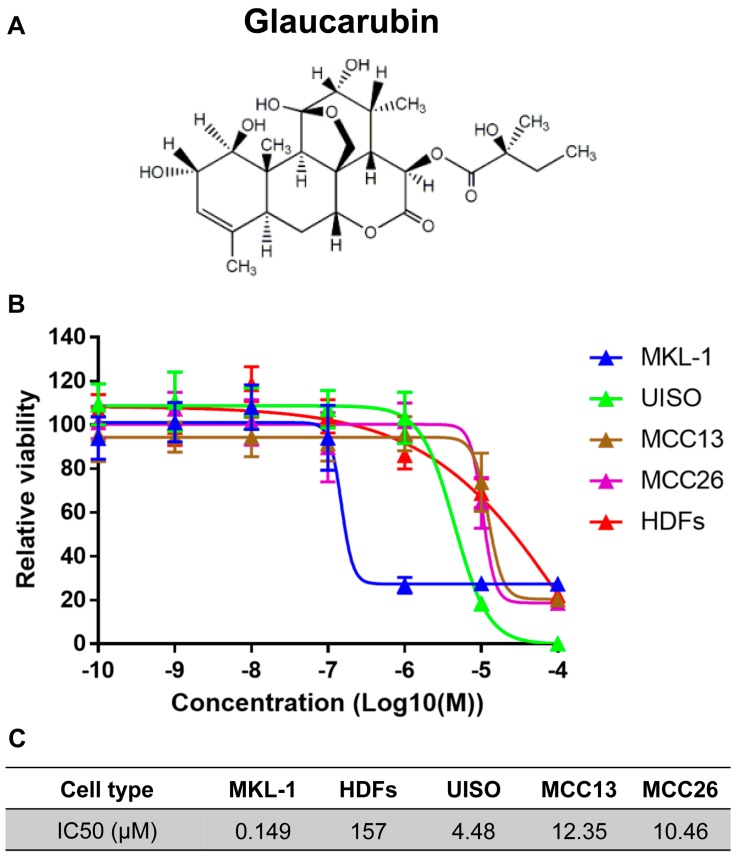
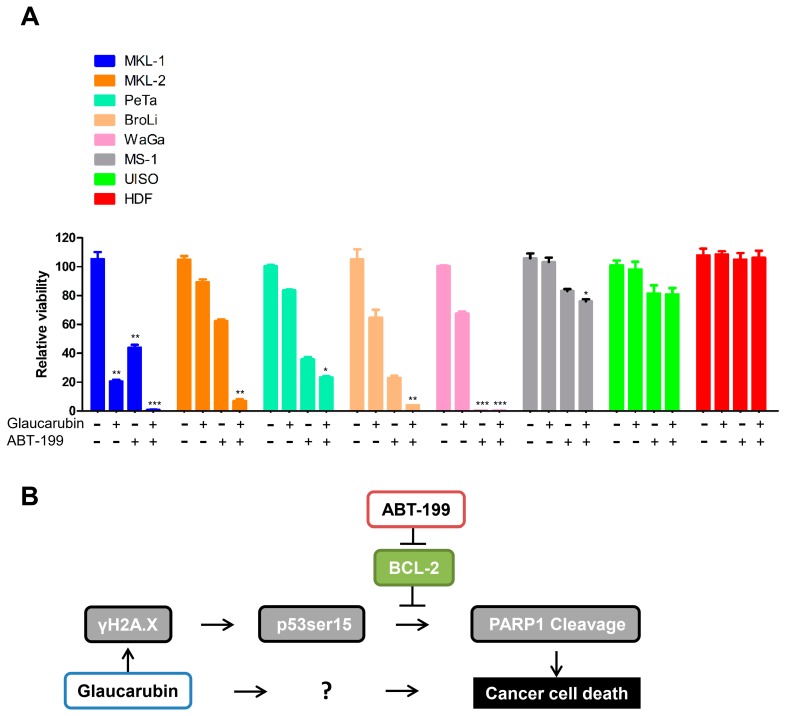
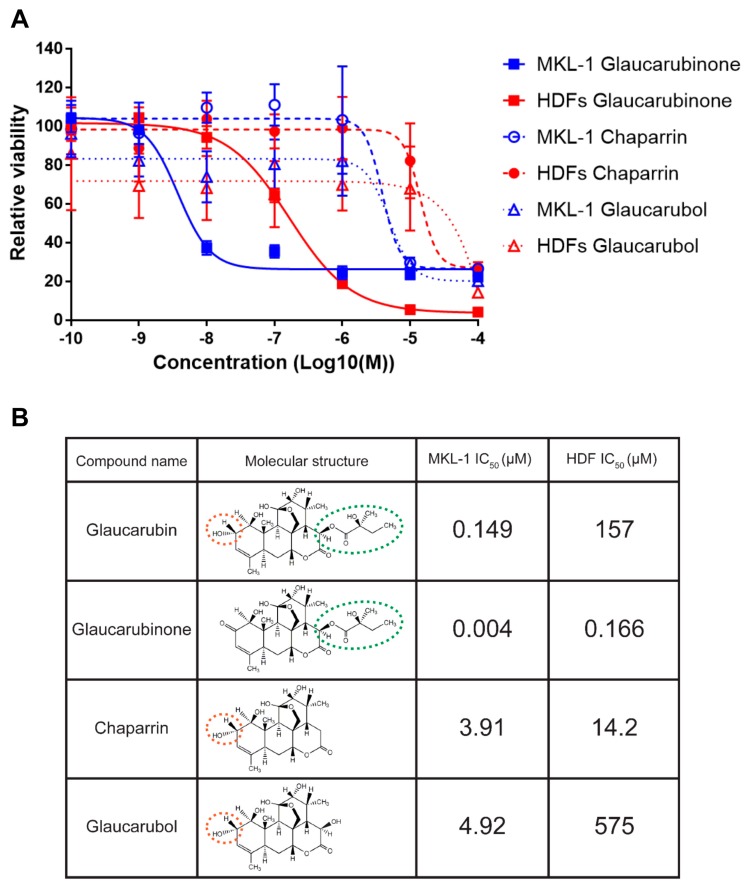
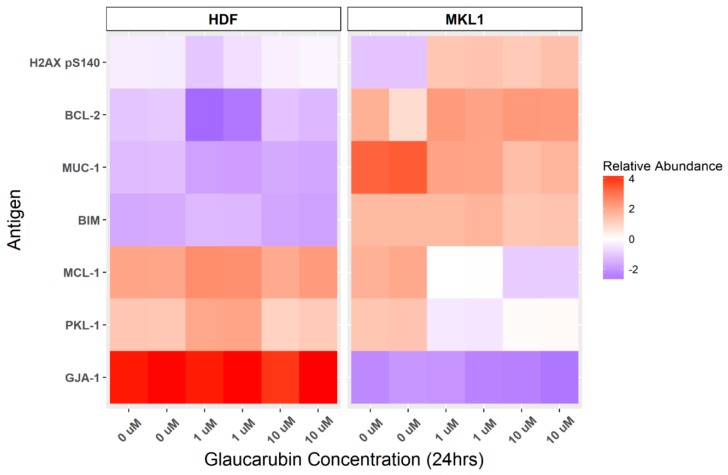
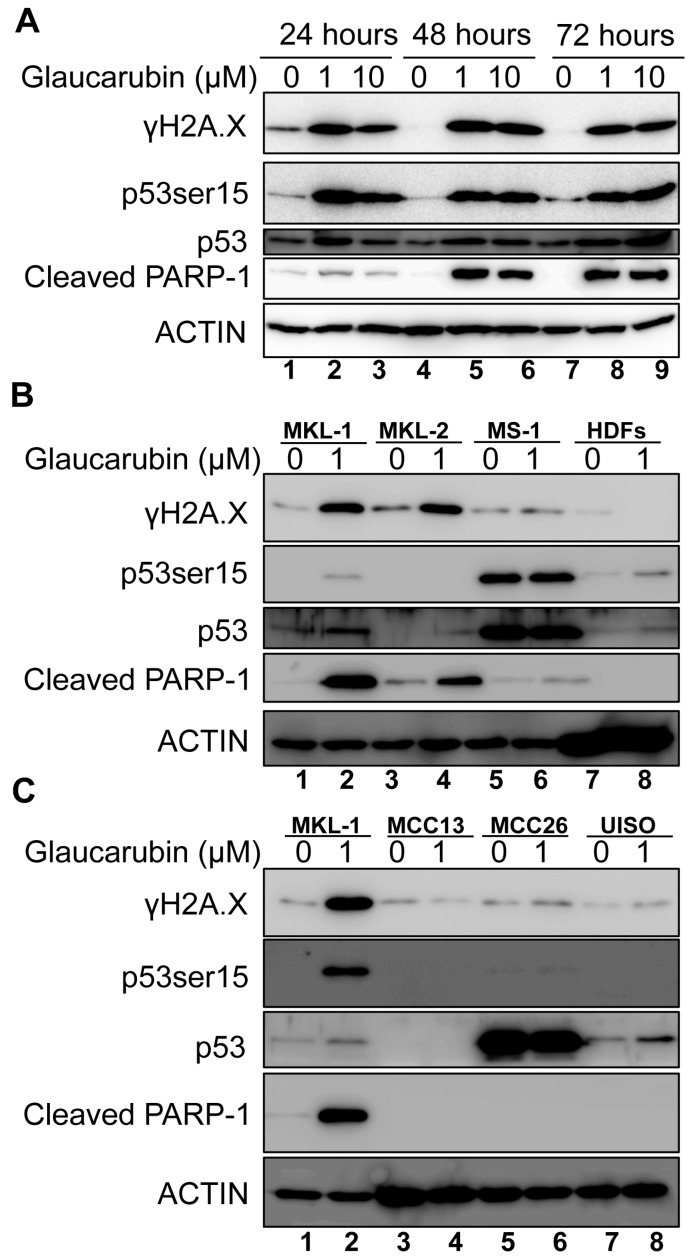
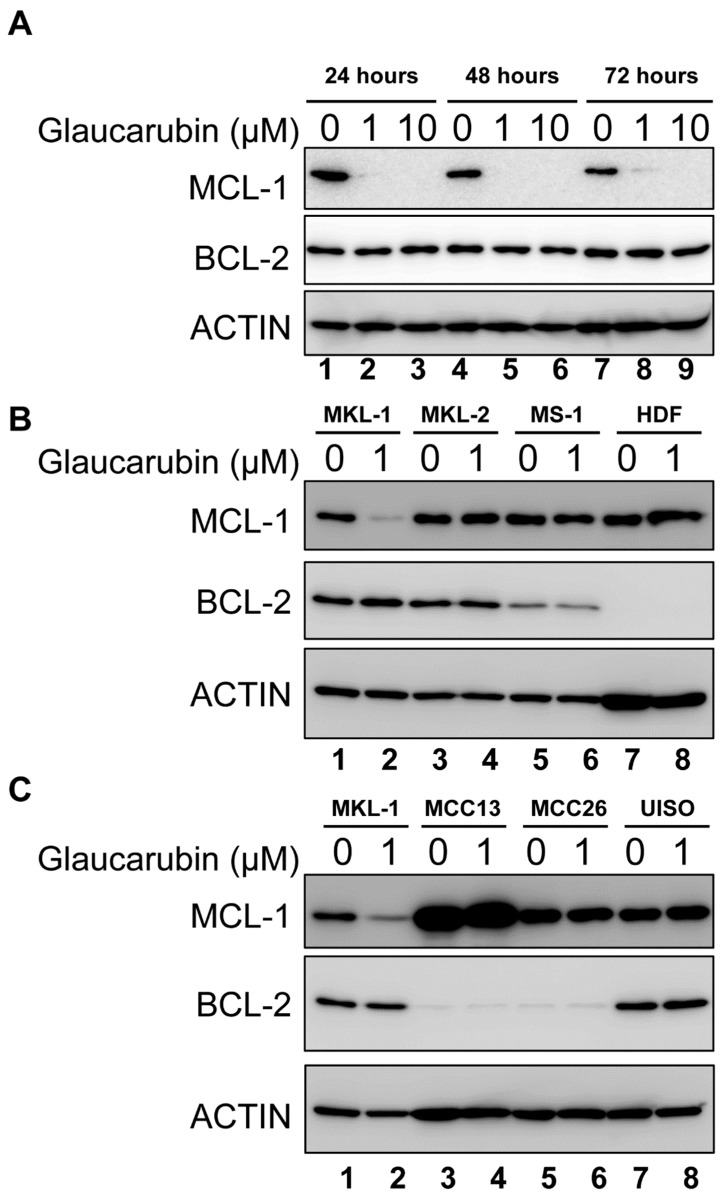
Merkel cell carcinoma (MCC) is a highly lethal skin cancer. MCC tumors rapidly develop resistance to the chemotherapies tested to date. While PD-1/PD-L1 immune checkpoint blockade has demonstrated success in MCC treatment, a significant portion of MCC patients are nonresponsive. Therefore, the pressing need for effective MCC chemotherapies remains. We screened a library of natural products and discovered that one compound, glaucarubin, potently reduced the viability of Merkel cell polyomavirus (MCPyV)-positive MCCs, while remaining nontoxic to primary human fibroblasts and MCPyV-negative MCC cell lines tested. Protein array and Western blot analyses revealed that glaucarubin induces DNA damage and PARP-1 cleavage that correlates with the loss of viability in MCC cells. However, high basal expression of the antiapoptotic factor BCL-2 allowed a subpopulation of cells to survive glaucarubin treatment. Previous studies have shown that, while targeting BCL-2 family proteins significantly decreases MCC cell viability, BCL-2 antisense therapy alone was insufficient to inhibit tumor growth in patients with advanced MCC. We discovered that treatment with an FDA-approved BCL-2 inhibitor in the context of glaucarubin-induced DNA damage led to near complete killing in multiple MCPyV-positive MCC cell lines that express high levels of BCL-2. The combination of DNA damage-induced apoptosis and BCL-2 inhibition thus represents a novel therapeutic strategy for MCPyV-positive MCCs.
默克尔细胞癌(MCC)是一种极具致死性的皮肤癌。MCC肿瘤对迄今为止所测试的化疗药物迅速产生耐药性。虽然PD-1/PD-L1免疫检查点阻断在MCC治疗中已显示出成效,但仍有相当一部分MCC患者对此无反应。因此,对有效的MCC化疗药物的迫切需求依然存在。我们筛选了一个天然产物文库,发现一种化合物——格劳卡鲁宾,能有效降低默克尔细胞多瘤病毒(MCPyV)阳性MCC的活力,同时对所测试的原代人成纤维细胞和MCPyV阴性MCC细胞系无毒。蛋白质阵列和蛋白质印迹分析表明,格劳卡鲁宾诱导DNA损伤和PARP-1裂解,这与MCC细胞活力丧失相关。然而,抗凋亡因子BCL-2的高基础表达使一部分细胞在格劳卡鲁宾处理后存活下来。先前的研究表明,虽然靶向BCL-2家族蛋白可显著降低MCC细胞活力,但单独的BCL-2反义疗法不足以抑制晚期MCC患者的肿瘤生长。我们发现,在格劳卡鲁宾诱导DNA损伤的情况下,用一种FDA批准的BCL-2抑制剂进行治疗,可导致多个表达高水平BCL-2的MCPyV阳性MCC细胞系近乎完全死亡。因此,DNA损伤诱导的凋亡与BCL-2抑制相结合代表了一种针对MCPyV阳性MCC的新型治疗策略。