• 文献检索
  • 文档翻译
  • 深度研究
  • 学术资讯
  • Suppr Zotero 插件Zotero 插件
  • 邀请有礼
  • 套餐&价格
  • 历史记录
应用&插件
Suppr Zotero 插件Zotero 插件浏览器插件Mac 客户端Windows 客户端微信小程序
定价
高级版会员购买积分包购买API积分包
服务
文献检索文档翻译深度研究API 文档MCP 服务
关于我们
关于 Suppr公司介绍联系我们用户协议隐私条款
关注我们

Suppr 超能文献

核心技术专利:CN118964589B侵权必究
粤ICP备2023148730 号-1Suppr @ 2026

文献检索

告别复杂PubMed语法,用中文像聊天一样搜索,搜遍4000万医学文献。AI智能推荐,让科研检索更轻松。

立即免费搜索

文件翻译

保留排版,准确专业,支持PDF/Word/PPT等文件格式,支持 12+语言互译。

免费翻译文档

深度研究

AI帮你快速写综述,25分钟生成高质量综述,智能提取关键信息,辅助科研写作。

立即免费体验

影响安全水源使用的情境和社会心理因素:以南非乌姆坎加库德地区马迪雅村为例。

Contextual and Psychosocial Factors Influencing the Use of Safe Water Sources: A Case of Madeya Village, uMkhanyakude District, South Africa.

机构信息

School of Nursing and Public Health, College of Health Sciences, University of KwaZulu-Natal, Howard Campus, Durban 4001, South Africa.

Faculty of Agriculture and Natural resources, University of Namibia, Katima Mulilo Campus, Winela Road, Box 1096, Ngweze, Katima Mulilo, Namibia.

出版信息

Int J Environ Res Public Health. 2020 Feb 19;17(4):1349. doi: 10.3390/ijerph17041349.

DOI:10.3390/ijerph17041349
PMID:32093109
原文链接:https://pmc.ncbi.nlm.nih.gov/articles/PMC7068542/
Abstract

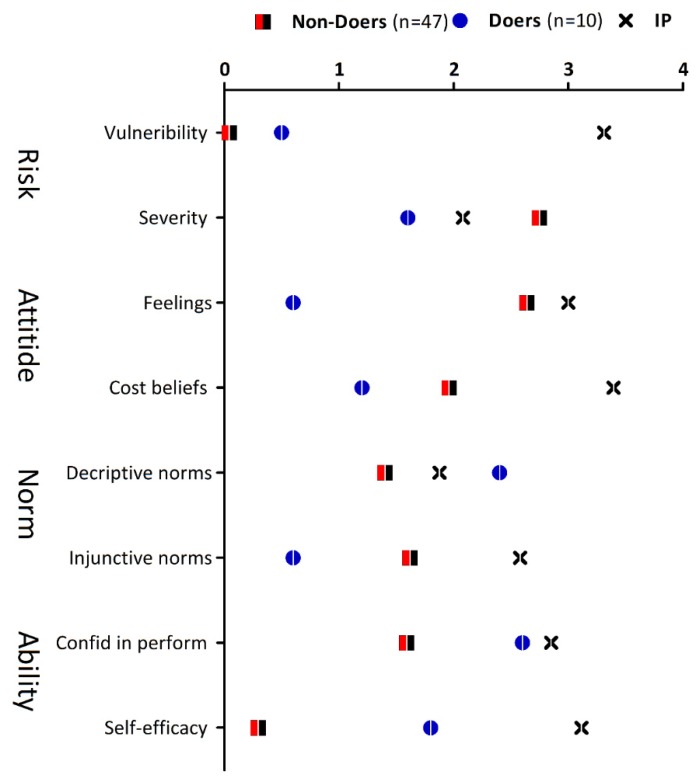
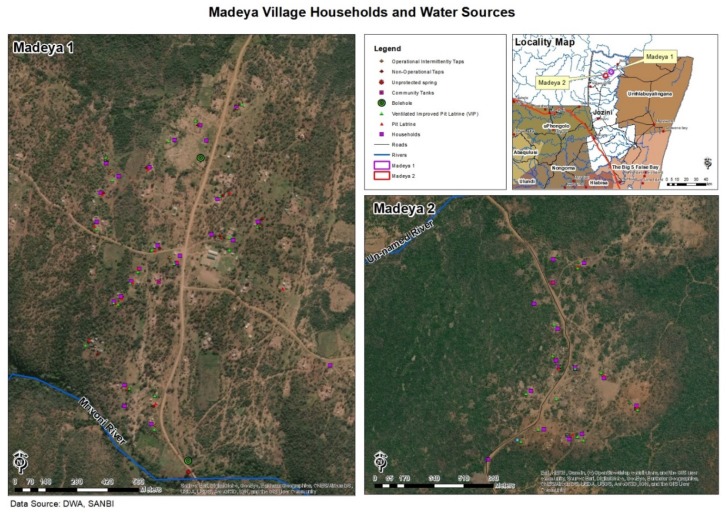
: Schistosomiasis is a public health problem that affects over 240 million people worldwide. It is mostly prevalent in tropical and sub-tropical areas among communities with limited access to clean water and adequate sanitation. This study was conducted in uMkhanyakude District in rural South Africa, where water resources are limited. In this community, individuals frequently come into contact with freshwater bodies for various reasons. The objective of the study was to identify critical contextual and psychosocial factors for behaviour change to reduce risk of schistosomiasis transmission in Madeya Village, uMkhanyakude district. : Structured household interviews were held with 57 primary caregivers to assess their thoughts and attitudes towards collecting water from a safe source. We used the Risk, Attitude, Norm, Ability, and Self-regulation model (RANAS) to estimate the intervention potential for each factor by analysing differences in means between groups of current performers and nonperformers who use safe water sources. : The subscale vulnerability belonging to the risk factor on the RANAS was scored as low. Furthermore, attitudinal factors towards the use of safe water sources were found to be low. Ability factors (confidence in performance and confidence in recovery) towards the use of safe water sources were low as well, indicating that these factors should be the target of the intervention in the study area. : Based on this study, it is recommended that a community-based empowerment intervention strategy it appropriate. The strategy should prompt behavioural practice and public commitment, use persuasive language to boost self-efficacy and target younger low-income caregivers between 18 and 35 years of age.

摘要

血吸虫病是一个公共卫生问题,影响着全球超过 2.4 亿人。它主要在热带和亚热带地区的社区流行,这些社区获得清洁水和适当卫生设施的机会有限。本研究在南非农村的乌姆坎夸德区进行,那里水资源有限。在这个社区,由于各种原因,个人经常接触淡水体。该研究的目的是确定关键的背景和社会心理因素,以改变行为,减少马迪雅村血吸虫病传播的风险,乌姆坎夸德区。 :对 57 名主要照顾者进行了结构化家庭访谈,以评估他们对从安全水源收集水的想法和态度。我们使用风险、态度、规范、能力和自我调节模型 (RANAS) 通过分析当前表演者和非表演者之间的均值差异来估计每个因素的干预潜力,这些表演者和非表演者使用安全水源。 :RANAS 上属于风险因素的脆弱性亚量表得分较低。此外,对使用安全水源的态度因素也较低。使用安全水源的能力因素(表现信心和恢复信心)也较低,表明这些因素应该是研究区域干预的目标。 :基于这项研究,建议采取以社区为基础的赋权干预策略。该策略应促进行为实践和公众承诺,使用有说服力的语言来提高自我效能,并针对 18 至 35 岁的年轻低收入照顾者。
https://cdn.ncbi.nlm.nih.gov/pmc/blobs/98ef/7068542/c8d942596dc6/ijerph-17-01349-g002.jpg
https://cdn.ncbi.nlm.nih.gov/pmc/blobs/98ef/7068542/cd20a80c0cf5/ijerph-17-01349-g001.jpg
https://cdn.ncbi.nlm.nih.gov/pmc/blobs/98ef/7068542/c8d942596dc6/ijerph-17-01349-g002.jpg
https://cdn.ncbi.nlm.nih.gov/pmc/blobs/98ef/7068542/cd20a80c0cf5/ijerph-17-01349-g001.jpg
https://cdn.ncbi.nlm.nih.gov/pmc/blobs/98ef/7068542/c8d942596dc6/ijerph-17-01349-g002.jpg

相似文献

1
Contextual and Psychosocial Factors Influencing the Use of Safe Water Sources: A Case of Madeya Village, uMkhanyakude District, South Africa.影响安全水源使用的情境和社会心理因素:以南非乌姆坎加库德地区马迪雅村为例。
Int J Environ Res Public Health. 2020 Feb 19;17(4):1349. doi: 10.3390/ijerph17041349.
2
Prevalence and risk factors of schistosomiasis and soil-transmitted helminthiases among preschool aged children (1-5 years) in rural KwaZulu-Natal, South Africa: a cross-sectional study.南非夸祖鲁-纳塔尔省农村地区 1-5 岁学龄前儿童中血吸虫病和土壤传播性蠕虫病的流行状况及危险因素:一项横断面研究。
Infect Dis Poverty. 2019 Jun 16;8(1):47. doi: 10.1186/s40249-019-0561-5.
3
Access to, and use of, water by populations living in a schistosomiasis and fascioliasis co-endemic area of northern Côte d'Ivoire.科特迪瓦北部血吸虫病和肝片吸虫病共同流行地区居民获取和使用水的情况。
Acta Trop. 2015 Sep;149:179-85. doi: 10.1016/j.actatropica.2015.05.019. Epub 2015 May 21.
4
Effects of a behavior change campaign on household drinking water disinfection in the Lake Chad basin using the RANAS approach.利用 RANAS 方法评估行为改变运动对乍得湖流域家庭饮用水消毒的影响。
Sci Total Environ. 2018 Apr 1;619-620:1599-1607. doi: 10.1016/j.scitotenv.2017.10.142. Epub 2017 Oct 27.
5
Risk factors for schistosomiasis in an urban area in northern Côte d'Ivoire.科特迪瓦北部一城区血吸虫病的风险因素。
Infect Dis Poverty. 2018 May 18;7(1):47. doi: 10.1186/s40249-018-0431-6.
6
A novel theatre-based behaviour change approach for influencing community uptake of schistosomiasis control measures.一种新颖的基于剧场的行为改变方法,用于影响社区对血吸虫病控制措施的采纳。
Parasit Vectors. 2022 Aug 25;15(1):301. doi: 10.1186/s13071-022-05421-5.
7
Contextual and psychosocial factors predicting Ebola prevention behaviours using the RANAS approach to behaviour change in Guinea-Bissau.在几内亚比绍,运用RANAS行为改变方法预测埃博拉预防行为的背景和社会心理因素。
BMC Public Health. 2017 May 15;17(1):446. doi: 10.1186/s12889-017-4360-2.
8
The link between mental health and safe drinking water behaviors in a vulnerable population in rural Malawi.心理健康与马拉维农村脆弱人群安全饮用水行为之间的联系。
BMC Psychol. 2019 Jul 8;7(1):44. doi: 10.1186/s40359-019-0320-1.
9
Impact of the scale-up of piped water on urogenital schistosomiasis infection in rural South Africa.规模化供水管网对南非农村尿路血吸虫病感染的影响。
Elife. 2018 Feb 20;7:e33065. doi: 10.7554/eLife.33065.
10
Pre- and post-intervention perceptions and water contact behaviour related to schistosomiasis in north-western Tanzania.坦桑尼亚西北部血吸虫病干预前后的认知和与水接触行为。
Acta Trop. 2013 Nov;128(2):391-8. doi: 10.1016/j.actatropica.2012.09.017. Epub 2012 Oct 8.

引用本文的文献

1
Maternal exposure to heat and its association with miscarriage in rural KwaZulu-Natal, South Africa: A population-based cohort study.南非夸祖鲁-纳塔尔省农村地区孕妇暴露于高温及其与流产的关系:一项基于人群的队列研究。
Womens Health (Lond). 2024 Jan-Dec;20:17455057241259171. doi: 10.1177/17455057241259171.
2
On the Efficacy of Indigenous Knowledge Systems in Responding to the COVID-19 Pandemic: Unsettling Coloniality.论本土知识体系应对 COVID-19 大流行的功效:打破殖民性。
Int J Environ Res Public Health. 2024 Jun 5;21(6):731. doi: 10.3390/ijerph21060731.
3
Barriers and facilitators to Water, Sanitation and Hygiene (WaSH) practices in Southern Africa: A scoping review.

本文引用的文献

1
Knowledge, attitudes and practices on schistosomiasis and soil-transmitted helminths among caregivers in Ingwavuma area in uMkhanyakude district, South Africa.南非乌姆坎加德地区因格瓦武马地区照顾者对血吸虫病和土壤传播性蠕虫的知识、态度和实践。
BMC Infect Dis. 2019 Aug 22;19(1):734. doi: 10.1186/s12879-019-4253-3.
2
Prevalence and risk factors of schistosomiasis and soil-transmitted helminthiases among preschool aged children (1-5 years) in rural KwaZulu-Natal, South Africa: a cross-sectional study.南非夸祖鲁-纳塔尔省农村地区 1-5 岁学龄前儿童中血吸虫病和土壤传播性蠕虫病的流行状况及危险因素:一项横断面研究。
Infect Dis Poverty. 2019 Jun 16;8(1):47. doi: 10.1186/s40249-019-0561-5.
3
南部非洲水、环境卫生和个人卫生(WASH)实践的障碍和促进因素:范围综述。
PLoS One. 2022 Aug 2;17(8):e0271726. doi: 10.1371/journal.pone.0271726. eCollection 2022.
4
Contextual and psychological factors influencing open defecation free status: an exploratory qualitative study in rural South Western Uganda.影响无露天排便状态的情境和心理因素:乌干达西南部农村地区的探索性定性研究。
BMC Public Health. 2022 Mar 1;22(1):414. doi: 10.1186/s12889-022-12759-z.
5
Enhancing LPG Adoption in Ghana (ELAG): A Trial Testing Policy-Relevant Interventions to Increase Sustained Use of Clean Fuels.加强加纳的液化石油气采用(ELAG):一项测试与政策相关干预措施以增加清洁燃料持续使用的试验
Sustainability. 2021 Feb 2;13(4). doi: 10.3390/su13042213. Epub 2021 Feb 19.
6
Spatial and seasonal distribution of Bulinus globosus and Biomphalaria pfeifferi in Ingwavuma, uMkhanyakude district, KwaZulu-Natal, South Africa: Implications for schistosomiasis transmission at micro-geographical scale.南非夸祖鲁-纳塔尔省因格瓦努马地区,布律尼氏血吸虫中间宿主(苏氏钉螺和光滑双脐螺)的时空分布及其对小尺度地域间血吸虫病传播的影响
Parasit Vectors. 2021 Apr 23;14(1):222. doi: 10.1186/s13071-021-04720-7.
Neglected Tropical Diseases: Epidemiology and Global Burden.
被忽视的热带病:流行病学与全球负担
Trop Med Infect Dis. 2017 Aug 5;2(3):36. doi: 10.3390/tropicalmed2030036.
4
Simulation of population dynamics of Bulinus globosus: Effects of environmental temperature on production of Schistosoma haematobium cercariae.布氏嗜碘吸虫种群动态模拟:环境温度对埃及血吸虫尾蚴产量的影响。
PLoS Negl Trop Dis. 2018 Aug 2;12(8):e0006651. doi: 10.1371/journal.pntd.0006651. eCollection 2018 Aug.
5
Contextual and psychosocial factors predicting Ebola prevention behaviours using the RANAS approach to behaviour change in Guinea-Bissau.在几内亚比绍,运用RANAS行为改变方法预测埃博拉预防行为的背景和社会心理因素。
BMC Public Health. 2017 May 15;17(1):446. doi: 10.1186/s12889-017-4360-2.
6
Modelling the spatial and seasonal distribution of suitable habitats of schistosomiasis intermediate host snails using Maxent in Ndumo area, KwaZulu-Natal Province, South Africa.利用最大熵模型对南非夸祖鲁-纳塔尔省恩杜莫地区血吸虫病中间宿主螺类适宜栖息地的空间和季节分布进行建模。
Parasit Vectors. 2016 Nov 4;9(1):572. doi: 10.1186/s13071-016-1834-5.
7
Risk factors and micro-geographical heterogeneity of Schistosoma haematobium in Ndumo area, uMkhanyakude district, KwaZulu-Natal, South Africa.南非夸祖鲁-纳塔尔省乌姆卡尼亚库德区恩杜莫地区埃及血吸虫的危险因素及微观地理异质性
Acta Trop. 2016 Jul;159:176-84. doi: 10.1016/j.actatropica.2016.03.028. Epub 2016 Mar 22.
8
Behavior Change without Behavior Change Communication: Nudging Handwashing among Primary School Students in Bangladesh.无需行为改变沟通的行为改变:推动孟加拉国小学生洗手
Int J Environ Res Public Health. 2016 Jan 14;13(1):129. doi: 10.3390/ijerph13010129.
9
Perceptions and plans for prevention of Ebola: results from a national survey.对埃博拉预防的认知与计划:一项全国性调查结果
BMC Public Health. 2015 Nov 16;15:1136. doi: 10.1186/s12889-015-2441-7.
10
Factors determining water treatment behavior for the prevention of cholera in Chad.乍得预防霍乱的水处理行为决定因素
Am J Trop Med Hyg. 2015 Jul;93(1):57-65. doi: 10.4269/ajtmh.14-0613. Epub 2015 Apr 27.