Ma Hsuan-Hsiao, Chou Te-Feng Arthur, Tsai Shang-Wen, Chen Cheng-Fong, Wu Po-Kuei, Chen Wei-Ming
Department of Orthopaedics and Traumatology, Taipei Veterans General Hospital, No. 201, Sec 2, Shi-Pai Road, Taipei, 112, Taiwan.
Department of Orthopaedics, School of Medicine, National Yang-Ming University, Taipei, Taiwan.
BMC Musculoskelet Disord. 2020 Feb 24;21(1):121. doi: 10.1186/s12891-020-3148-1.
Continuous femoral nerve block (cFNB) has been developed to extend the analgesic effect since the efficacy of single-injection femoral nerve block (sFNB) is often limited to approximately 16-24 h. The aim of this meta-analysis was to validate the add-on effect of cFNB in the setting of a multimodal analgesic protocol.
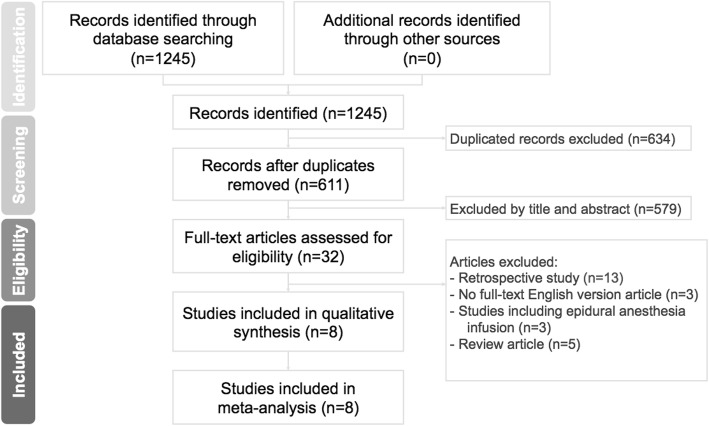
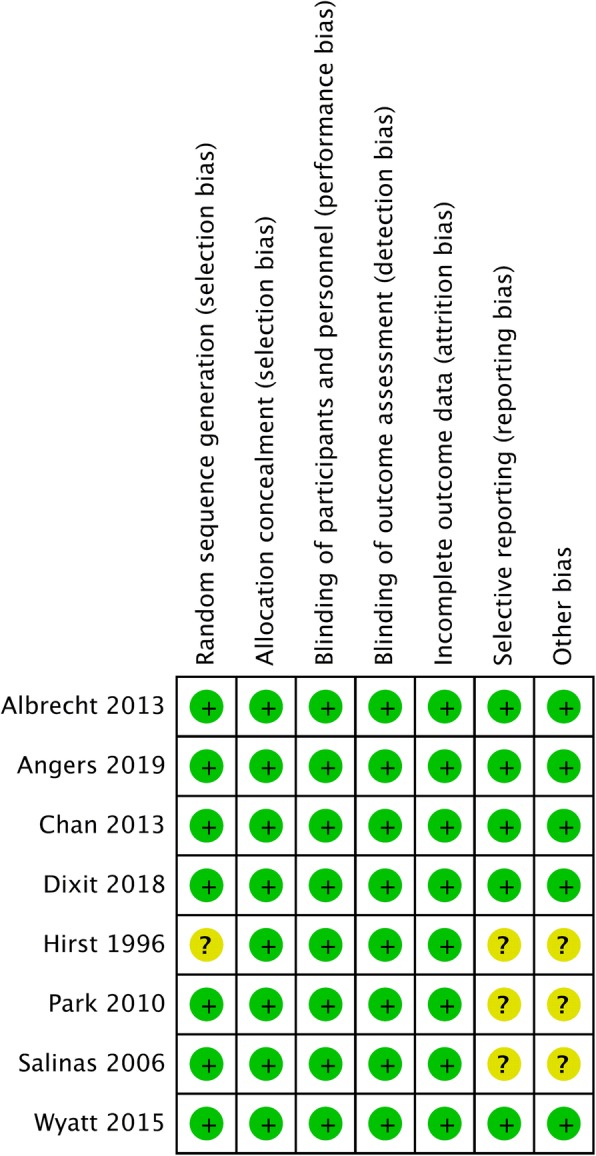
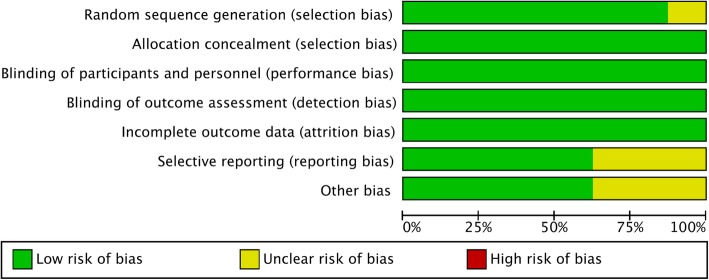
We performed a comprehensive literature review on Web of Science, Embase, the Cochrane Library and PubMed. Eight randomized controlled trials (N = 626) that compared the efficacy of cFNB with sFNB were included. The primary outcome domains consist of visual analog scale (VAS) score at postoperative 24 and 48 h. The secondary outcome domains include opioid consumption, length of hospital stay and incidence of nausea.
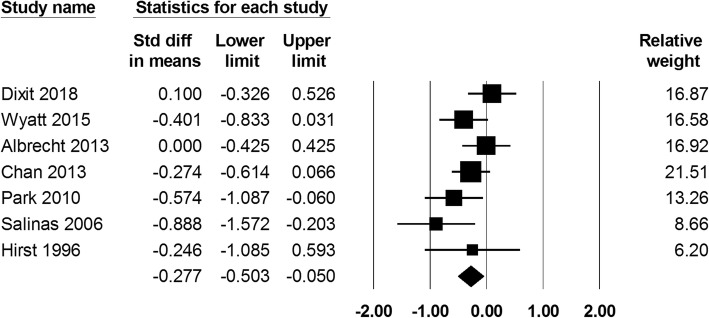
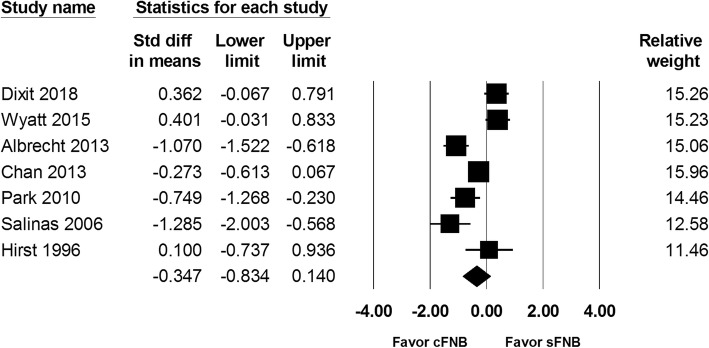
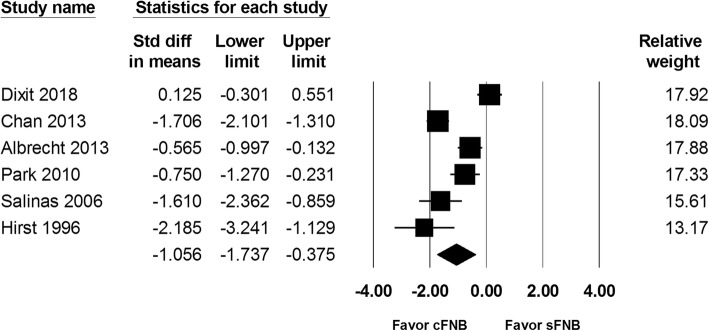
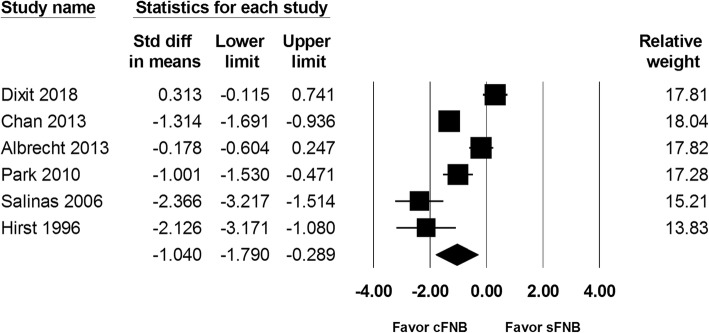
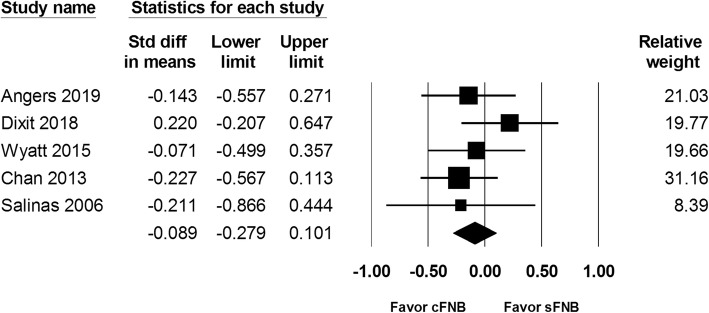
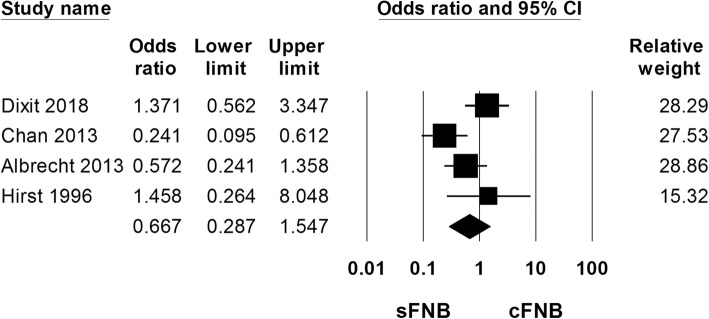
Our analysis revealed that cFNB was associated with a lower VAS score at 24 h (SMD: -0.277;95% CI - 0.503 to - 0.05). However, the difference of VAS score did not meet the minimal clinically importance difference for total knee arthroplasty (TKA). VAS score at 48 h was similar between the cFNB and sFNB group. The cFNB group was associated with less amount of opioids consumed at both 24(SMD: -1.056;95% CI - 1.737 to - 0.375) and 48 h(SMD: -1.040;95% CI - 1.790 to - 0.289). Length of hospital stay and incidence of nausea were similar between the two groups.
In the setting of a multimodal analgesic protocol, patients might benefit from cFNB with regards to a reduced need of opioids in the early postoperative period. However, we did not find a clinically significant difference in pain scores at different time points between the cFNB and sFNB group.
I; meta-analysis.
由于单次注射股神经阻滞(sFNB)的疗效通常局限于约16 - 24小时,连续股神经阻滞(cFNB)已被研发用于延长镇痛效果。本荟萃分析的目的是验证cFNB在多模式镇痛方案中的附加效果。
我们在Web of Science、Embase、Cochrane图书馆和PubMed上进行了全面的文献综述。纳入了八项比较cFNB与sFNB疗效的随机对照试验(N = 626)。主要结局指标包括术后24小时和48小时的视觉模拟评分(VAS)。次要结局指标包括阿片类药物消耗量、住院时间和恶心发生率。
我们的分析显示,cFNB与24小时时较低的VAS评分相关(标准化均数差:-0.277;95%置信区间-0.503至-0.05)。然而,VAS评分的差异未达到全膝关节置换术(TKA)的最小临床重要差异。cFNB组和sFNB组在48小时时的VAS评分相似。cFNB组在24小时(标准化均数差:-1.056;95%置信区间-1.737至-0.375)和48小时(标准化均数差:-1.040;95%置信区间-1.790至-0.289)时的阿片类药物消耗量均较少。两组的住院时间和恶心发生率相似。
在多模式镇痛方案中,患者在术后早期可能因cFNB而减少阿片类药物的需求。然而,我们未发现cFNB组和sFNB组在不同时间点的疼痛评分存在临床显著差异。
I;荟萃分析。