Fang Lihua, Wang Yan, Yang Ruizhi, Deng Sijing, Deng Jiahao, Wan Linsun
Key Laboratory of National Engineering Laboratory for Nondestructive Testing and Optoelectric Sensing Technology and Application (Ministry of Education), Nanchang Hangkong University, Add: No 696. Fenghenan Rd, Donghu District, Nanchang city, Jiangxi Province, 330063, China.
Tianjin Eye Hospital & Eye Institute, Ophthalmology and Visual Development Key Laboratory, Tianjin Medical University, Tianjin, 300020, China.
BMC Ophthalmol. 2020 Feb 24;20(1):67. doi: 10.1186/s12886-020-01338-8.
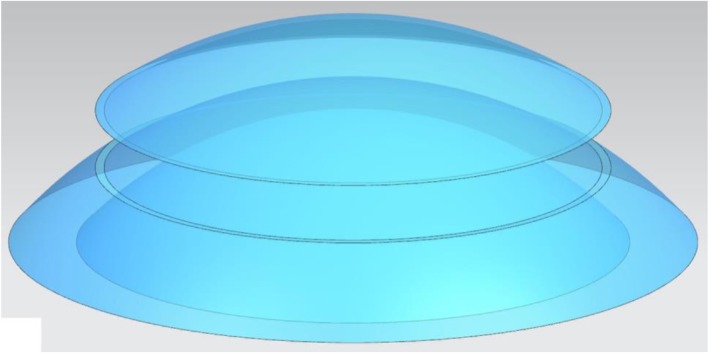
It is well known that the biomechanical properties change after LASIK refractive surgery. One reason is the impact of flap creation on the residual stroma. The results have revealed that the change is closely related with the flap thickness in several studies. However, the quantitative relationships between the distributions of displacement and stress on the corneal surface and flap thickness have not been studied. The aim of the study was to quantify evaluate the biomechanical change caused by the LASIK flap.
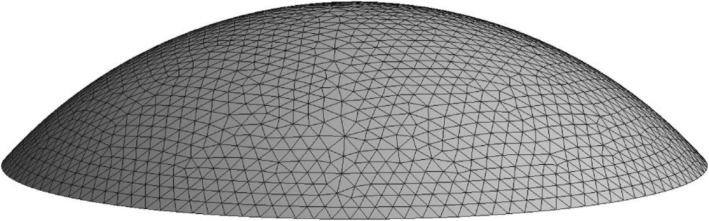
By building a finite element model of the cornea, the displacement, the stress and the strain on the corneal surface were analyzed.
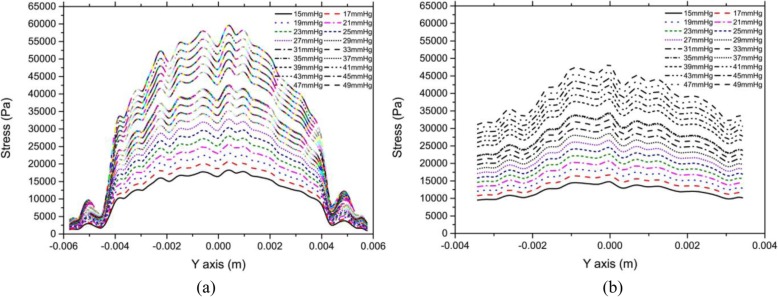
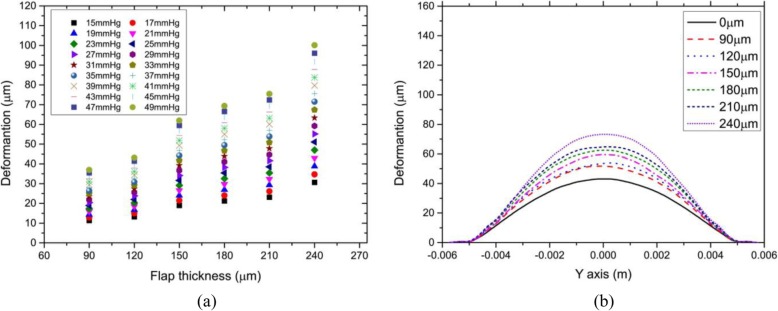
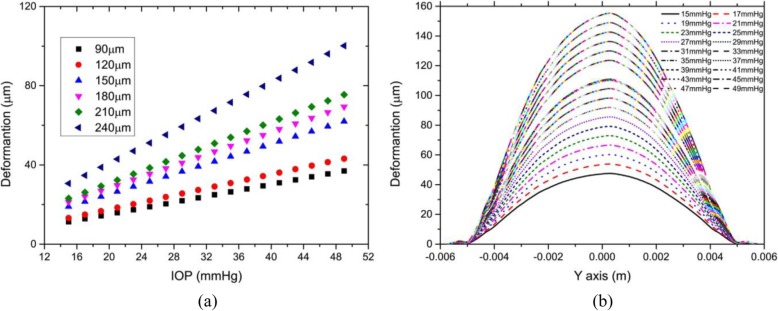
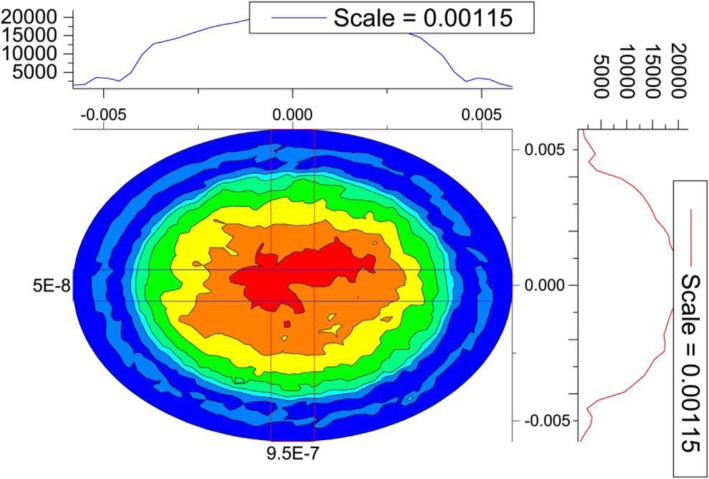
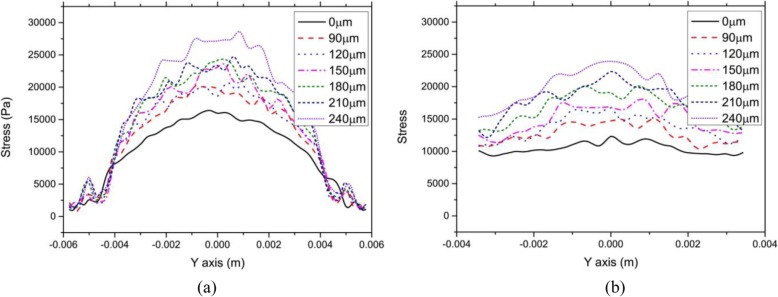
The results showed that the corneal flap could obviously cause the deformation of the anterior corneal surface. For example, the displacement of the corneal vertex achieved 15 μm more than that without corneal flap, when the thickness of corneal flap was 120 μm thick. This displacement was enough to cause the change of aberrations in the human eyes. In the central part of the cornea, the stress on the anterior corneal surface increased with flap thickness. But the change in the stress on the posterior corneal surface was significantly less than that on the anterior surface. In addition, the stress in the central part of the anterior corneal surface increased significantly as the intra-ocular pressure (IOP) increase. Furthermore the increase of IOP had a clearly less effect on stress distribution at the edge of the cornea. Distributions of strain on the corneal surface were similar to those of stress.
The changes in the biomechanical properties of cornea after refractive surgery should not be ignored.
众所周知,准分子激光原位角膜磨镶术(LASIK)屈光手术后生物力学特性会发生改变。其中一个原因是角膜瓣制作对剩余基质的影响。多项研究结果表明,这种改变与角膜瓣厚度密切相关。然而,角膜表面位移和应力分布与角膜瓣厚度之间的定量关系尚未得到研究。本研究的目的是定量评估LASIK角膜瓣引起的生物力学变化。
通过构建角膜的有限元模型,分析角膜表面的位移、应力和应变。
结果显示,角膜瓣可明显导致角膜前表面变形。例如,当角膜瓣厚度为120μm时,角膜顶点的位移比无角膜瓣时多15μm。这种位移足以引起人眼像差的变化。在角膜中央部分,角膜前表面的应力随角膜瓣厚度增加而增大。但角膜后表面应力的变化明显小于前表面。此外,随着眼内压(IOP)升高,角膜前表面中央部分的应力显著增加。而且,眼内压升高对角膜边缘应力分布的影响明显较小。角膜表面应变分布与应力分布相似。
屈光手术后角膜生物力学特性的变化不容忽视。