Department of Bioengineering, Marmara University, 34722, Istanbul, Turkey.
Department of Bioengineering, Istanbul Medeniyet University, 34720, Istanbul, Turkey.
Sci Rep. 2020 Feb 24;10(1):3272. doi: 10.1038/s41598-020-60127-x.
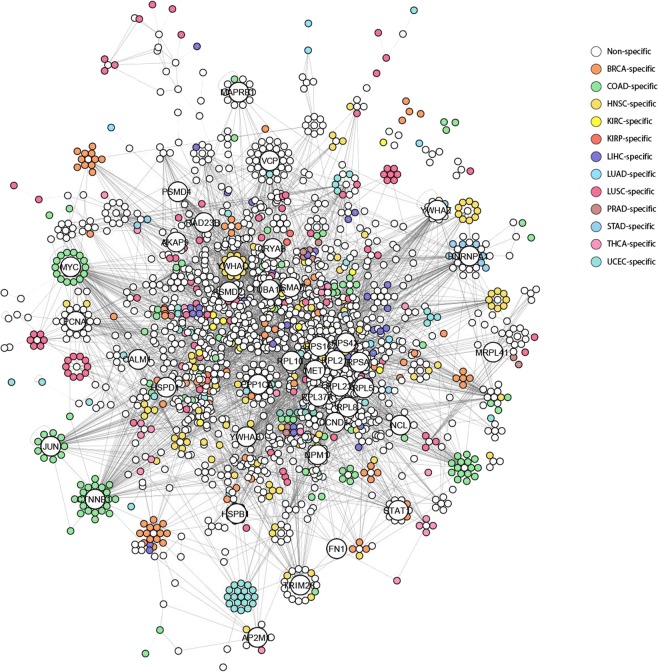
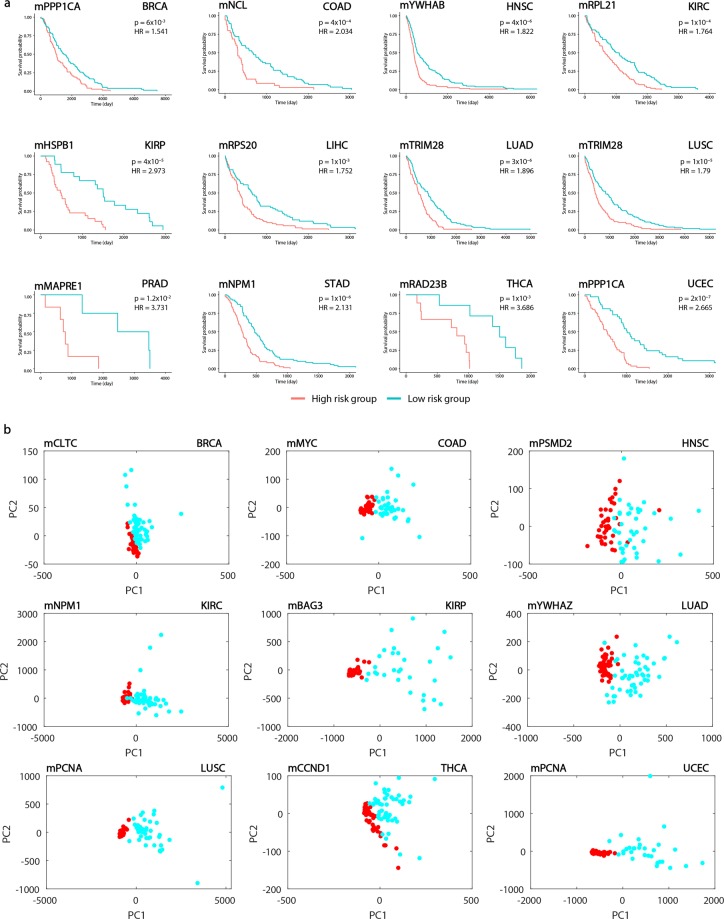
Deciphering the variations in the protein interactome is required to reach a systems-level understanding of tumorigenesis. To accomplish this task, we have considered the clinical and transcriptome data on >6000 samples from The Cancer Genome Atlas for 12 different cancers. Utilizing the gene expression levels as a proxy, we have identified the differential protein-protein interactions in each cancer type and presented a differential view of human protein interactome among the cancers. We clearly demonstrate that a certain fraction of proteins differentially interacts in the cancers, but there was no general protein interactome profile that applied to all cancers. The analysis also provided the characterization of differentially interacting proteins (DIPs) representing significant changes in their interaction patterns during tumorigenesis. In addition, DIP-centered protein modules with high diagnostic and prognostic performances were generated, which might potentially be valuable in not only understanding tumorigenesis, but also developing effective diagnosis, prognosis, and treatment strategies.
要达到对肿瘤发生的系统水平的理解,就需要对蛋白质互作组的变异进行破译。为了完成这项任务,我们考虑了来自癌症基因组图谱的 12 种不同癌症的 >6000 个样本的临床和转录组数据。我们利用基因表达水平作为替代指标,在每种癌症类型中确定了差异蛋白-蛋白相互作用,并呈现了癌症之间人类蛋白质互作组的差异视图。我们清楚地表明,在癌症中,某些蛋白质会发生差异相互作用,但并没有一种适用于所有癌症的通用蛋白质互作组模式。该分析还提供了对差异相互作用蛋白(DIP)的特征描述,这些蛋白在肿瘤发生过程中其相互作用模式发生了显著变化。此外,还生成了以 DIP 为中心的具有高诊断和预后性能的蛋白质模块,这些模块不仅可能在理解肿瘤发生方面具有重要价值,而且在开发有效的诊断、预后和治疗策略方面也可能具有重要价值。