The Wilmot Cancer Institute at the University of Rochester Medical Center, Rochester, NY, United States.
University of Albany, Albany, NY, United States.
Sci Rep. 2020 Feb 24;10(1):3241. doi: 10.1038/s41598-020-59824-4.
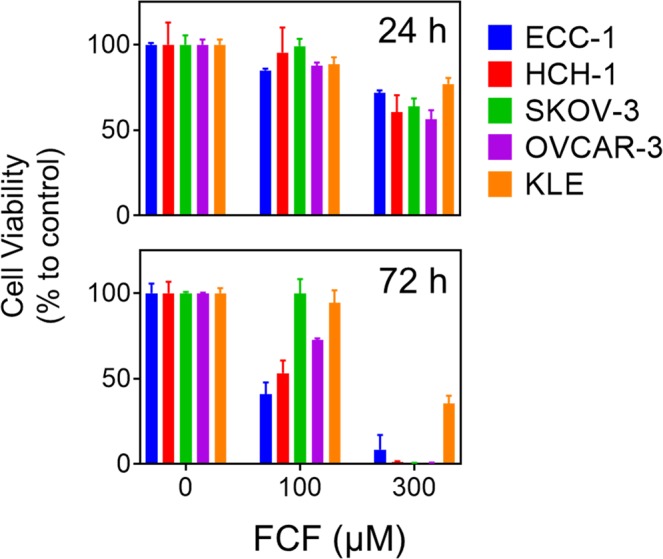
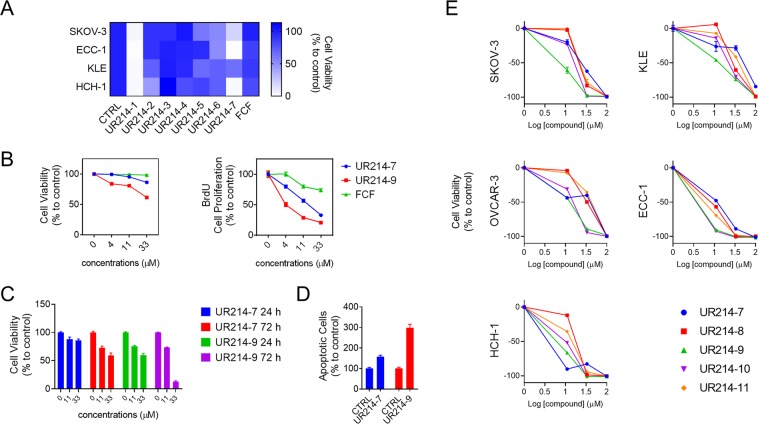
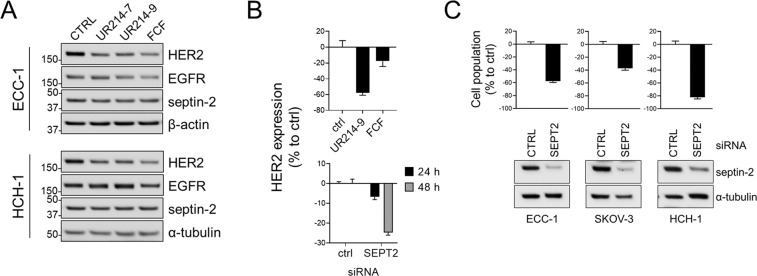
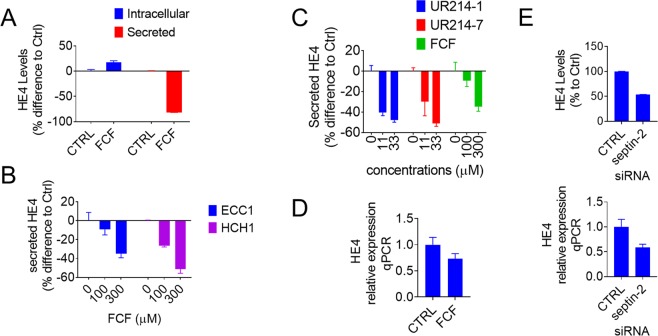
Forchlorfenuron (FCF) is a synthetic plant cytokinin widely used in agriculture to promote fruit size, that paradoxically inhibits proliferation, migration, and invasion in human cancer cell lines. FCF has also been shown to affect HIF-1α and HER2, which are both known to play a crucial role in cancer cell survival. In this study, we have developed potent FCF analogs through structural modification of FCF, coined UR214-1, UR214-7, and UR214-9. Compared to parental FCF, these analogs are more effective in decreasing viability and proliferation in both ovarian and endometrial cancer cell lines. These FCF analogs also suppress HER2 expression at a concentration lower than that of FCF. In addition, we found that treatment with either FCF or its analogs decreases the expression of human epididymis protein 4 (HE4), which is commonly upregulated in ovarian and endometrial cancers. Given the association between cancer behavior and HE4 production in gynecologic cancers, our findings may provide insight useful in the development of new treatment strategies for gynecologic cancers.
Forchlorfenuron (FCF) 是一种合成植物细胞分裂素,广泛用于农业中促进果实大小,但其在人类癌细胞系中却表现出抑制增殖、迁移和侵袭的悖论作用。FCF 还被证明可以影响 HIF-1α 和 HER2,这两者都已知在癌细胞存活中起着关键作用。在这项研究中,我们通过对 FCF 的结构修饰开发了强效的 FCF 类似物,分别命名为 UR214-1、UR214-7 和 UR214-9。与母体 FCF 相比,这些类似物在降低卵巢癌和子宫内膜癌细胞系的活力和增殖方面更有效。这些 FCF 类似物还能以低于 FCF 的浓度抑制 HER2 表达。此外,我们发现用 FCF 或其类似物处理会降低人附睾蛋白 4(HE4)的表达,HE4 在卵巢癌和子宫内膜癌中通常上调。鉴于妇科癌症中癌症行为与 HE4 产生之间的关联,我们的研究结果可能为妇科癌症新治疗策略的开发提供有用的见解。