Department of Pharmacology, School of Basic Medical Sciences; State Key Laboratory of Medical Neurobiology and Ministry of Education Frontiers Center for Brain Science, Institutes of Brain Science, Fudan University, Shanghai, 200032, China.
Department of Pulmonary Medicine, Zhongshan Hospital, Fudan University, Shanghai, 200032, China.
Neurosci Bull. 2020 Jun;36(6):585-597. doi: 10.1007/s12264-020-00468-9. Epub 2020 Feb 24.
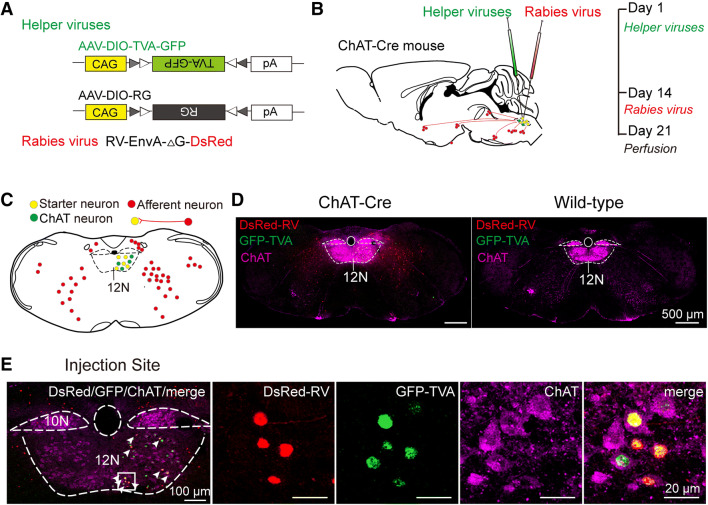
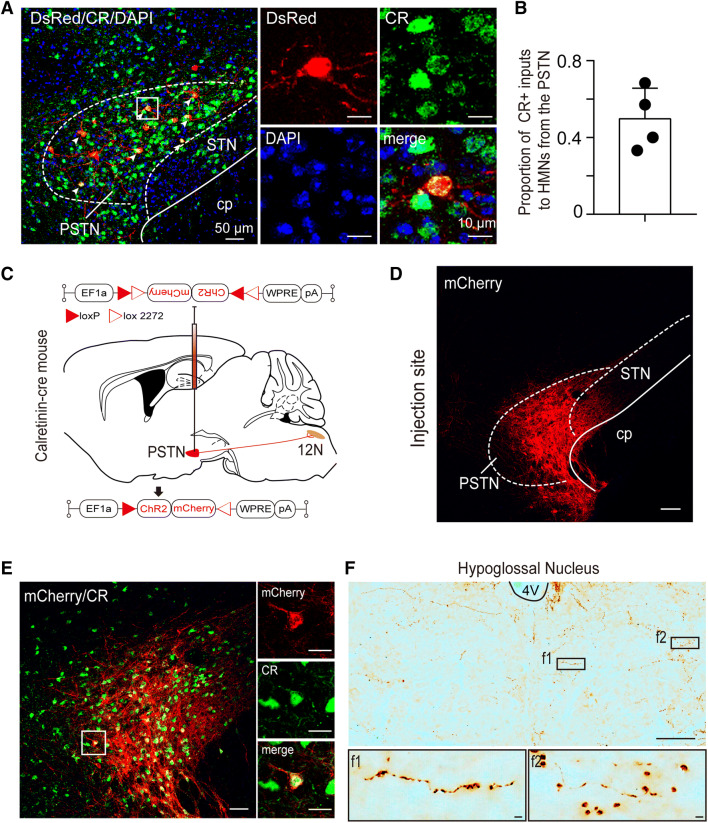
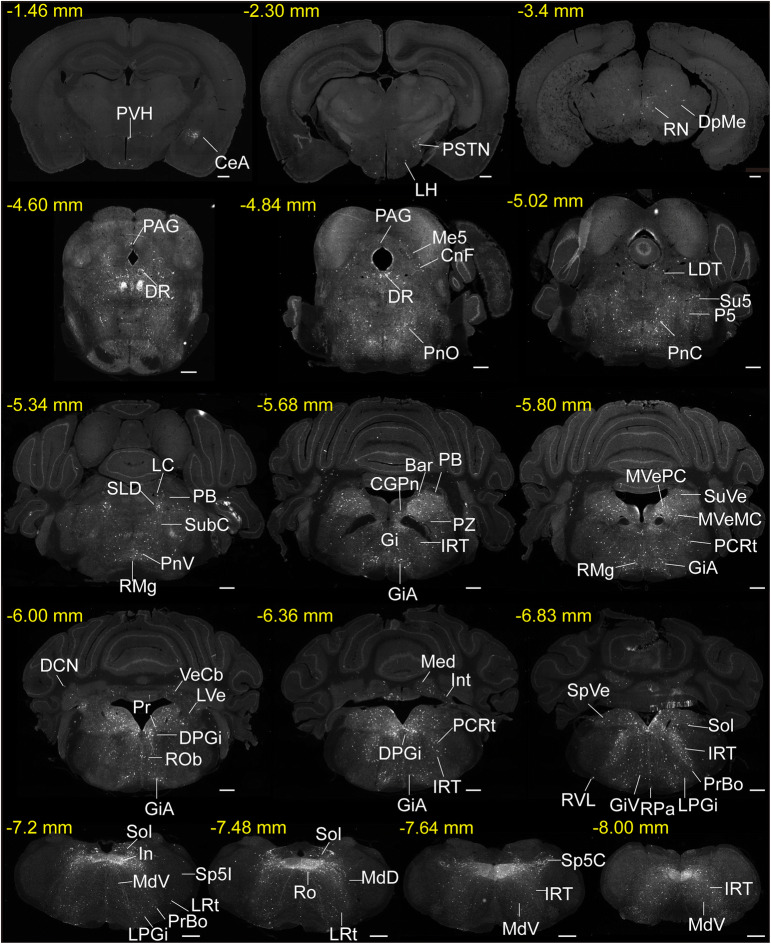
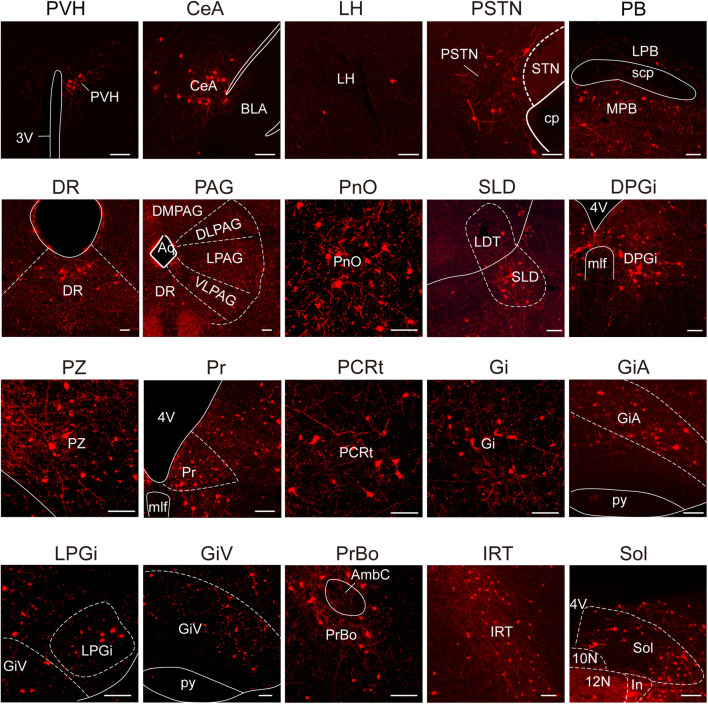
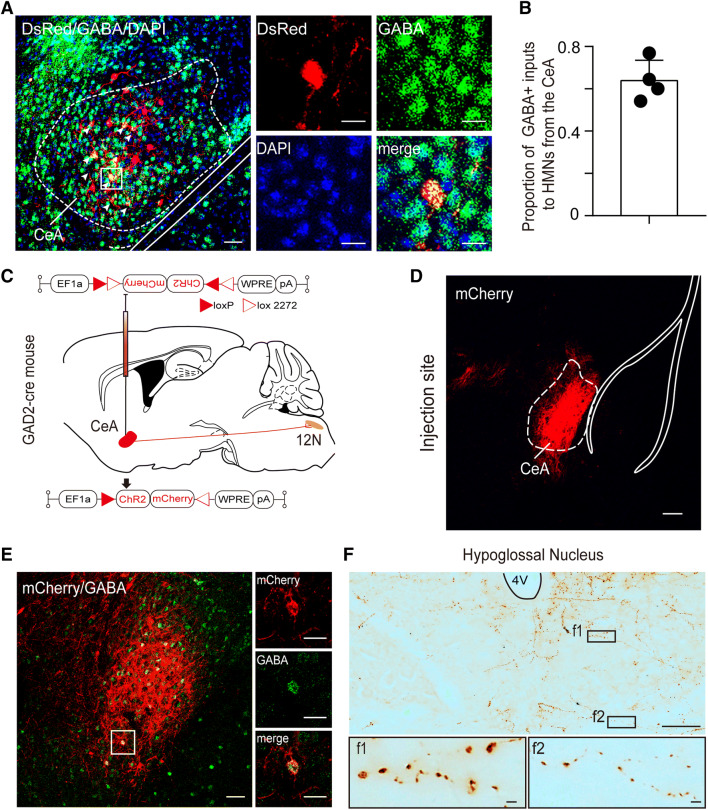
Hypoglossal motor neurons (HMNs) innervate tongue muscles and play key roles in a variety of physiological functions, including swallowing, mastication, suckling, vocalization, and respiration. Dysfunction of HMNs is associated with several diseases, such as obstructive sleep apnea (OSA) and sudden infant death syndrome. OSA is a serious breathing disorder associated with the activity of HMNs during different sleep-wake states. Identifying the neural mechanisms by which the state-dependent activities of HMNs are controlled may be helpful in providing a theoretical basis for effective therapy for OSA. However, the presynaptic partners governing the activity of HMNs remain to be elucidated. In the present study, we used a cell-type-specific retrograde tracing system based on a modified rabies virus along with a Cre/loxP gene-expression strategy to map the whole-brain monosynaptic inputs to HMNs in mice. We identified 53 nuclei targeting HMNs from six brain regions: the amygdala, hypothalamus, midbrain, pons, medulla, and cerebellum. We discovered that GABAergic neurons in the central amygdaloid nucleus, as well as calretinin neurons in the parasubthalamic nucleus, sent monosynaptic projections to HMNs. In addition, HMNs received direct inputs from several regions associated with respiration, such as the pre-Botzinger complex, parabrachial nucleus, nucleus of the solitary tract, and hypothalamus. Some regions engaged in sleep-wake regulation (the parafacial zone, parabrachial nucleus, ventral medulla, sublaterodorsal tegmental nucleus, dorsal raphe nucleus, periaqueductal gray, and hypothalamus) also provided primary inputs to HMNs. These results contribute to further elucidating the neural circuits underlying disorders caused by the dysfunction of HMNs.
舌下运动神经元(HMNs)支配舌肌,在多种生理功能中发挥关键作用,包括吞咽、咀嚼、吮吸、发声和呼吸。HMN 功能障碍与多种疾病有关,如阻塞性睡眠呼吸暂停(OSA)和婴儿猝死综合征。OSA 是一种严重的呼吸障碍,与 HMN 在不同睡眠-觉醒状态下的活动有关。确定 HMN 状态依赖性活动受控制的神经机制可能有助于为 OSA 的有效治疗提供理论基础。然而,调节 HMN 活动的突触前伙伴仍有待阐明。在本研究中,我们使用了一种基于改良狂犬病毒的细胞类型特异性逆行示踪系统,结合 Cre/loxP 基因表达策略,来描绘小鼠 HMN 的全脑单突触输入。我们从六个脑区鉴定出了 53 个靶向 HMN 的核团:杏仁核、下丘脑、中脑、脑桥、延髓和小脑。我们发现,杏仁核中央核的 GABA 能神经元和旁下丘脑核的钙视网膜蛋白神经元向 HMN 发出单突触投射。此外,HMN 还直接接收与呼吸相关的几个区域的输入,如前包钦格复合体、臂旁核、孤束核和下丘脑。一些参与睡眠-觉醒调节的区域(面旁区、臂旁核、延髓腹侧、Sublaterodorsal 中脑被盖核、中缝背核、导水管周围灰质和下丘脑)也向 HMN 提供初级输入。这些结果有助于进一步阐明 HMN 功能障碍引起的疾病的神经回路。