Papadopoulos Konstantinos, Pahinis Kimon, Saltidou Kyriaki, Dionysopoulos Dimitrios, Tsitrou Effrosyni
Department of Operative Dentistry, Faculty of Dentistry, School of Health Sciences, Aristotle University of Thessaloniki, Thessaloniki 54124, Greece.
A Department of Dentistry, Nea Moudania National Health Center, Nea Moudania 63200, Greece.
Materials (Basel). 2020 Feb 22;13(4):981. doi: 10.3390/ma13040981.
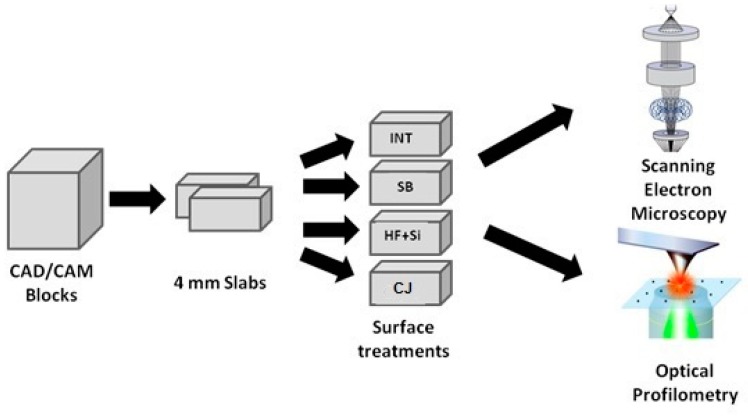
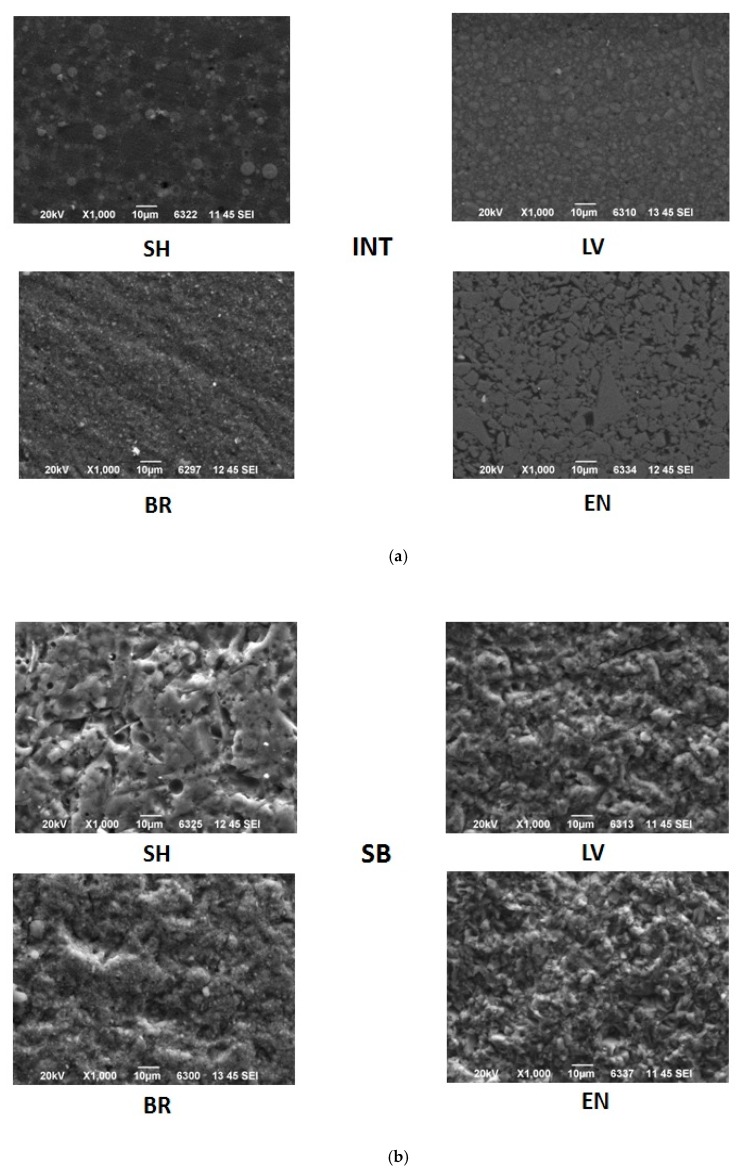
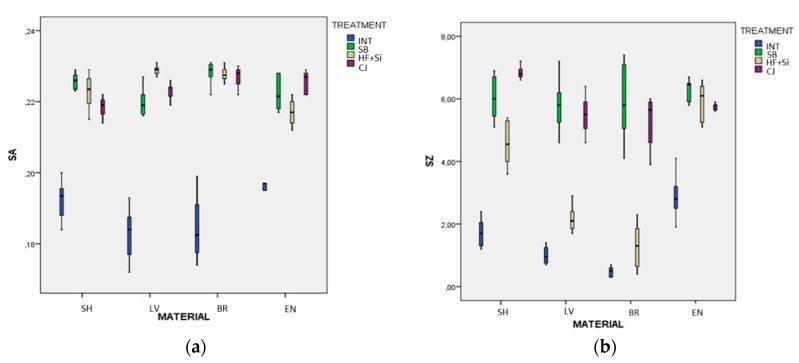
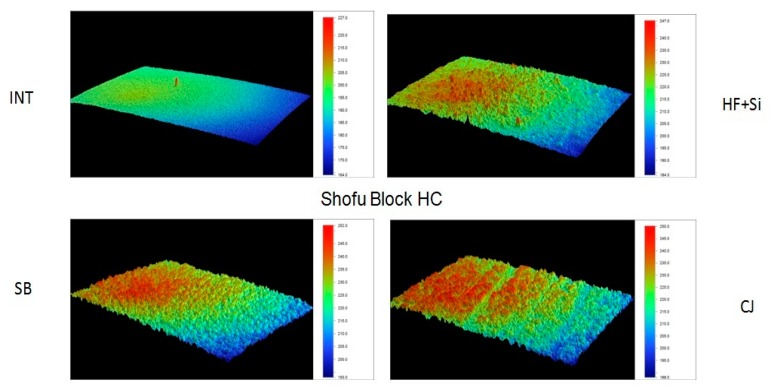
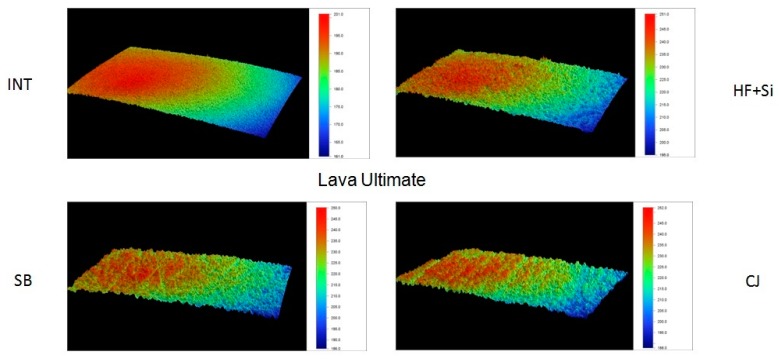
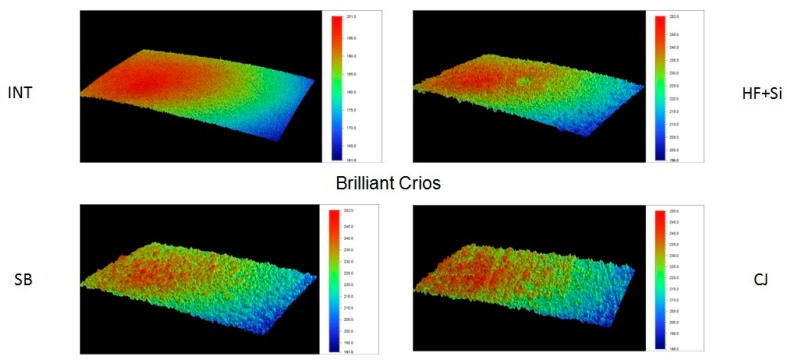
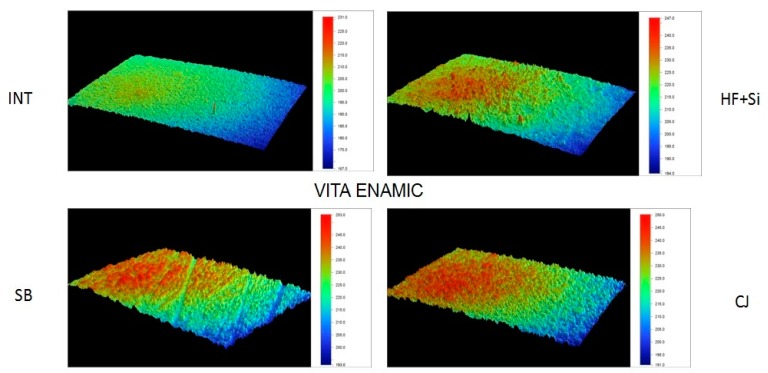
Computer-aided design/computer-aided manufacturing (CAD/CAM) technology was developed to ensure the sufficient strength of tooth restorations, to improve esthetic restorations with a natural appearance and to make the techniques easier, faster and more accurate. In the view of the limited research on the surface treatments of the CAD/CAM materials and the need to evaluate the ideal surface characteristics of a material to achieve the best adhesion to tooth tissues, this study aimed to investigate the surface roughness and morphology of four different CAD/CAM materials using four different surface treatments. The CAD/CAM materials used in this study were three composites (Shofu Block HC, Lava Ultimate and Brilliant Crios) and a hybrid ceramic (Enamic). The surface of the specimens of each material received one of the following treatments: no surface treatment, sandblasting with 29 μm AlO particles, 9% hydrofluoric acid etching and silane application, and the tribochemical method using CoJet System. Surface roughness was evaluated using optical profilometry, and surface morphology was observed by means of scanning electron microscopy. All surface treatments resulted in higher surface roughness values compared to the control group. Different treatments affected the surface properties of the materials, presumably due to discrepancies in their composition and structure.
计算机辅助设计/计算机辅助制造(CAD/CAM)技术的发展是为了确保牙齿修复体有足够的强度,改善修复体的美观使其外观自然,并使技术更简便、快速和精确。鉴于对CAD/CAM材料表面处理的研究有限,且需要评估材料的理想表面特性以实现与牙齿组织的最佳黏附,本研究旨在使用四种不同的表面处理方法来研究四种不同CAD/CAM材料的表面粗糙度和形态。本研究中使用的CAD/CAM材料为三种复合材料(松风Block HC、Lava Ultimate和Brilliant Crios)和一种混合陶瓷(Enamic)。每种材料的试样表面接受以下处理之一:不进行表面处理、用29μm AlO颗粒喷砂、9%氢氟酸蚀刻并应用硅烷,以及使用CoJet系统的摩擦化学方法。使用光学轮廓仪评估表面粗糙度,通过扫描电子显微镜观察表面形态。与对照组相比,所有表面处理均导致更高的表面粗糙度值。不同的处理影响了材料的表面性能,这可能是由于它们的组成和结构存在差异。