Department of Orthopaedic Surgery, Aarhus University Hospital.
Department of Clinical Medicine, Aarhus University.
Acta Orthop. 2020 Jun;91(3):319-325. doi: 10.1080/17453674.2020.1730660. Epub 2020 Feb 26.
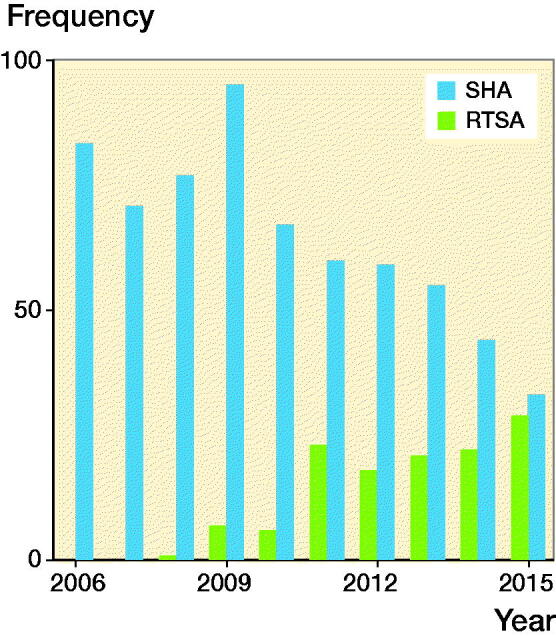
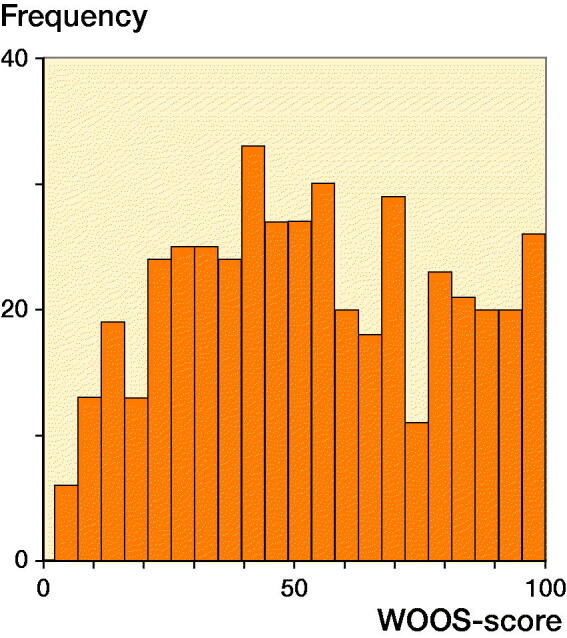
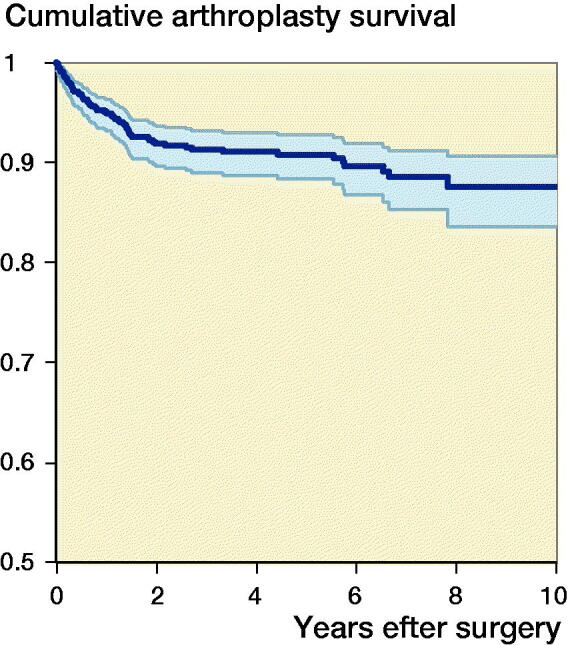
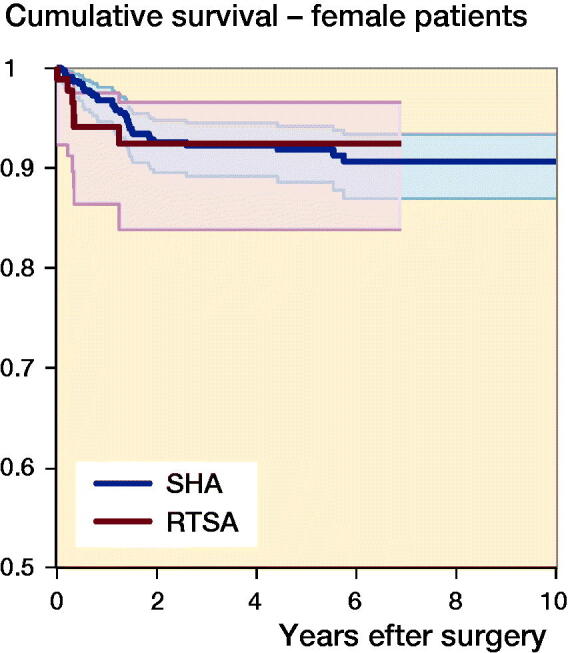
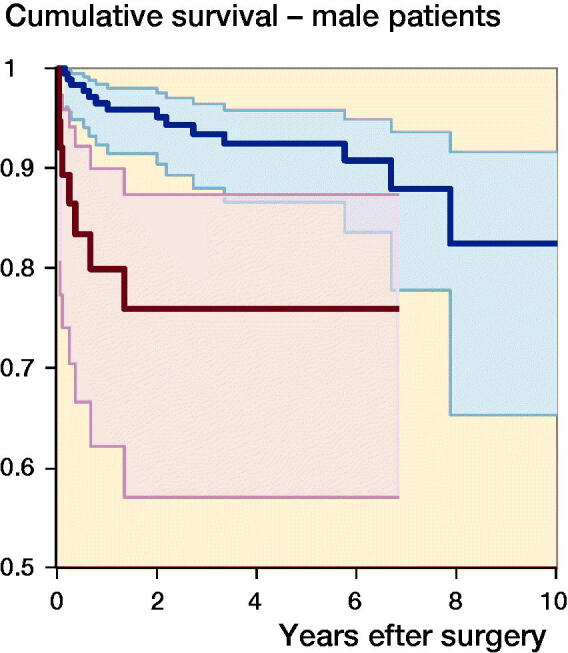
Background and purpose - When nonoperative treatment of proximal humerus fracture (PHF) fails, shoulder arthroplasty may be indicated. We investigated risk factors for revision and evaluated patient-reported outcome 1 year after treatment with either stemmed hemiarthroplasty (SHA) or reverse total shoulder arthroplasty (RTSA) after previous nonoperative treatment of PHF sequelae.Patients and methods - Data were derived from the Danish Shoulder Arthroplasty Registry and included 837 shoulder arthroplasties performed for PHF sequelae between 2006 and 2015. Type of arthroplasty, sex, age, and surgery period were investigated as risk factors. The Western Ontario Osteoarthritis of the Shoulder index (WOOS) was used to evaluate patient-reported outcome (0-100, 0 indicates worst outcome). Cox regression and linear regression models were used in the statistical analyses.Results - 644 patients undergoing SHA and 127 patients undergoing RTSA were included. During a mean follow-up of 3.7 years, 48 (7%) SHA and 14 (11%) RTSA were revised. Men undergoing RTSA had a higher revision rate than men undergoing SHA (hazard ratio [HR] 6, 95% confidence interval [CI] 2-19). 454 (62%) patients returned a complete WOOS questionnaire. The mean WOOS score was 53 for SHA and 53 for RTSA. Patients who were 65 years or older had a better WOOS score than younger patients (mean difference 7, CI 1-12). Half of patients had WOOS scores below 50.Interpretation - Shoulder arthroplasty for PHF sequelae was associated with a high risk of revision and a poor patient-reported outcome. Men treated with RTSA had a high risk of revision.
背景与目的-当肱骨近端骨折(PHF)的非手术治疗失败时,可能需要进行肩关节置换。我们研究了既往非手术治疗 PHF 后遗症后行半髋关节置换术(SHA)或反式全肩关节置换术(RTSA)治疗的患者的翻修相关风险因素,并评估了患者 1 年时的报告结局。
患者和方法-数据来自丹麦肩关节置换登记处,纳入了 2006 年至 2015 年间因 PHF 后遗症而行肩关节置换的 837 例患者。研究了关节置换类型、性别、年龄和手术时期作为危险因素。采用 Western Ontario 肩关节炎指数(WOOS)评估患者报告结局(0-100,0 表示最差结局)。采用 Cox 回归和线性回归模型进行统计分析。
结果-纳入 644 例行 SHA 和 127 例行 RTSA 的患者。平均随访 3.7 年后,48 例(7%)SHA 和 14 例(11%)RTSA 进行了翻修。行 RTSA 的男性翻修率高于行 SHA 的男性(风险比 [HR] 6,95%置信区间 [CI] 2-19)。454 例(62%)患者返回了完整的 WOOS 问卷。SHA 和 RTSA 的平均 WOOS 评分为 53。65 岁及以上的患者 WOOS 评分高于年轻患者(平均差值 7,CI 1-12)。半数患者的 WOOS 评分低于 50。
结论-PHF 后遗症的肩关节置换与较高的翻修风险和较差的患者报告结局相关。行 RTSA 的男性有较高的翻修风险。