Department of Microbiology and Molecular Genetics, Oklahoma State University, Stillwater, Oklahoma, 74078, USA.
Department of Biochemistry and Microbiology at Oklahoma State University-Center for Health Sciences, College of Osteopathic Medicine, Tulsa, Oklahoma, 74464, USA.
Sci Rep. 2020 Feb 25;10(1):3383. doi: 10.1038/s41598-020-59231-9.
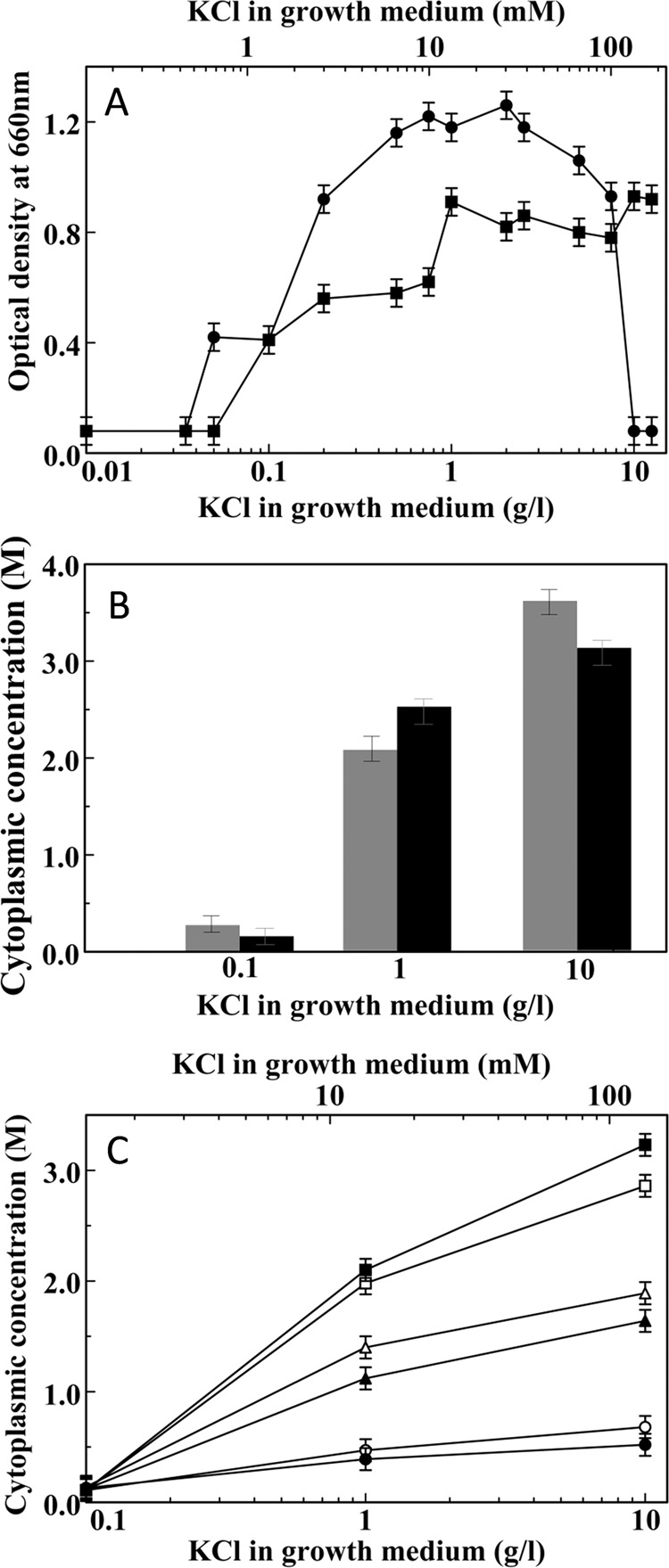
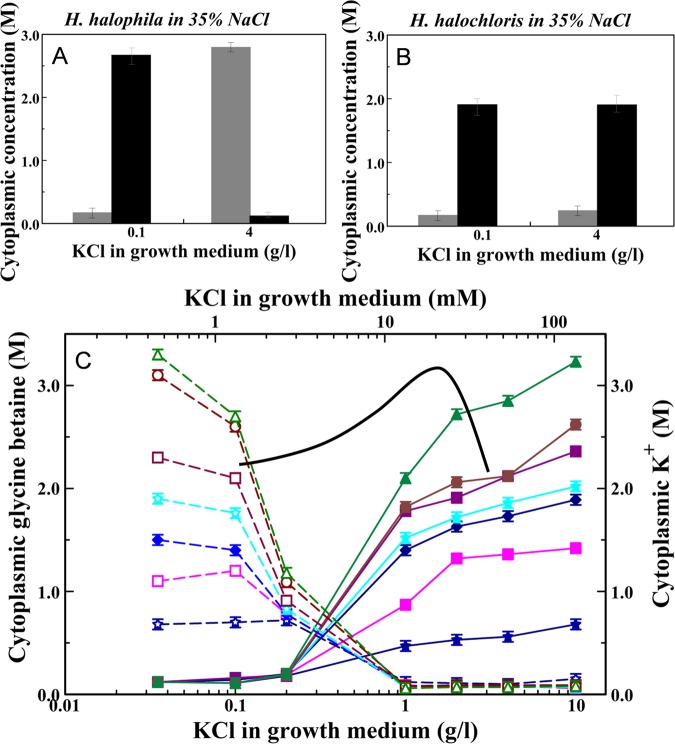
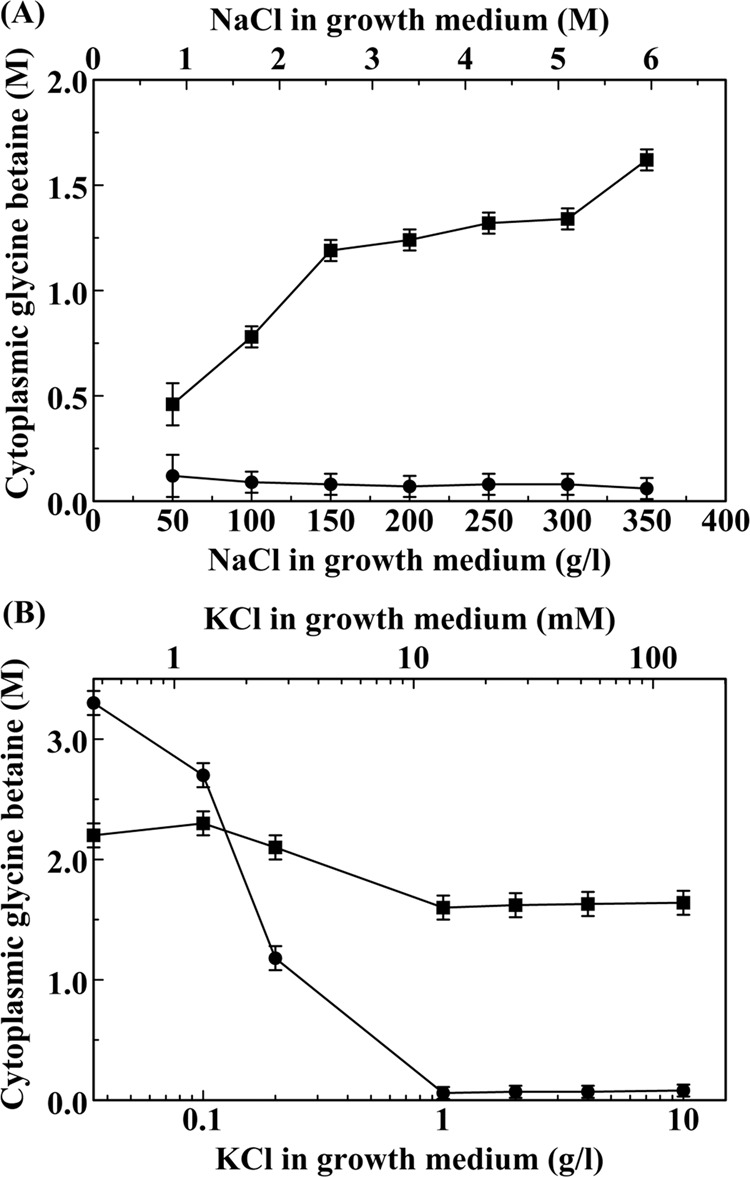
Halophiles utilize two distinct osmoprotection strategies. The accumulation of organic compatible solutes such as glycine betaine does not perturb the functioning of cytoplasmic components, but represents a large investment of energy and carbon. KCl is an energetically attractive alternative osmoprotectant, but requires genome-wide modifications to establish a highly acidic proteome. Most extreme halophiles are optimized for the use of one of these two strategies. Here we examine the extremely halophilic Proteobacterium Halorhodospira halophila and report that medium K concentration dramatically alters its osmoprotectant use. When grown in hypersaline media containing substantial K concentrations, H. halophila accumulates molar concentrations of KCl. However, at limiting K concentrations the organism switches to glycine betaine as its major osmoprotectant. In contrast, the closely related organism Halorhodospira halochloris is limited to using compatible solutes. H. halophila performs both de novo synthesis and uptake of glycine betaine, matching the biosynthesis and transport systems encoded in its genome. The medium K concentration (~10 mM) at which the KCl to glycine betaine osmoprotectant switch in H. halophila occurs is near the K content of the lake from which it was isolated, supporting an ecological relevance of this osmoprotectant strategy.
嗜盐菌利用两种截然不同的渗透保护策略。有机兼容溶质(如甘氨酸甜菜碱)的积累不会干扰细胞质成分的功能,但需要大量的能量和碳投入。KCl 是一种具有吸引力的替代渗透保护剂,但需要对基因组进行全面修改才能建立高度酸性的蛋白质组。大多数极端嗜盐菌都优化了这两种策略中的一种。在这里,我们研究了极端嗜盐古菌 Halorhodospira halophila,并报告说中等 K 浓度会显著改变其渗透保护剂的使用。当在含有大量 K 浓度的高盐培养基中生长时,H. halophila 积累摩尔浓度的 KCl。然而,在 K 浓度有限的情况下,该生物体转而将甘氨酸甜菜碱作为其主要的渗透保护剂。相比之下,密切相关的物种 Halorhodospira halochloris 仅限于使用兼容溶质。H. halophila 既能进行甘氨酸甜菜碱的从头合成,也能进行甘氨酸甜菜碱的摄取,与它基因组中编码的生物合成和运输系统相匹配。H. halophila 中 KCl 到甘氨酸甜菜碱渗透保护剂转换的中等 K 浓度(~10 mM)接近其分离自的湖泊中的 K 含量,这支持了这种渗透保护剂策略的生态相关性。