Dipartimento di Medicina Interna e Specialità Mediche, Sapienza Università di Roma, 00161, Rome, Italy.
Dipartimento di Medicina Molecolare, Sapienza Università di Roma, 00161, Rome, Italy.
Commun Biol. 2020 Feb 25;3(1):85. doi: 10.1038/s42003-020-0811-x.
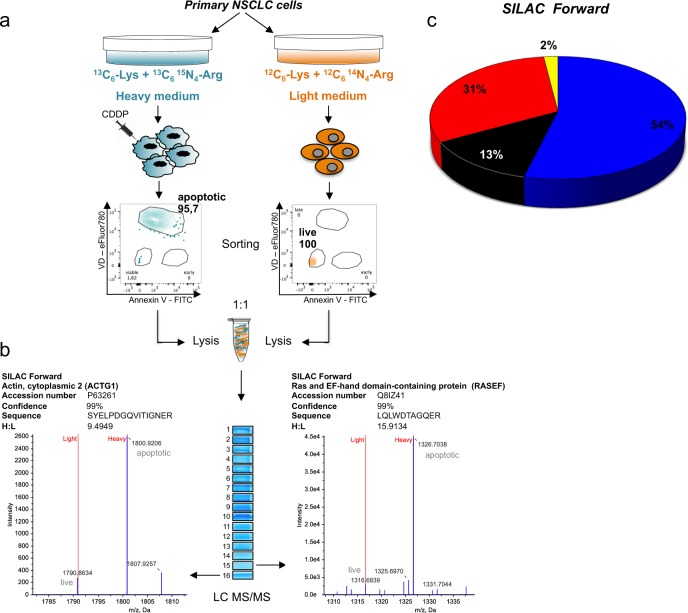
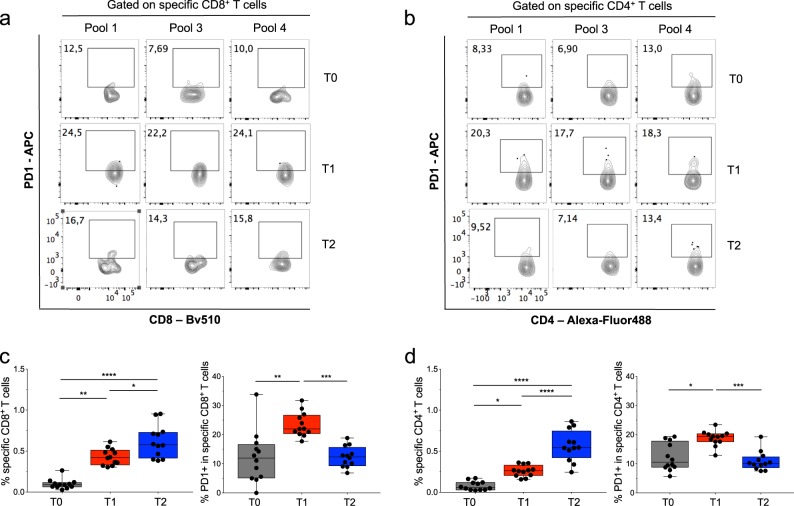
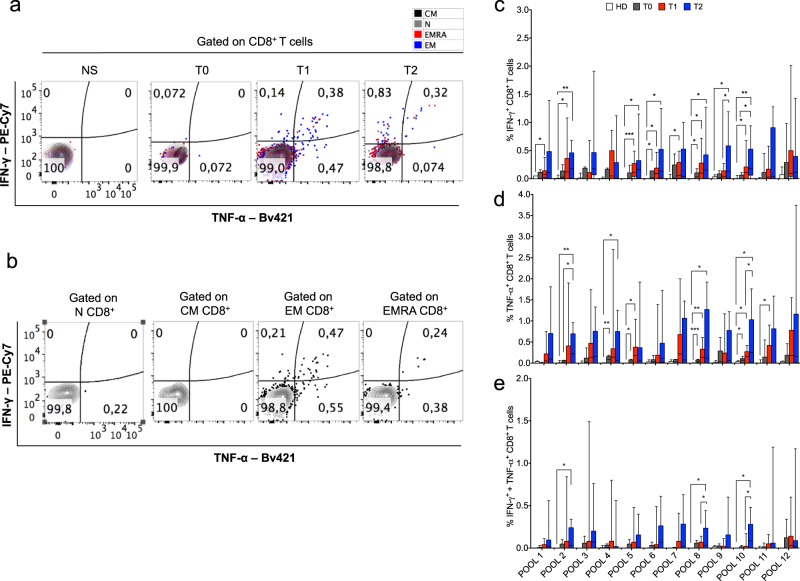
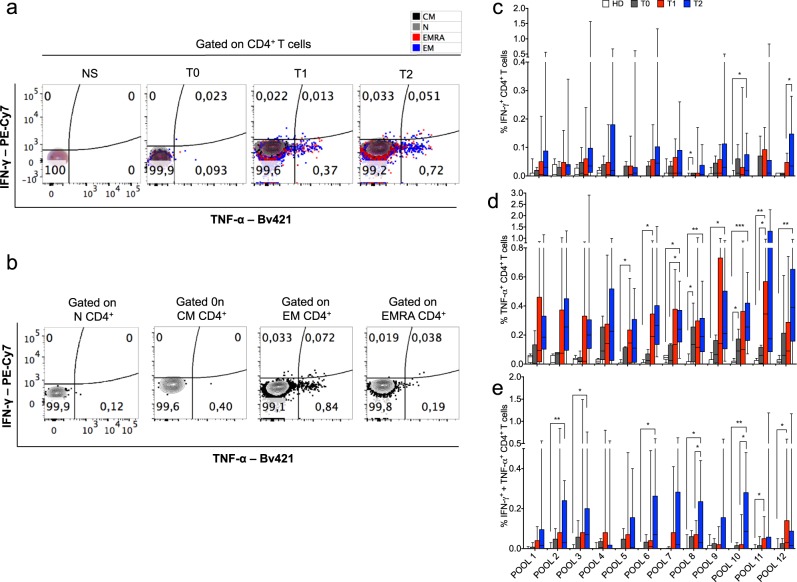
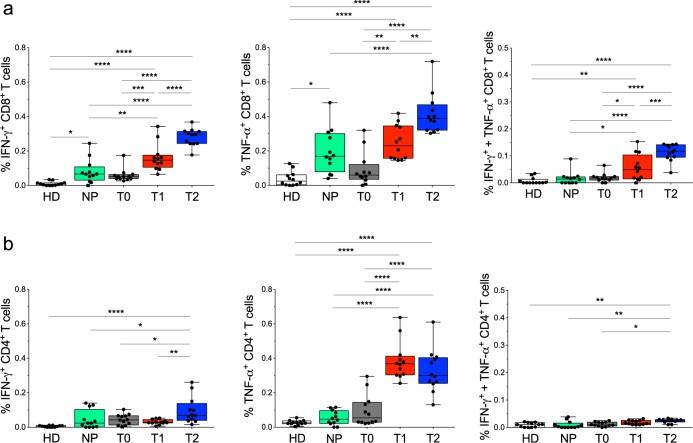
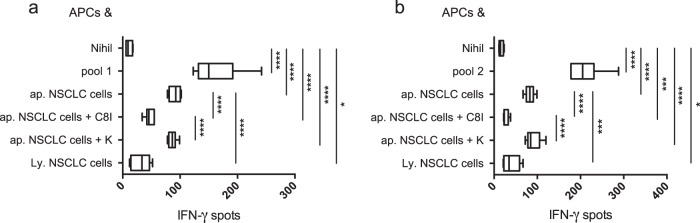
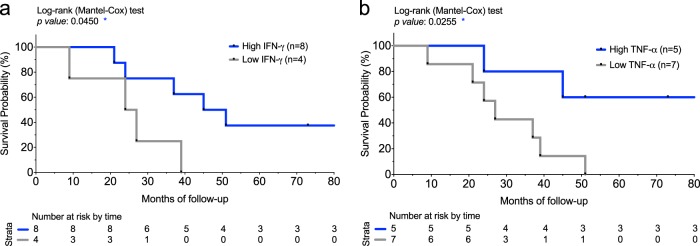
Here, we developed an unbiased, functional target-discovery platform to identify immunogenic proteins from primary non-small cell lung cancer (NSCLC) cells that had been induced to apoptosis by cisplatin (CDDP) treatment in vitro, as compared with their live counterparts. Among the multitude of proteins identified, some of them were represented as fragmented proteins in apoptotic tumor cells, and acted as non-mutated neoantigens (NM-neoAgs). Indeed, only the fragmented proteins elicited effective multi-specific CD4 and CD8 T cell responses, upon a chemotherapy protocol including CDDP. Importantly, these responses further increased upon anti-PD-1 therapy, and correlated with patients' survival and decreased PD-1 expression. Cross-presentation assays showed that NM-neoAgs were unveiled in apoptotic tumor cells as the result of caspase-dependent proteolytic activity of cellular proteins. Our study demonstrates that apoptotic tumor cells generate a repertoire of immunogenic NM-neoAgs that could be potentially used for developing effective T cell-based immunotherapy across multiple cancer patients.
在这里,我们开发了一种无偏倚的、功能性的靶标发现平台,以鉴定体外顺铂(CDDP)诱导凋亡的原发性非小细胞肺癌(NSCLC)细胞中的免疫原性蛋白,与活细胞相比。在鉴定出的众多蛋白质中,其中一些在凋亡肿瘤细胞中表现为碎片化蛋白,并作为非突变的新抗原(NM-neoAgs)发挥作用。事实上,只有在包括 CDDP 的化疗方案中,这些碎片化蛋白才能引发有效的多特异性 CD4 和 CD8 T 细胞反应。重要的是,这些反应在抗 PD-1 治疗后进一步增加,并与患者的生存和 PD-1 表达降低相关。交叉呈递实验表明,NM-neoAgs 是细胞蛋白的 caspase 依赖性蛋白水解活性导致凋亡肿瘤细胞中揭示出来的。我们的研究表明,凋亡肿瘤细胞产生了一系列免疫原性的 NM-neoAgs,这些抗原可能被用于开发针对多种癌症患者的有效基于 T 细胞的免疫疗法。