Alawdi Shawqi H, Eidi Housam, Safar Marwa M, Abdel-Wahhab Mosaad A
Department of Pharmacology, Faculty of Medicine and Health Sciences, Thamar University, Dhamar, Yemen.
Department of Pharmacy Practice, Faculty of Pharmacy, University of Science and Technology, Sana'a, Yemen.
Nanotechnol Sci Appl. 2019 Dec 31;12:47-53. doi: 10.2147/NSA.S232517. eCollection 2019.
Diamond nanoparticles (Nanodiamond) are biocompatible drug delivery platforms with outstanding surface properties. Their passage into the brain has been confirmed previously. Thus, nanodiamond could provide a drug delivery system to shuttle several drugs through the blood-brain barrier (BBB) which represents a real challenge for the effective delivery of several drugs into the brain. Amlodipine is a calcium channel blocker that cannot pass through BBB and may elicit neuroprotective effects to reverse calcium-induced excitotoxicity and mitochondrial dysfunction that underlie several neurologic disorders including Alzheimer's disease and stroke.
The study aimed to investigate the loading of amlodipine on nanodiamond particles.
Nanodiamond particles were oxidized in a strong oxidizing acidic mixture of sulfuric and nitric acids. Adsorption of amlodipine on nanodiamond particles was achieved in alkaline pH using various concentrations of sodium hydroxide. The loaded amlodipine was determined by high-performance liquid chromatography and confirmed by Fourier transform infrared (FTIR) spectroscopy and transmission electron microscopy.
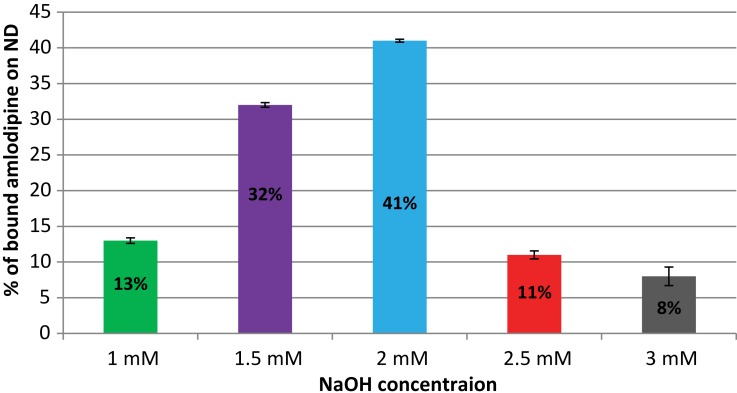
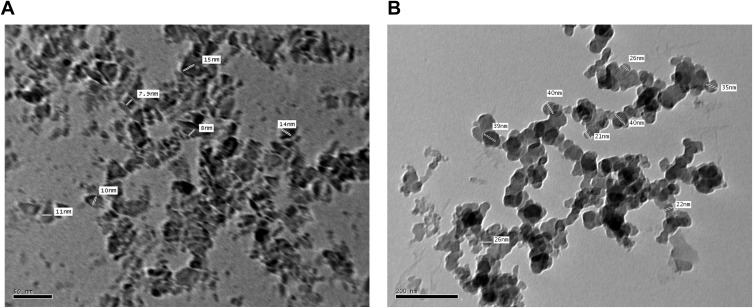
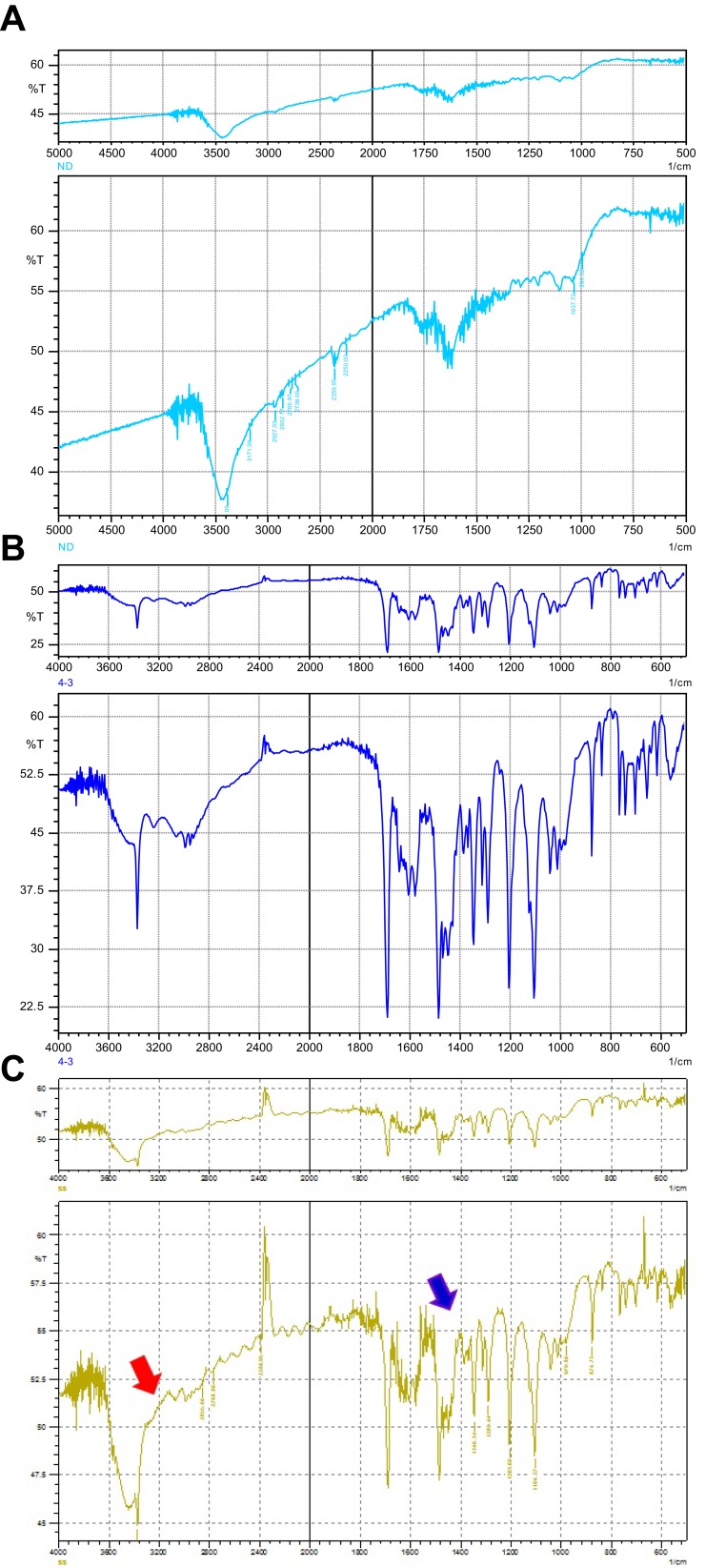
The highest percentage (41%) of loaded amlodipine onto nanodiamond particles was achieved in alkaline medium using 2 mM NaOH at a corresponding pH of 8.5. Also, characteristic FTIR bands of amlodipine and nanodiamond were shown obviously in the nanodiamond-amlodipine conjugates. Moreover, the successful loading of amlodipine on diamond nanoparticles was confirmed by transmission electron microscopy.
The present study demonstrates the successful loading of amlodipine onto nanodiamond particles. These findings offer a potential for applying diamond nanoparticles as a drug delivery system to shuttle amlodipine into the brain and open the door to deliver other similar drugs into the brain.
纳米金刚石是具有出色表面特性的生物相容性药物递送平台。此前已证实其可进入大脑。因此,纳米金刚石可提供一种药物递送系统,使多种药物穿过血脑屏障(BBB),而这对多种药物有效递送至大脑而言是一项真正的挑战。氨氯地平是一种钙通道阻滞剂,无法穿过血脑屏障,可能具有神经保护作用,可逆转钙诱导的兴奋性毒性和线粒体功能障碍,而这些正是包括阿尔茨海默病和中风在内的多种神经系统疾病的发病基础。
本研究旨在探究氨氯地平在纳米金刚石颗粒上的负载情况。
纳米金刚石颗粒在硫酸和硝酸的强氧化性酸性混合物中进行氧化。在碱性pH条件下,使用不同浓度的氢氧化钠实现氨氯地平在纳米金刚石颗粒上的吸附。通过高效液相色谱法测定负载的氨氯地平,并通过傅里叶变换红外光谱(FTIR)和透射电子显微镜进行确认。
在碱性介质中,使用2 mM氢氧化钠,在相应pH值为8.5时,纳米金刚石颗粒上负载氨氯地平的百分比最高(41%)。此外,在纳米金刚石-氨氯地平偶联物中,氨氯地平和纳米金刚石的特征FTIR谱带明显可见。而且,透射电子显微镜证实了氨氯地平成功负载在金刚石纳米颗粒上。
本研究证明氨氯地平成功负载在纳米金刚石颗粒上。这些发现为应用金刚石纳米颗粒作为药物递送系统将氨氯地平输送至大脑提供了可能性,并为将其他类似药物输送至大脑打开了大门。