John Kevin, Mishra Ajay Kumar, Gunasekaran Karthik, Iyyadurai Ramya
Department of Medicine, Christian Medical College, Vellore, India.
Case Rep Nephrol. 2020 Feb 12;2020:7801546. doi: 10.1155/2020/7801546. eCollection 2020.
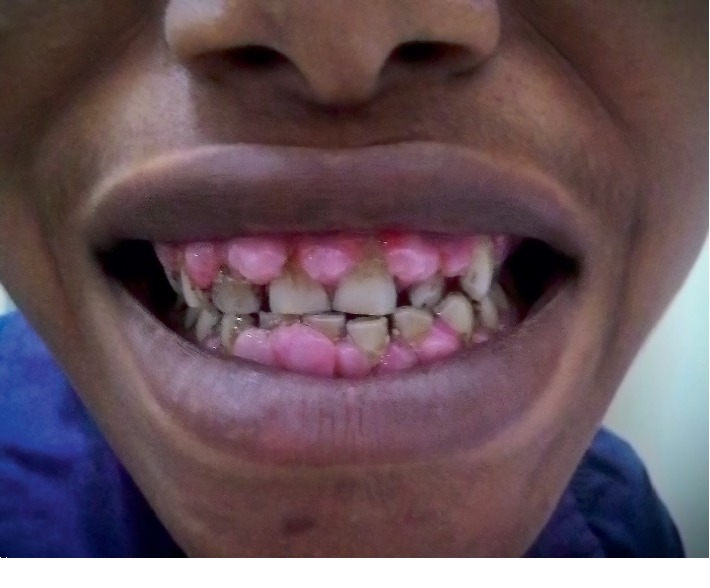
Gingival hyperplasia is a rare finding in clinical practice. Nevertheless, when it occurs, it is a finding of great value as it can lead to definite clinical diagnosis. The present case is a 19-year-old male who was referred for further management of stage 5 chronic kidney disease. On evaluation, he was found to have gingival hyperplasia. He was evaluated for reversible causes of kidney disease, and since none were found, renal replacement therapy was advised. He had been taking amlodipine for blood pressure control. As this was presumed to be the cause of gingival hyperplasia, it was stopped and replaced by a combination of beta-blocker and prazosin. At six-month follow-up, he had complete resolution of gingival hyperplasia. Amlodipine as a cause of gingival hyperplasia is a rare occurrence. However, it is crucial to keep in mind such a possible side effect of this commonly prescribed antihypertensive drug.
牙龈增生在临床实践中是一种罕见的表现。然而,当它出现时,却是一项具有重要价值的发现,因为它可导致明确的临床诊断。本病例为一名19岁男性,因5期慢性肾脏病前来接受进一步治疗。经评估,发现他患有牙龈增生。对其进行了肾病可逆病因的评估,由于未发现任何可逆病因,遂建议进行肾脏替代治疗。他一直在服用氨氯地平来控制血压。由于推测这是牙龈增生的病因,故停用氨氯地平,换用β受体阻滞剂和哌唑嗪的联合用药。在六个月的随访中,他的牙龈增生完全消退。氨氯地平作为牙龈增生的病因较为罕见。然而,牢记这种常用降压药可能存在的这种副作用至关重要。