Mesias Marta, Nouali Aouatif, Delgado-Andrade Cristina, Morales Francisco J
Institute of Food Science, Technology and Nutrition (ICTAN-CSIC), 28040 Madrid, Spain.
Foods. 2020 Feb 24;9(2):247. doi: 10.3390/foods9020247.
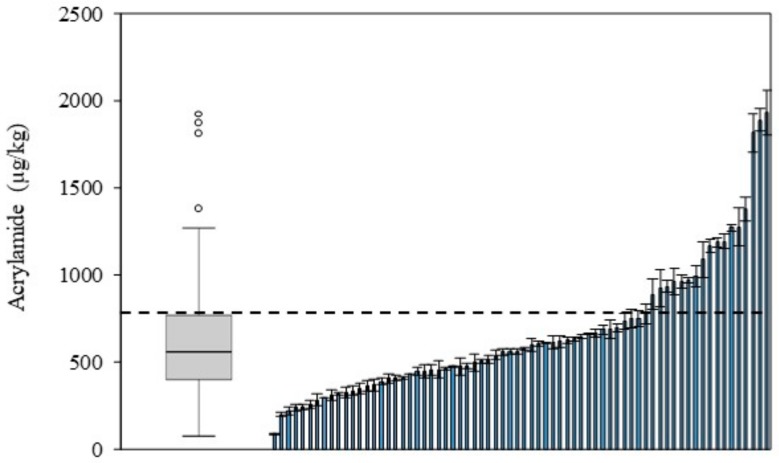
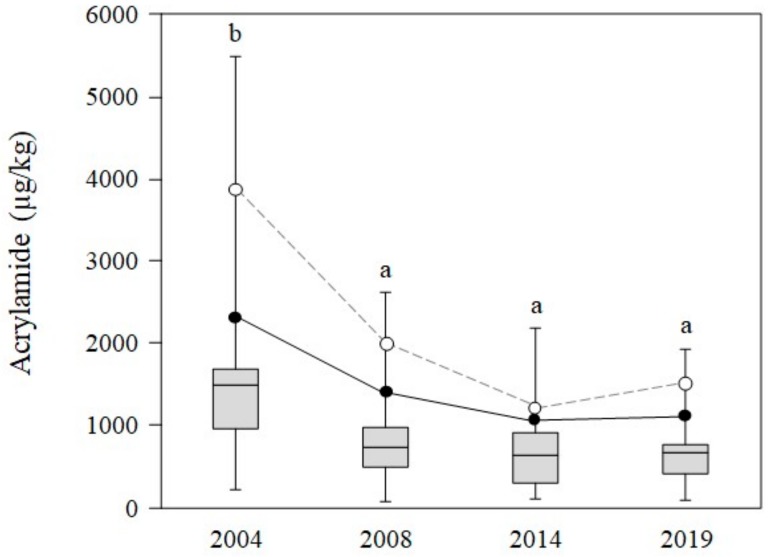
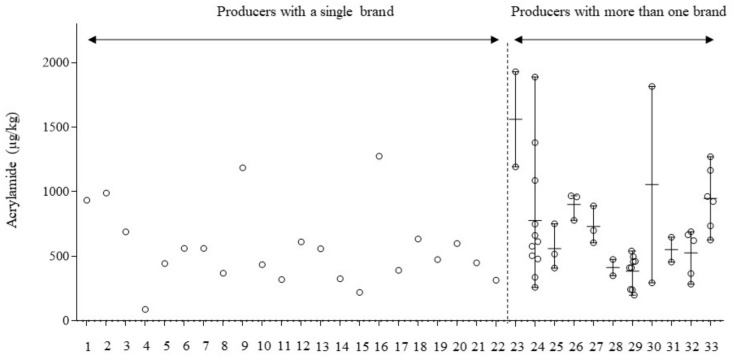
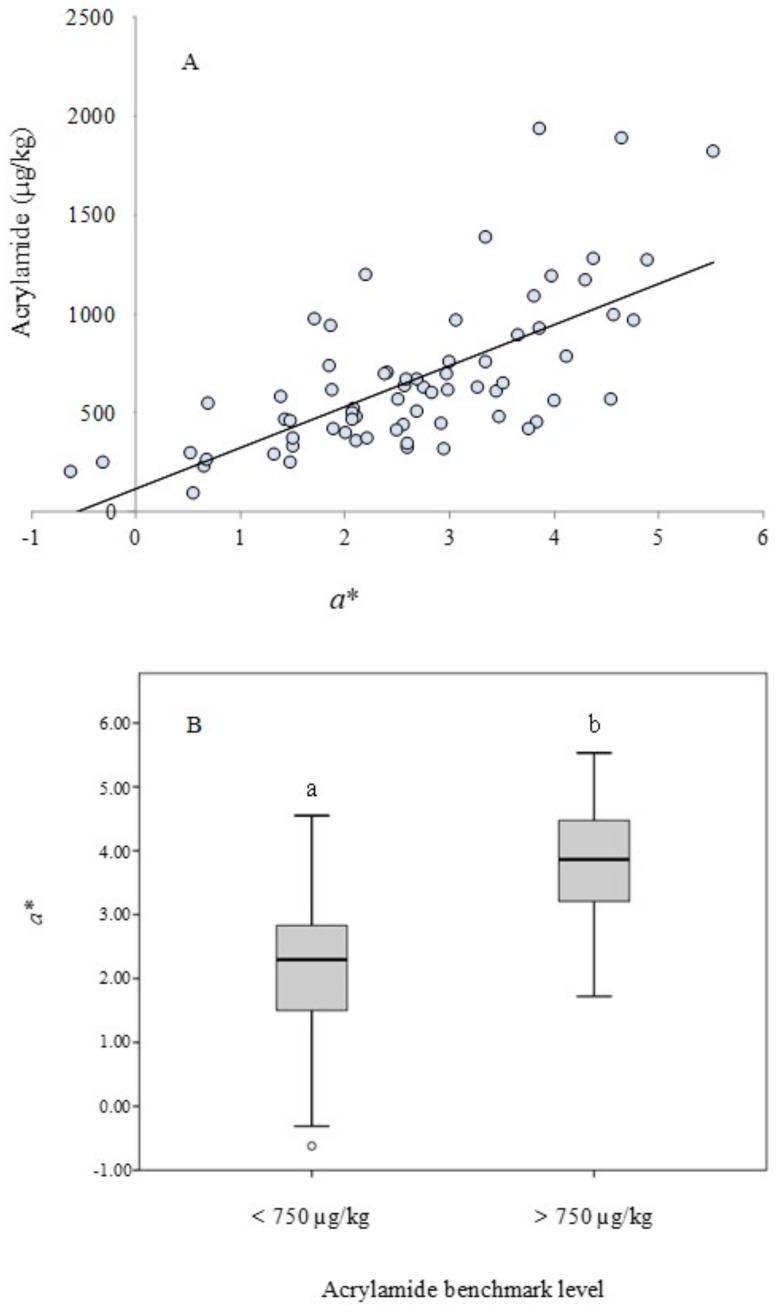
In 2017, the European Commission published Regulation 2017/2158 establishing mitigation measures and benchmark levels to reduce acrylamide in foods. Acrylamide was determined in seventy potato crisp samples commercialized in Spain. The aim was to update knowledge about the global situation in the snack sector and evaluate the effectiveness of mitigation strategies applied, especially since the publication of the Regulation. Results were compared with data previously published in 2004, 2008, and 2014, assessing the evolution over recent years. Average acrylamide content in 2019 (664 µg/kg, range 89-1930 μg/kg) was 55.3% lower compared to 2004, 10.3% lower compared to 2008 and practically similar to results from 2014. Results support the effectiveness of mitigation measures implemented by Spanish potato crisp manufacturers. However, 27% of samples exhibited concentrations above the benchmark level established in the Regulation (750 μg/kg), which suggests that efforts to reduce acrylamide formation in this sector must be continued. Besides the variability seen between samples, acrylamide significantly correlated with the color parameter , which enables discrimination of whether potato crisps contain above or below benchmark content. The calculated margin of exposure for carcinogenicity was below the safety limit, which should be considered from a public health point of view.
2017年,欧盟委员会发布了第2017/2158号法规,确立了减少食品中丙烯酰胺的缓解措施和基准水平。对西班牙市场上销售的70份薯片样品中的丙烯酰胺进行了测定。目的是更新关于零食行业全球形势的知识,并评估所应用缓解策略的有效性,特别是自该法规发布以来。将结果与2004年、2008年和2014年之前公布的数据进行比较,评估近年来的变化情况。2019年丙烯酰胺的平均含量(664微克/千克,范围为89 - 1930微克/千克)与2004年相比降低了55.3%,与2008年相比降低了10.3%,与2014年的结果基本相似。结果支持了西班牙薯片制造商实施的缓解措施的有效性。然而,27%的样品丙烯酰胺浓度高于法规规定的基准水平(750微克/千克),这表明该行业减少丙烯酰胺形成的努力仍需继续。除了样品之间存在的变异性外,丙烯酰胺与颜色参数显著相关,这能够区分薯片的丙烯酰胺含量是高于还是低于基准含量。计算得出的致癌性暴露边际低于安全限值,从公共卫生角度应予以考虑。