Department of Epidemiology, University of Washington, Seattle, Washington, USA.
Department of Global Health, University of Washington, Seattle, Washington, USA.
BMJ Open. 2020 Feb 25;10(2):e035186. doi: 10.1136/bmjopen-2019-035186.
Bacterial vaginosis (BV) and vaginal microbiota disruption during pregnancy are associated with increased risk of spontaneous preterm birth (SPTB), but clinical trials of BV treatment during pregnancy have shown little or no benefit. An alternative hypothesis is that vaginal bacteria present around conception may lead to SPTB by compromising the protective effects of cervical mucus, colonising the endometrial surface before fetal membrane development, and causing low-level inflammation in the decidua, placenta and fetal membranes. This protocol describes a prospective case-cohort study addressing this hypothesis.
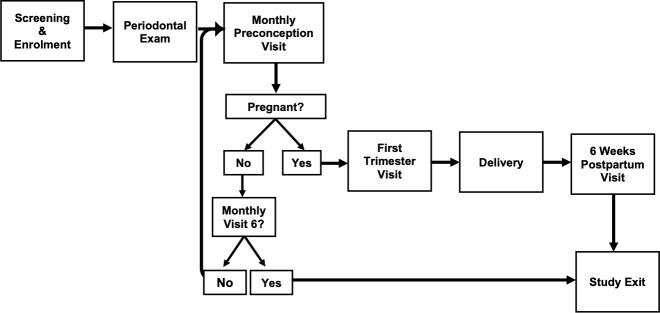
HIV-seronegative Kenyan women with fertility intent are followed from preconception through pregnancy, delivery and early postpartum. Participants provide monthly vaginal specimens during the preconception period for vaginal microbiota assessment. Estimated date of delivery is determined by last menstrual period and first trimester obstetrical ultrasound. After delivery, a swab is collected from between the fetal membranes. Placenta and umbilical cord samples are collected for histopathology. Broad-range 16S rRNA gene PCR and deep sequencing of preconception vaginal specimens will assess species richness and diversity in women with SPTB versus term delivery. Concentrations of key bacterial species will be compared using quantitative PCR (qPCR). Taxon-directed qPCR will also be used to quantify bacteria from fetal membrane samples and evaluate the association between bacterial concentrations and histopathological evidence of inflammation in the fetal membranes, placenta and umbilical cord.
This study was approved by ethics committees at Kenyatta National Hospital and the University of Washington. Results will be disseminated to clinicians at study sites and partner institutions, presented at conferences and published in peer-reviewed journals. The findings of this study could shift the paradigm for thinking about the mechanisms linking vaginal microbiota and prematurity by focusing attention on the preconception vaginal microbiota as a mediator of SPTB.
细菌性阴道病(BV)和阴道微生物群失调与妊娠期间自发性早产(SPTB)风险增加有关,但妊娠期间治疗 BV 的临床试验显示获益甚少或没有获益。另一种假设是,受孕前后存在的阴道细菌可能通过破坏宫颈粘液的保护作用、在胎膜发育前定植于子宫内膜表面以及在蜕膜、胎盘和胎膜中引起低水平炎症,从而导致 SPTB。本方案描述了一项前瞻性病例对照研究,旨在验证这一假说。
具有生育意向的肯尼亚 HIV 血清阴性妇女从受孕前一直随访至妊娠、分娩和产后早期。参与者在受孕前期间每月提供阴道标本,以评估阴道微生物群。通过末次月经和孕早期产科超声确定预计分娩日期。分娩后,从胎膜之间采集拭子。胎盘和脐带样本用于组织病理学检查。对 SPTB 与足月分娩妇女的受孕前阴道标本进行广谱 16S rRNA 基因 PCR 和深度测序,以评估物种丰富度和多样性。使用定量 PCR(qPCR)比较关键细菌物种的浓度。分类物定向 qPCR 还将用于定量胎儿膜样本中的细菌,并评估细菌浓度与胎儿膜、胎盘和脐带组织病理学炎症证据之间的关联。
本研究已获得肯尼亚国家医院和华盛顿大学伦理委员会的批准。研究结果将在研究现场和合作机构的临床医生中传播,在会议上展示,并在同行评议期刊上发表。这项研究的结果可能会改变人们对阴道微生物群与早产之间关联机制的思维模式,将注意力集中在受孕前阴道微生物群作为 SPTB 的中介上。