School of Biochemistry and Immunology, Trinity Biomedical Sciences Institute, Trinity College Dublin, Dublin 2, Ireland.
Wellcome-Wolfson Institute for Experimental Medicine, Queen's University Belfast, Belfast, United Kingdom.
J Biol Chem. 2020 Apr 3;295(14):4438-4450. doi: 10.1074/jbc.RA119.011400. Epub 2020 Feb 26.
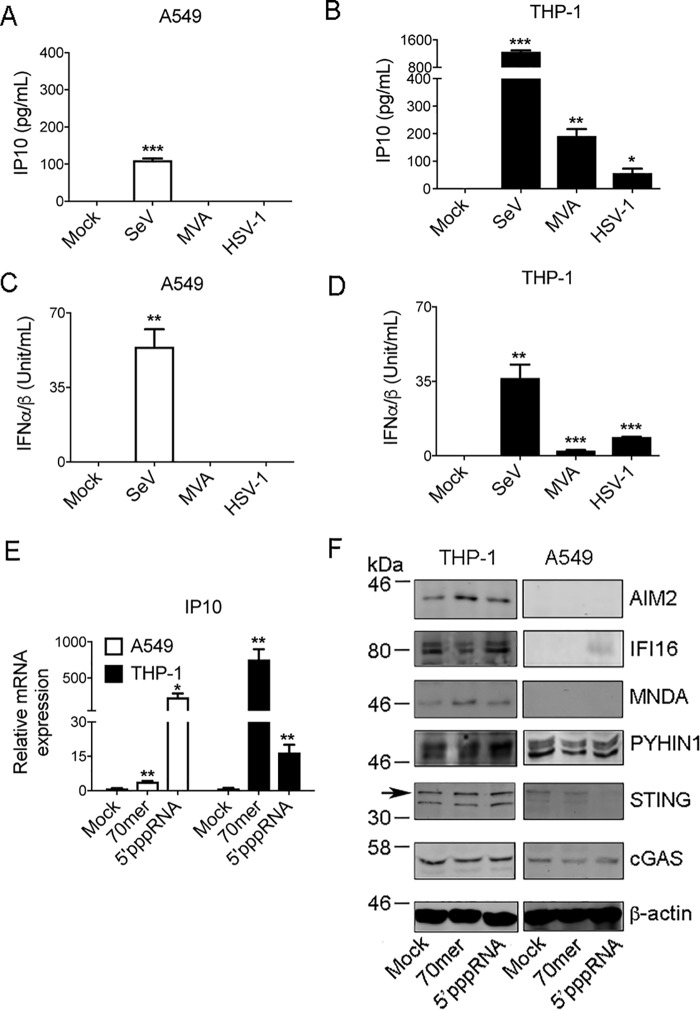
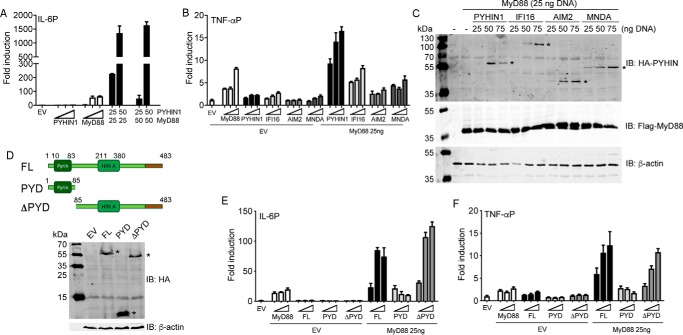
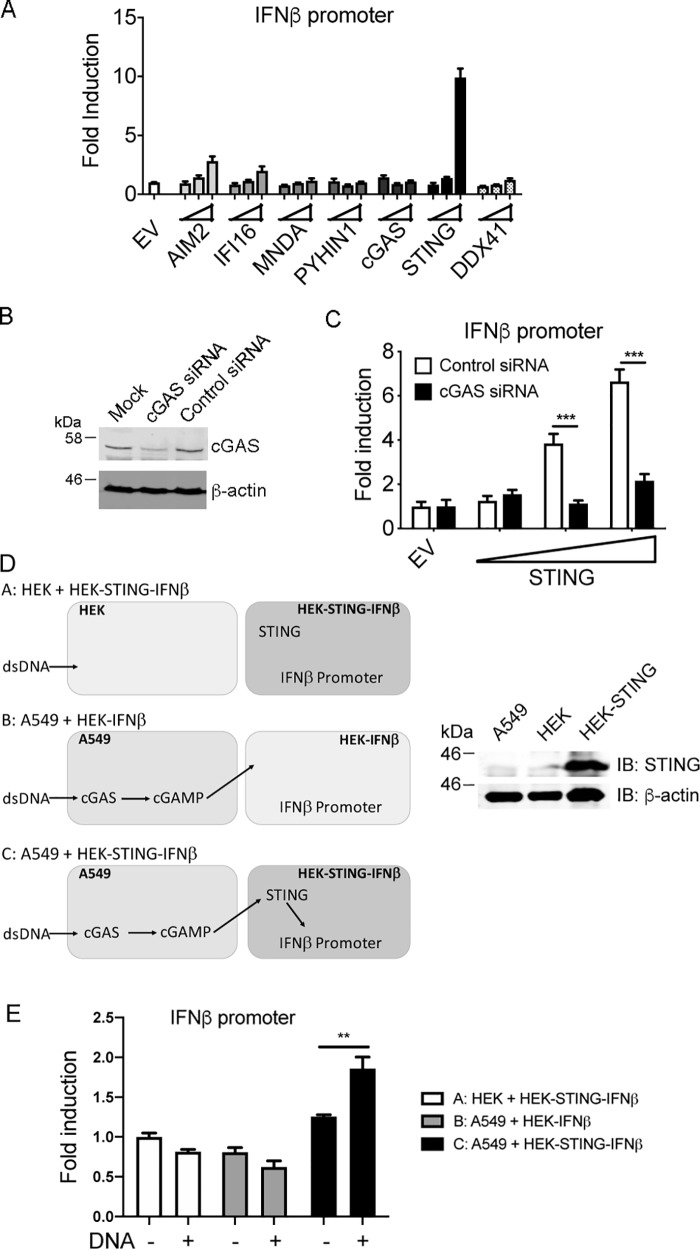
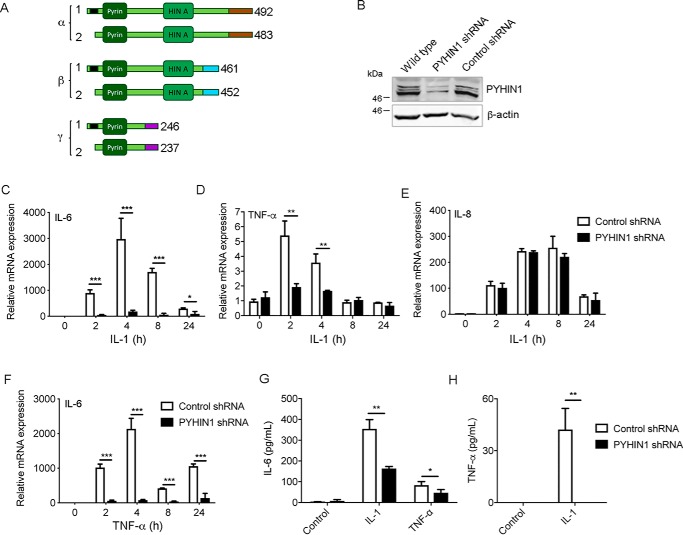
Animal cells use pattern-recognition receptors (PRRs) to detect specific pathogens. Pathogen detection mounts an appropriate immune response, including interferon and cytokine induction. The intracellular PRR-signaling pathways that detect DNA viruses have been characterized, particularly in myeloid cells. In these pathways, cGMP-AMP synthase (cGAS) and the pyrin and HIN domain family member (PYHIN) protein interferon-γ-inducible protein 16 (IFI16) detect DNA and signal via stimulator of interferon genes protein (STING). However, although airway epithelial cells are frontline sentinels in detecting pathogens, information on how they respond to DNA viruses is limited, and the roles of PYHIN proteins in these cells are unknown. Here, we examined expression and activities of cGAS, STING, and PYHINs in human lung epithelial cells. A549 epithelial cells, commonly used for RNA-sensing studies, failed to respond to DNA because they lacked STING expression, and ectopic STING expression restored a cGAS-dependent DNA response in these cells. In contrast, NuLi-1 immortalized human bronchial epithelial cells did express STING, which was activated after DNA stimulation and mediated DNA-dependent gene induction. PYHIN1, which like IFI16 has been proposed to be a viral DNA sensor, was the only PYHIN protein expressed in both airway epithelial cell types. However, rather than having a role in DNA sensing, PYHIN1 induced proinflammatory cytokines in response to interleukin-1 (IL-1) or tumor necrosis factor α (TNFα) stimulation. Of note, PYHIN1, via its HIN domain, directly induced IL-6 and TNFα transcription, revealing that PYHIN proteins play a role in proinflammatory gene induction in airway epithelial cells.
动物细胞利用模式识别受体 (PRR) 来检测特定的病原体。病原体的检测会引发适当的免疫反应,包括干扰素和细胞因子的诱导。已经对检测 DNA 病毒的细胞内 PRR 信号通路进行了描述,特别是在髓样细胞中。在这些途径中,环鸟苷酸-腺苷酸合酶 (cGAS) 和含有吡喃和 HIN 结构域家族成员 (PYHIN) 蛋白干扰素-γ诱导蛋白 16 (IFI16) 检测 DNA 并通过干扰素基因刺激蛋白 (STING) 发出信号。然而,尽管气道上皮细胞是检测病原体的一线哨兵,但关于它们如何对 DNA 病毒做出反应的信息有限,并且 PYHIN 蛋白在这些细胞中的作用尚不清楚。在这里,我们检查了人肺上皮细胞中 cGAS、STING 和 PYHINs 的表达和活性。常用于 RNA 感应研究的 A549 上皮细胞由于缺乏 STING 表达而无法对 DNA 做出反应,而外源性 STING 表达恢复了这些细胞中 cGAS 依赖性的 DNA 反应。相比之下,NuLi-1 永生化的人支气管上皮细胞确实表达了 STING,该蛋白在 DNA 刺激后被激活,并介导 DNA 依赖性基因诱导。PYHIN1 与 IFI16 一样,被提议为病毒 DNA 传感器,是这两种气道上皮细胞类型中唯一表达的 PYHIN 蛋白。然而,PYHIN1 并没有在 DNA 感应中发挥作用,而是在受到白细胞介素 1 (IL-1) 或肿瘤坏死因子 α (TNFα) 刺激时诱导促炎细胞因子。值得注意的是,PYHIN1 通过其 HIN 结构域直接诱导 IL-6 和 TNFα 的转录,表明 PYHIN 蛋白在气道上皮细胞中促炎基因诱导中发挥作用。