Department of Defense Biotechnology High Performance Computing Software Applications Institute, Telemedicine and Advanced Technology Research Center, U.S. Army Medical Research and Development Command, Ft. Detrick, MD, USA.
The Henry M. Jackson Foundation for the Advancement of Military Medicine, Inc. (HJF), Bethesda, MD, USA.
Malar J. 2020 Feb 27;19(1):94. doi: 10.1186/s12936-020-03174-z.
Human blood cells (erythrocytes) serve as hosts for the malaria parasite Plasmodium falciparum during its 48-h intraerythrocytic developmental cycle (IDC). Established in vitro protocols allow for the study of host-parasite interactions during this phase and, in particular, high-resolution metabolomics can provide a window into host-parasite interactions that support parasite development.
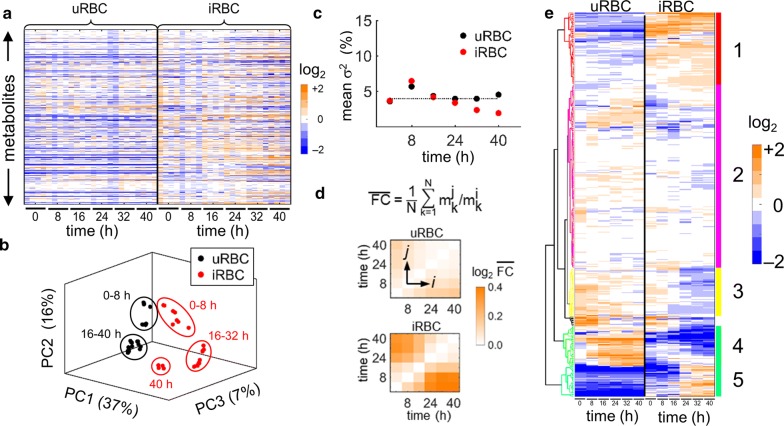
Uninfected and parasite-infected erythrocyte cultures were maintained at 2% haematocrit for the duration of the IDC, while parasitaemia was maintained at 7% in the infected cultures. The parasite-infected cultures were synchronized to obtain stage-dependent information of parasite development during the IDC. Samples were collected in quadruplicate at six time points from the uninfected and parasite-infected cultures and global metabolomics was used to analyse cell fractions of these cultures.
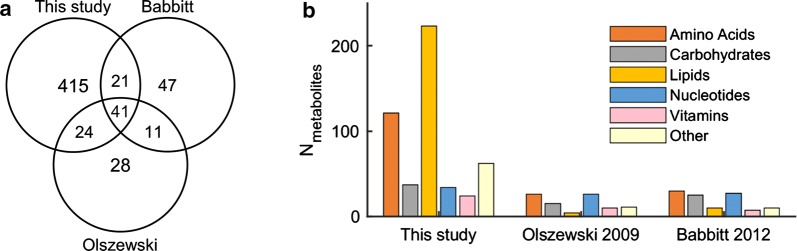
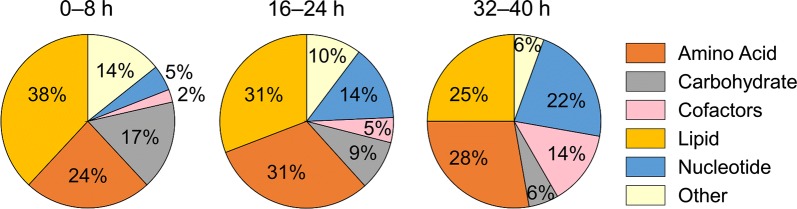
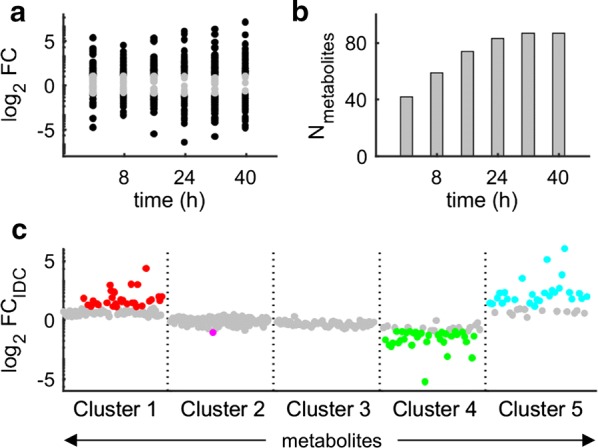
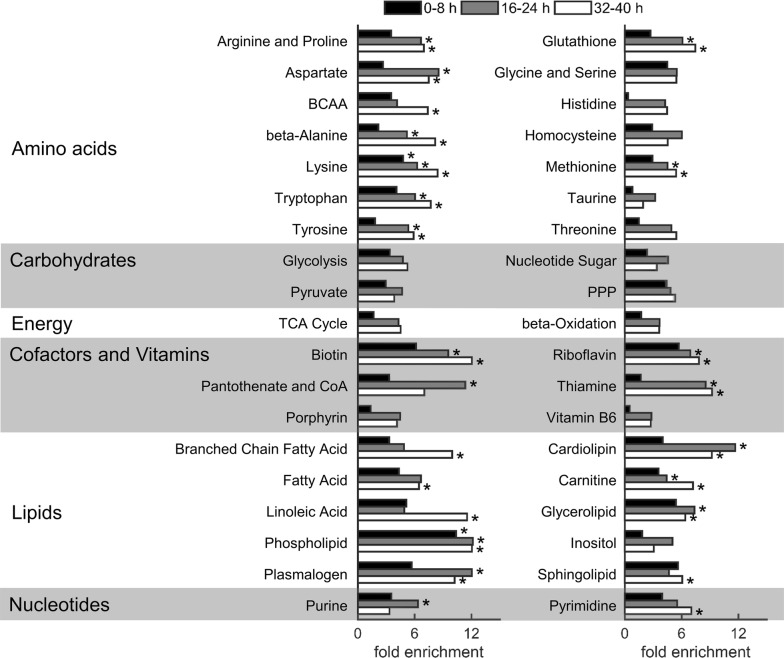
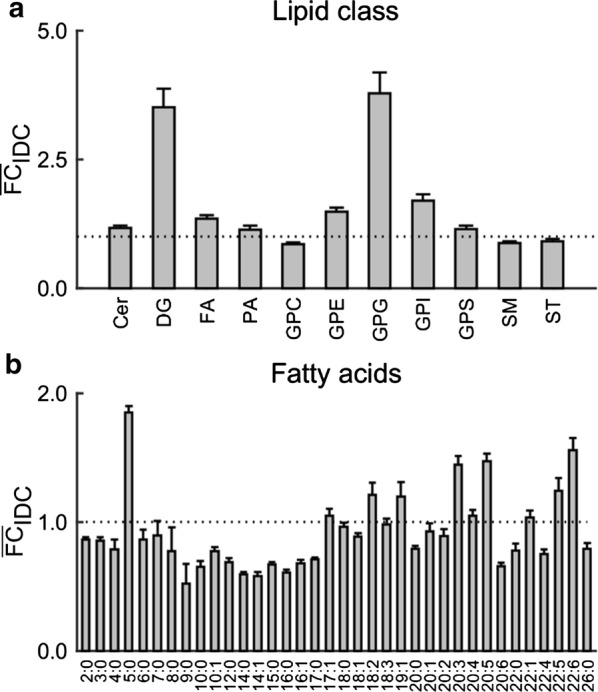
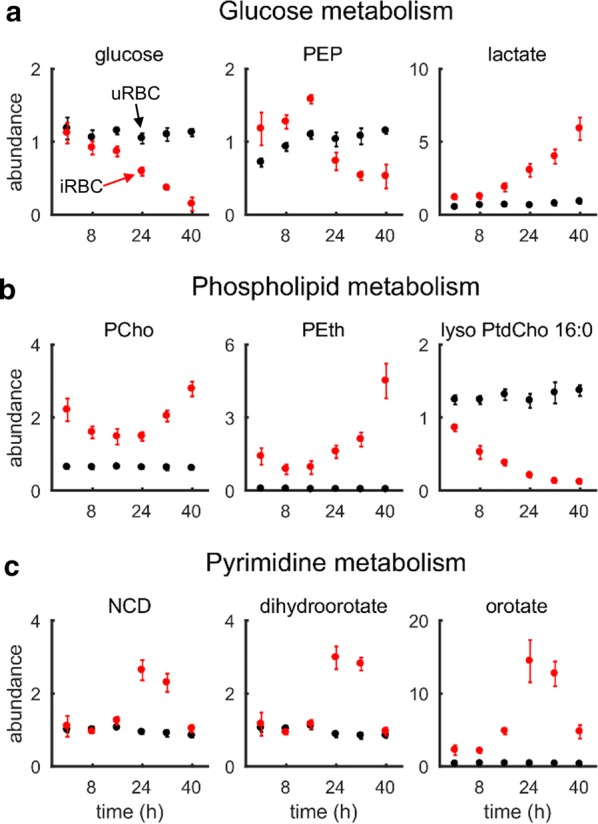
In uninfected and parasite-infected cultures during the IDC, 501 intracellular metabolites, including 223 lipid metabolites, were successfully quantified. Of these, 19 distinct metabolites were present only in the parasite-infected culture, 10 of which increased to twofold in abundance during the IDC. This work quantified approximately five times the metabolites measured in previous studies of similar research scope, which allowed for more detailed analyses. Enrichment in lipid metabolism pathways exhibited a time-dependent association with different classes of lipids during the IDC. Specifically, enrichment occurred in sphingolipids at the earlier stages, and subsequently in lysophospholipid and phospholipid metabolites at the intermediate and end stages of the IDC, respectively. In addition, there was an accumulation of 18-, 20-, and 22-carbon polyunsaturated fatty acids, which produce eicosanoids and promote gametocytogenesis in infected erythrocyte cultures.
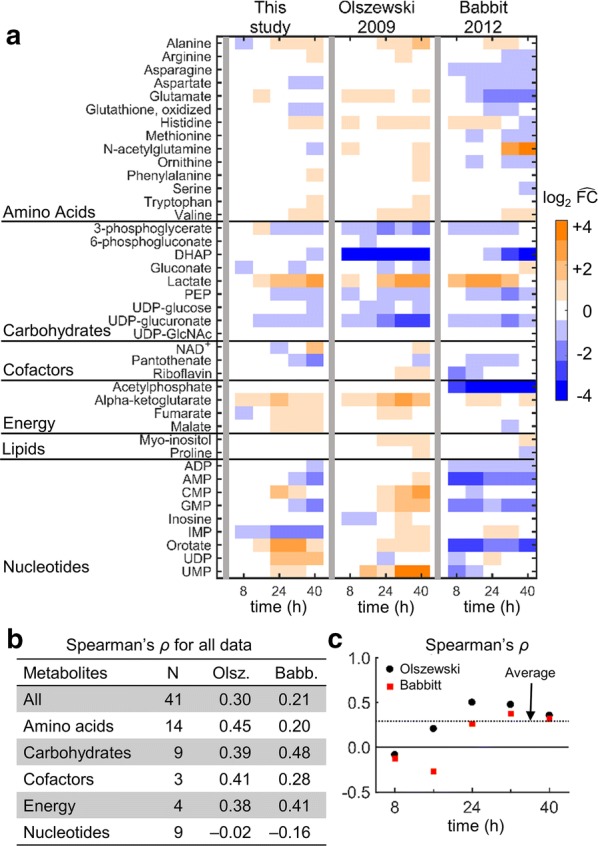
The current study revealed a number of heretofore unidentified metabolic components of the host-parasite system, which the parasite may exploit in a time-dependent manner to grow over the course of its development in the blood stage. Notably, the analyses identified components, such as precursors of immunomodulatory molecules, stage-dependent lipid dynamics, and metabolites, unique to parasite-infected cultures. These conclusions are reinforced by the metabolic alterations that were characterized during the IDC, which were in close agreement with those known from previous studies of blood-stage infection.
人类血细胞(红细胞)在疟原虫恶性疟原虫的 48 小时红细胞内发育周期(IDC)期间充当寄生虫的宿主。已建立的体外方案允许在该阶段研究宿主-寄生虫相互作用,特别是高分辨率代谢组学可以提供一个了解支持寄生虫发育的宿主-寄生虫相互作用的窗口。
未感染和寄生虫感染的红细胞培养物在 IDC 期间保持 2%的血细胞比容,而感染培养物中的疟原虫保持在 7%。寄生虫感染的培养物被同步化以获得 IDC 期间寄生虫发育的阶段依赖性信息。从未感染和寄生虫感染的培养物中以四倍体收集六个时间点的样本,并使用全局代谢组学分析这些培养物的细胞分数。
在 IDC 期间的未感染和寄生虫感染的培养物中,成功定量了 501 种细胞内代谢物,包括 223 种脂质代谢物。其中,19 种独特的代谢物仅存在于寄生虫感染的培养物中,其中 10 种在 IDC 期间增加了两倍。这项工作定量了以前类似研究范围的研究中测量的代谢物的大约五倍,这允许进行更详细的分析。脂质代谢途径的富集与 IDC 期间不同类别的脂质表现出时间依赖性关联。具体而言,在 IDC 的早期阶段,鞘脂的富集,随后在 IDC 的中间和末期分别是溶血磷脂和磷脂代谢物的富集。此外,还积累了 18-、20-和 22-碳多不饱和脂肪酸,它们在感染的红细胞培养物中产生类二十烷酸并促进配子体发生。
本研究揭示了宿主-寄生虫系统的一些迄今未被识别的代谢成分,寄生虫可能会以时间依赖性的方式利用这些成分在血液阶段的发育过程中生长。值得注意的是,分析确定了独特的寄生虫感染培养物的成分,如免疫调节分子的前体、阶段依赖性脂质动力学和代谢物。这些结论得到了 IDC 期间特征描述的代谢变化的加强,这些变化与以前对血液阶段感染的研究中已知的变化非常吻合。