Department of Orthopaedic Surgery, Hannover Medical School, Germany;
Laboratory for Biomechanics and Biomaterials, Hannover Medical School.
Acta Orthop. 2020 Jun;91(3):266-271. doi: 10.1080/17453674.2020.1732749. Epub 2020 Feb 28.
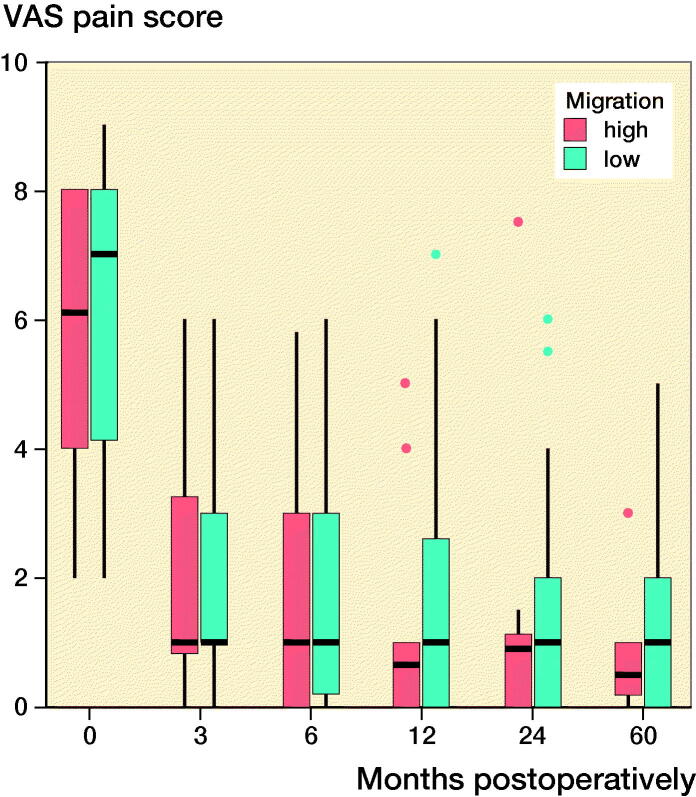
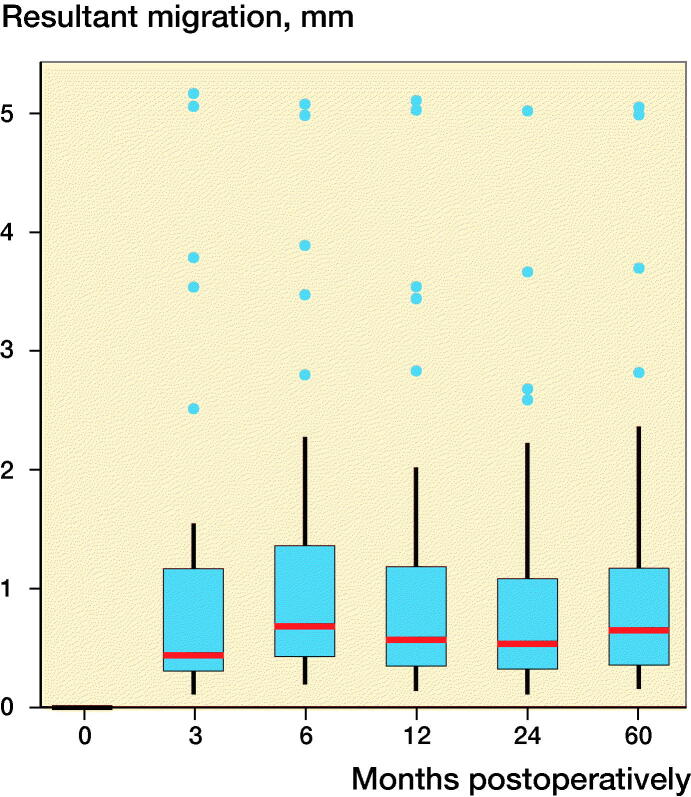
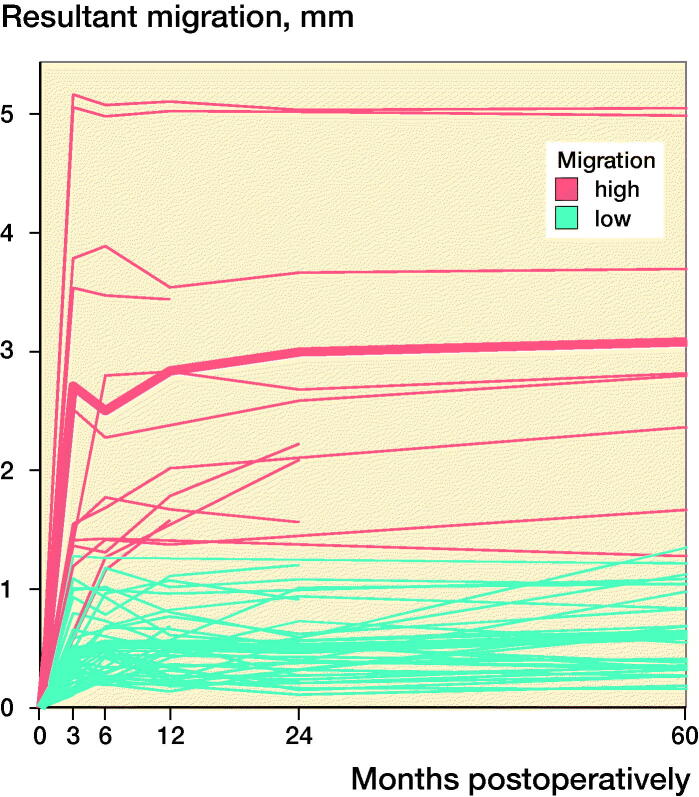
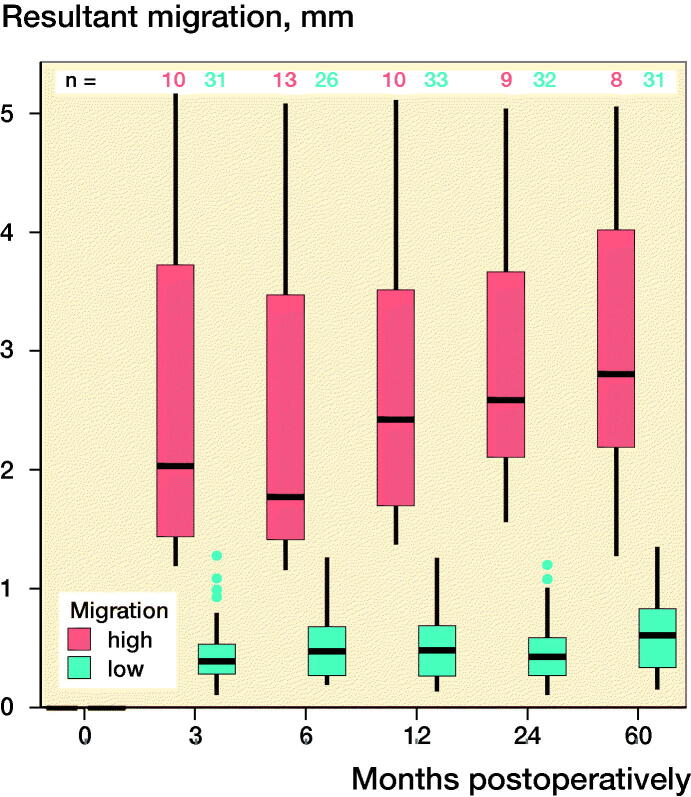
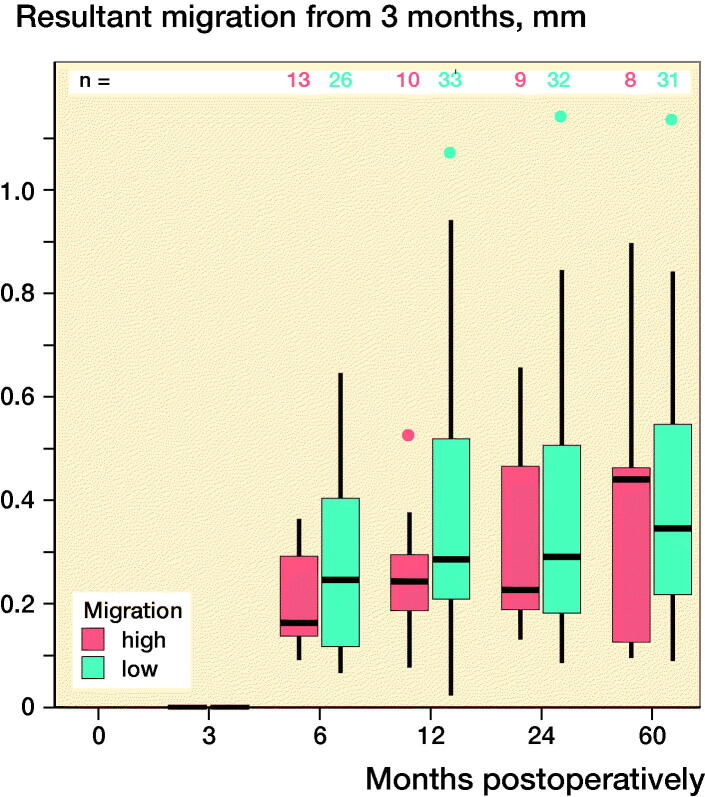
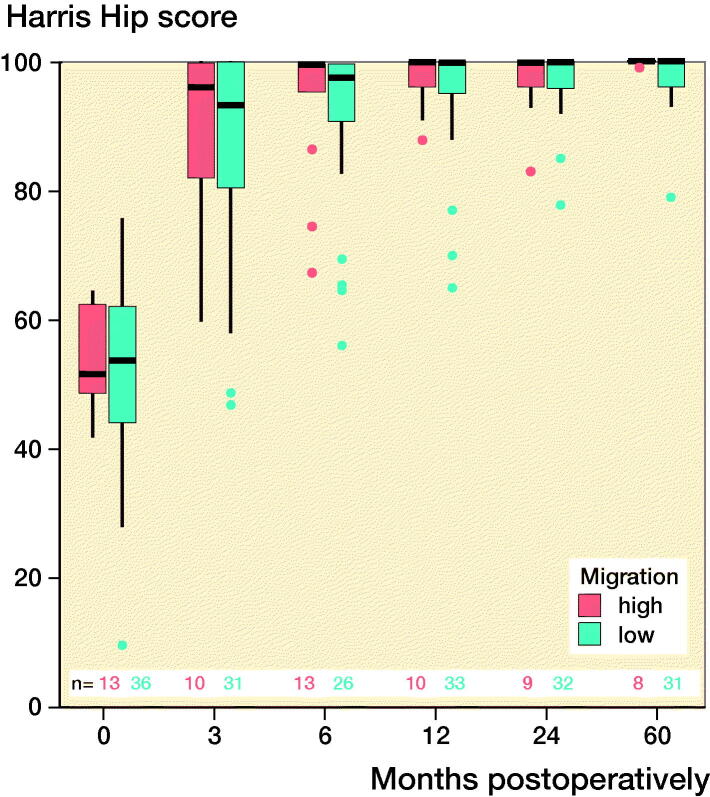
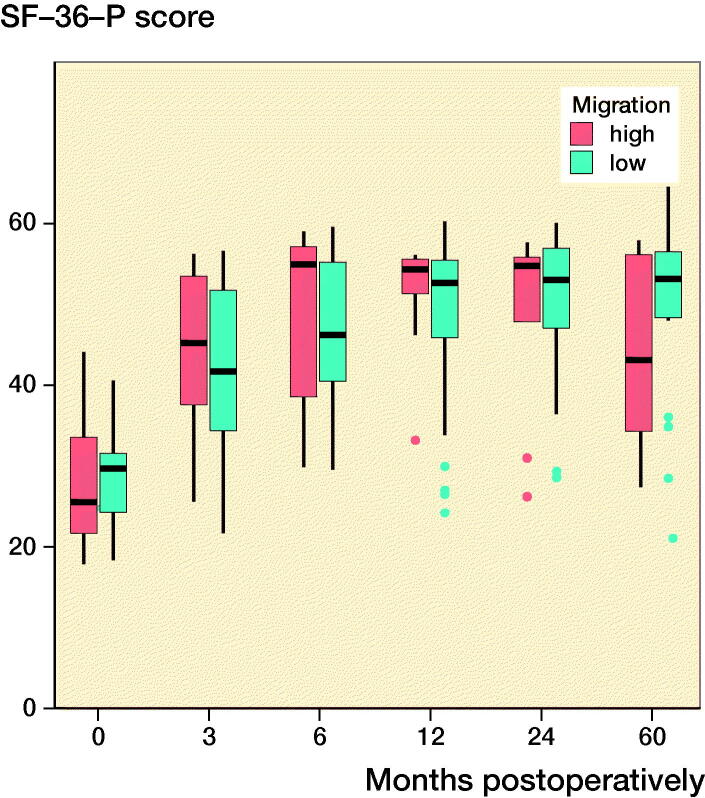
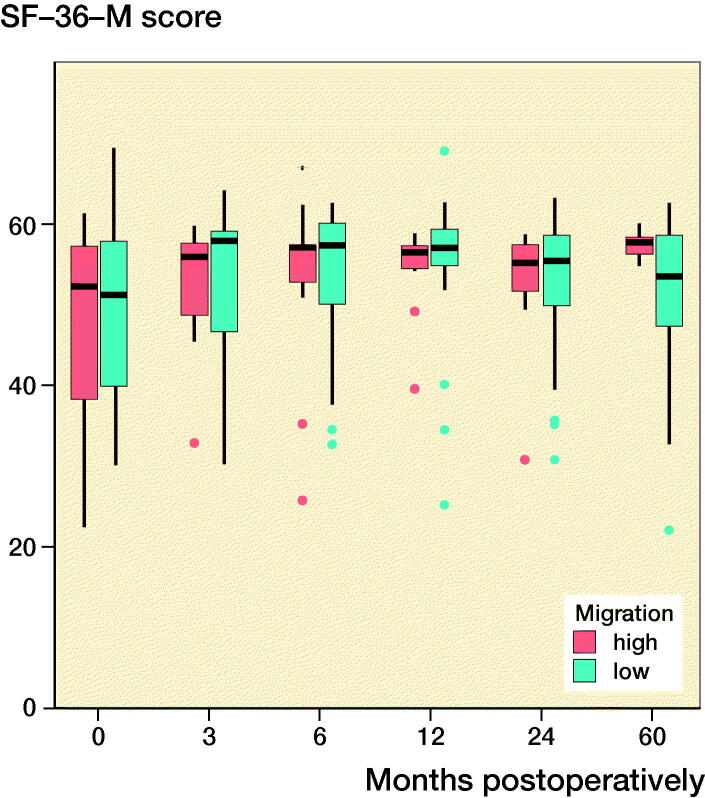
Background and purpose - Short-stem hip arthroplasty has been a viable alternative to standard stems for the treatment of hip osteoarthritis for over 10 years. This study assessed whether a correlation existed between a greater initial increase in implant migration and inferior clinical outcomes at 5 years postoperatively. Results on these patients after 2 years have been published previously.Patients and methods - Radiostereometry and clinical scoring were undertaken after surgery and at 3, 6, 12, and 24 months, and 5 years postoperatively. The migration and the clinical outcomes data from the patients with initial migrations at 3 months above the 75th percentile (≥ 75% group) were compared with those with migrations at 3 months of less than the 75th percentile (< 75% group).Results - Between 3 months and 5 years after surgery, the mean resultant implant migrations were 0.40 mm (SD 0.32) in the ≥ 75% group and 0.39 mm (SD 0.25) in the < 75% group. The mean Harris Hip Scores and SF-36 physical scores at 5 years postoperatively were 100 (SD 0.4) and 44 (SD 12), respectively, for the ≥ 75% group and 99 (SD 2) and 50 (SD 10), respectively, for the < 75% group. The differences between the patient groups were not statistically significant.Interpretation - There was no correlation between a greater initial migration and inferior clinical outcomes at 5 years postoperatively. Despite a greater initial migration, there were no risks of early aseptic loosening and inferior midterm clinical outcomes associated with a short-stem implant with a primary metaphyseal anchorage.
背景与目的-短柄髋关节置换术作为一种可行的替代标准柄治疗髋关节骨关节炎的方法已经有 10 多年了。本研究评估了初始植入物迁移增加与术后 5 年临床结果较差之间是否存在相关性。这些患者术后 2 年的结果之前已经发表过。
患者和方法-术后及术后 3、6、12、24 个月和 5 年进行放射立体测量和临床评分。将 3 个月时初始迁移超过第 75 百分位数(≥75%组)的患者与 3 个月时迁移小于第 75 百分位数(<75%组)的患者的迁移和临床结果数据进行比较。
结果-术后 3 个月至 5 年间,≥75%组的平均实际植入物迁移量为 0.40mm(SD 0.32),<75%组为 0.39mm(SD 0.25)。术后 5 年的平均 Harris 髋关节评分和 SF-36 物理评分分别为≥75%组的 100(SD 0.4)和 44(SD 12),<75%组为 99(SD 2)和 50(SD 10)。两组患者之间的差异无统计学意义。
结论-初始较大的迁移与术后 5 年较差的临床结果之间没有相关性。尽管初始迁移较大,但具有初级干骺端固定的短柄植入物不存在早期无菌性松动和中期临床结果较差的风险。