State Key Laboratory for Modification of Chemical Fibers and Polymer Materials, Shanghai Belt and Road Joint Laboratory of Advanced Fiber and Low-dimension Materials (Donghua University), College of Materials Science and Engineering, Donghua University, Shanghai, 201620, PR China.
College of Chemistry, Chemical Engineering and Biotechnology, Donghua University, Shanghai, 201620, PR China.
Nat Commun. 2020 Feb 27;11(1):1107. doi: 10.1038/s41467-020-14446-2.
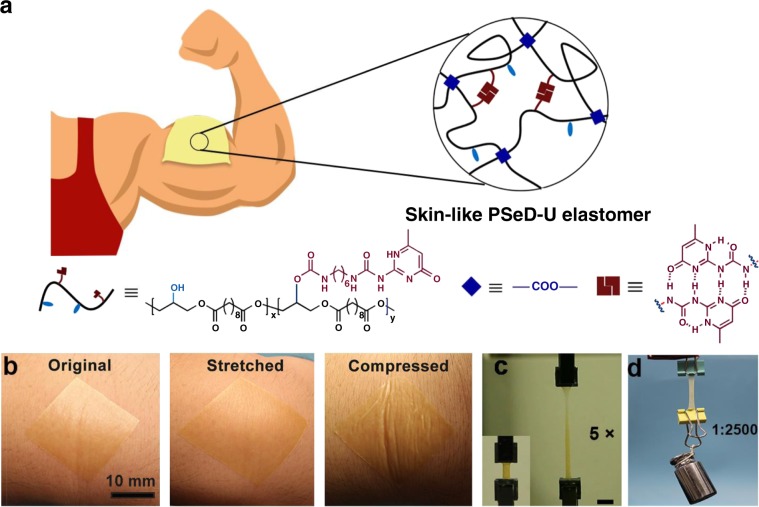
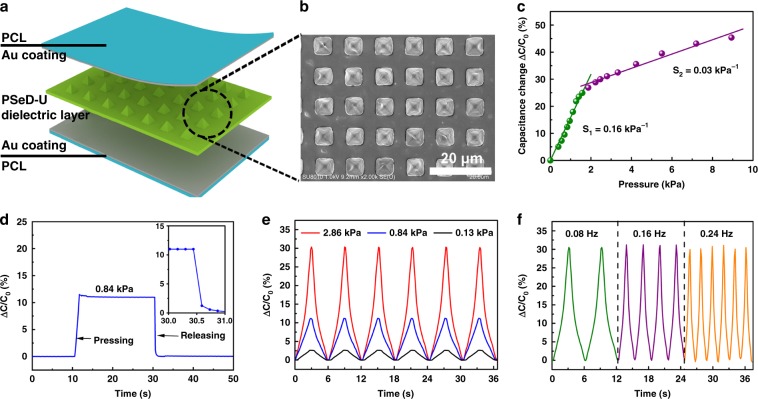
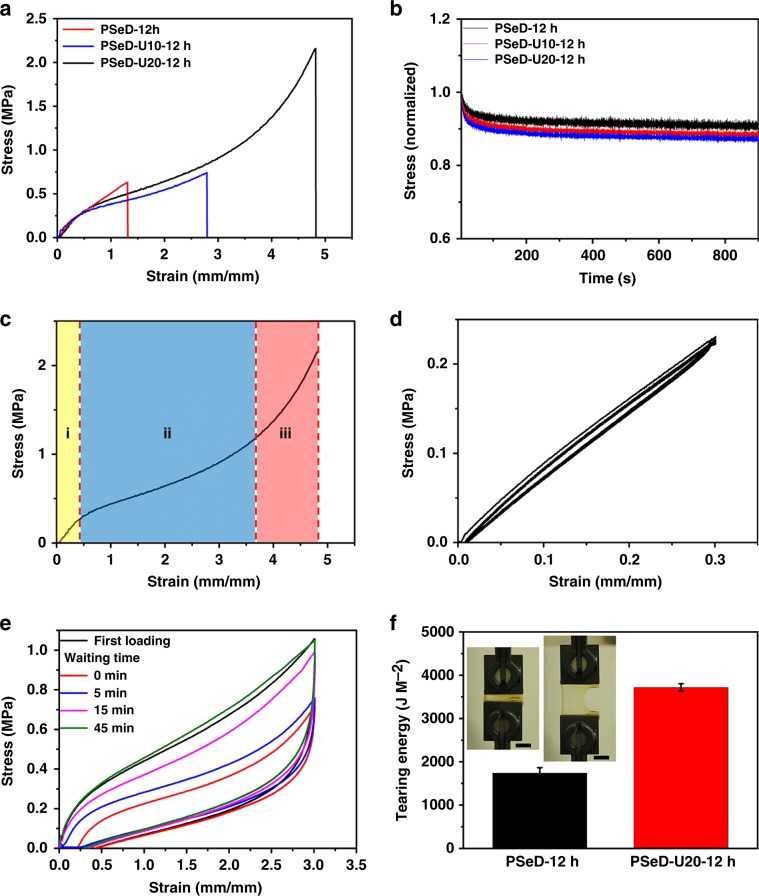
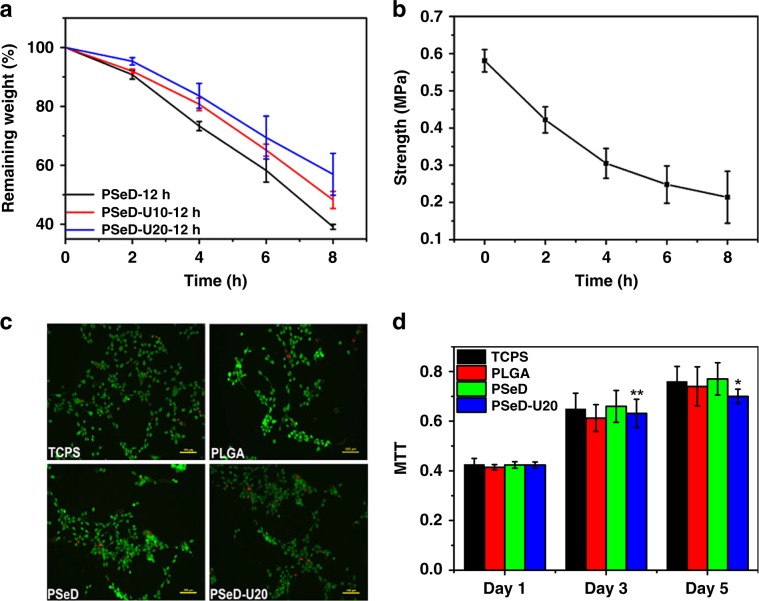
The bio-integrated electronics industry is booming and becoming more integrated with biological tissues. To successfully integrate with the soft tissues of the body (eg. skin), the material must possess many of the same properties including compliance, toughness, elasticity, and tear resistance. In this work, we prepare mechanically and biologically skin-like materials (PSeD-U elastomers) by designing a unique physical and covalent hybrid crosslinking structure. The introduction of an optimal amount of hydrogen bonds significantly strengthens the resultant elastomers with 11 times the toughness and 3 times the strength of covalent crosslinked PSeD elastomers, while maintaining a low modulus. Besides, the PSeD-U elastomers show nonlinear mechanical behavior similar to skins. Furthermore, PSeD-U elastomers demonstrate the cytocompatibility and biodegradability to achieve better integration with tissues. Finally, piezocapacitive pressure sensors are fabricated with high pressure sensitivity and rapid response to demonstrate the potential use of PSeD-U elastomers in bio-integrated electronics.
生物集成电子产业正在蓬勃发展,并与生物组织更加融合。为了成功地与身体的软组织(例如皮肤)集成,材料必须具有许多相同的特性,包括顺应性、韧性、弹性和抗撕裂性。在这项工作中,我们通过设计独特的物理和共价混合交联结构,制备出具有机械和生物功能的类似皮肤的材料(PSeD-U 弹性体)。引入适量的氢键可显著增强弹性体的韧性,使其韧性提高 11 倍,强度提高 3 倍,而弹性模量保持较低。此外,PSeD-U 弹性体表现出类似于皮肤的非线性机械行为。此外,PSeD-U 弹性体具有细胞相容性和生物可降解性,可实现与组织的更好集成。最后,制备了具有高灵敏度和快速响应的压电容式压力传感器,展示了 PSeD-U 弹性体在生物集成电子学中的应用潜力。