Marine Genomics Unit, Okinawa Institute of Science and Technology Graduate University, Onna, Okinawa, Japan.
Atmosphere and Ocean Research Institute, The University of Tokyo, Kashiwanoha, Kashiwa, Japan.
Genome Biol Evol. 2020 Mar 1;12(3):203-209. doi: 10.1093/gbe/evaa042.
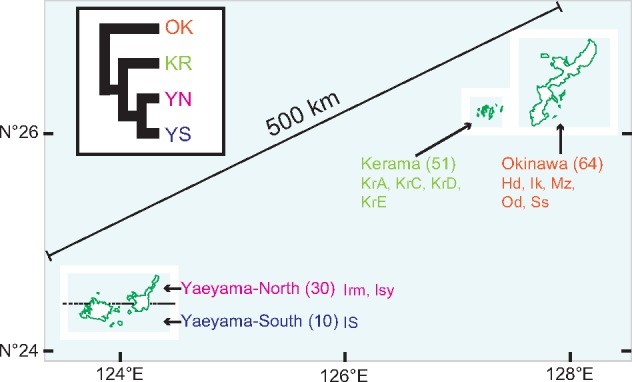
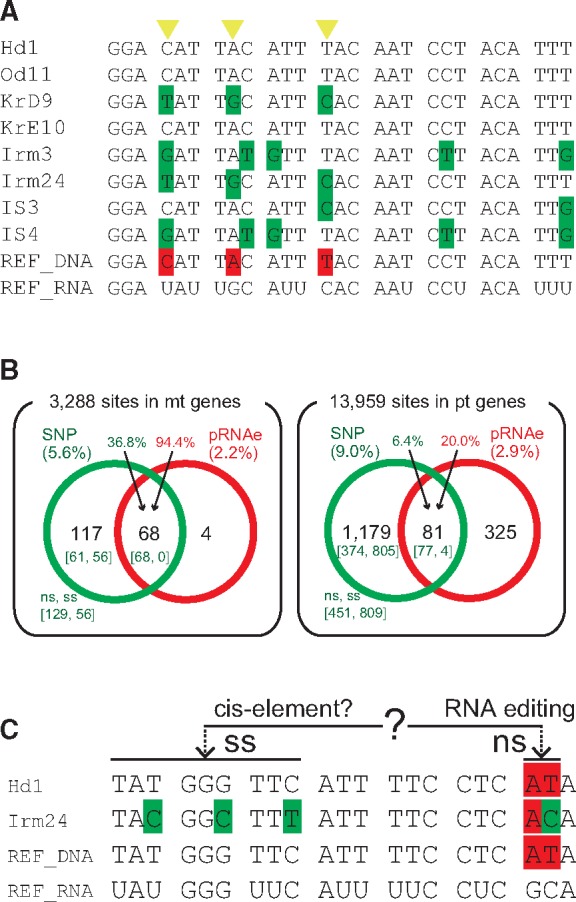
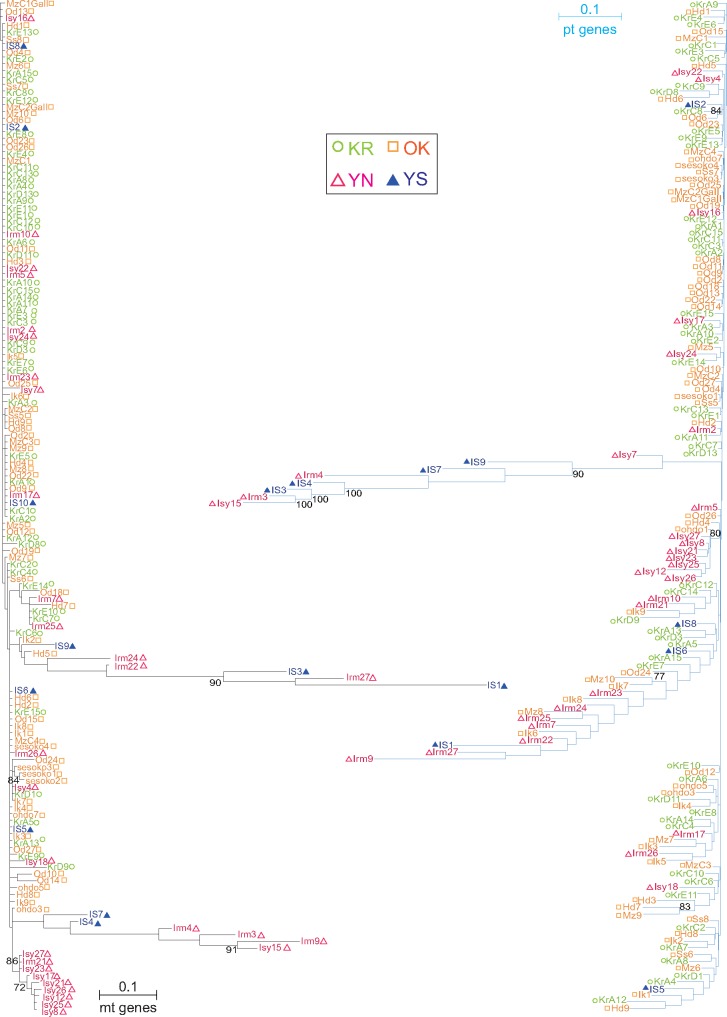
In order to develop successful strategies for coral reef preservation, it is critical that the biology of both host corals and symbiotic algae are investigated. In the Ryukyu Archipelago, which encompasses many islands spread over ∼500 km of the Pacific Ocean, four major populations of the coral Acropora digitifera have been studied using whole-genome shotgun (WGS) sequence analysis (Shinzato C, Mungpakdee S, Arakaki N, Satoh N. 2015. Genome-wide single-nucleotide polymorphism (SNP) analysis explains coral diversity and recovery in the Ryukyu Archipelago. Sci Rep. 5:18211.). In contrast, the diversity of the symbiotic dinoflagellates associated with these A. digitifera populations is unknown. It is therefore unclear if these two core components of the coral holobiont share a common evolutionary history. This issue can be addressed for the symbiotic algal populations by studying the organelle genomes of their mitochondria and plastids. Here, we analyzed WGS data from ∼150 adult A. digitifera, and by mapping reads to the available reference genome sequences, we extracted 2,250 sequences representing 15 organelle genes of Symbiodiniaceae. Molecular phylogenetic analyses of these mitochondrial and plastid gene sets revealed that A. digitifera from the southern Yaeyama islands harbor a different Symbiodiniaceae population than the islands of Okinawa and Kerama in the north, indicating that the distribution of symbiont populations partially matches that of the four host populations. Interestingly, we found that numerous SNPs correspond to known RNA-edited sites in 14 of the Symbiodiniaceae organelle genes, with mitochondrial genes showing a stronger correspondence than plastid genes. These results suggest a possible correlation between RNA editing and SNPs in the two organelle genomes of symbiotic dinoflagellates.
为了制定成功的珊瑚礁保护策略,研究宿主珊瑚和共生藻类的生物学特性至关重要。在琉球群岛,有四个主要的 Acropora digitifera 珊瑚种群已经通过全基因组鸟枪法(WGS)序列分析进行了研究(Shinzato C、Mungpakdee S、Arakaki N、Satoh N. 2015. 全基因组单核苷酸多态性(SNP)分析解释了琉球群岛珊瑚的多样性和恢复。Sci Rep. 5:18211.)。相比之下,与这些 A. digitifera 种群相关的共生甲藻的多样性尚不清楚。因此,尚不清楚这些珊瑚共生体的两个核心组成部分是否具有共同的进化历史。通过研究共生藻类细胞器的线粒体和质体基因组,可以解决共生藻种群的这个问题。在这里,我们分析了来自约 150 个成年 A. digitifera 的 WGS 数据,并通过将读取数据映射到可用的参考基因组序列,我们提取了代表 15 个共生藻细胞器基因的 2250 个序列。这些线粒体和质体基因座的分子系统发育分析表明,来自南部八重山群岛的 A. digitifera 与北部的冲绳和庆良间群岛的共生藻种群不同,表明共生种群的分布部分与四个宿主种群相匹配。有趣的是,我们发现许多 SNP 对应于 14 个共生藻细胞器基因中的已知 RNA 编辑位点,线粒体基因的对应程度强于质体基因。这些结果表明,在共生甲藻的两个细胞器基因组中,RNA 编辑和 SNP 之间可能存在相关性。