College of Pharmaceutical Sciences, Zhejiang University, Hangzhou, 310058, China.
Guangxi Key Laboratory of Functional Phytochemicals Research and Utilization, Guangxi Institute of Botany, Chinese Academy of Sciences, Guilin 541006, China.
Anal Chem. 2020 Apr 7;92(7):4954-4962. doi: 10.1021/acs.analchem.9b05084. Epub 2020 Mar 26.
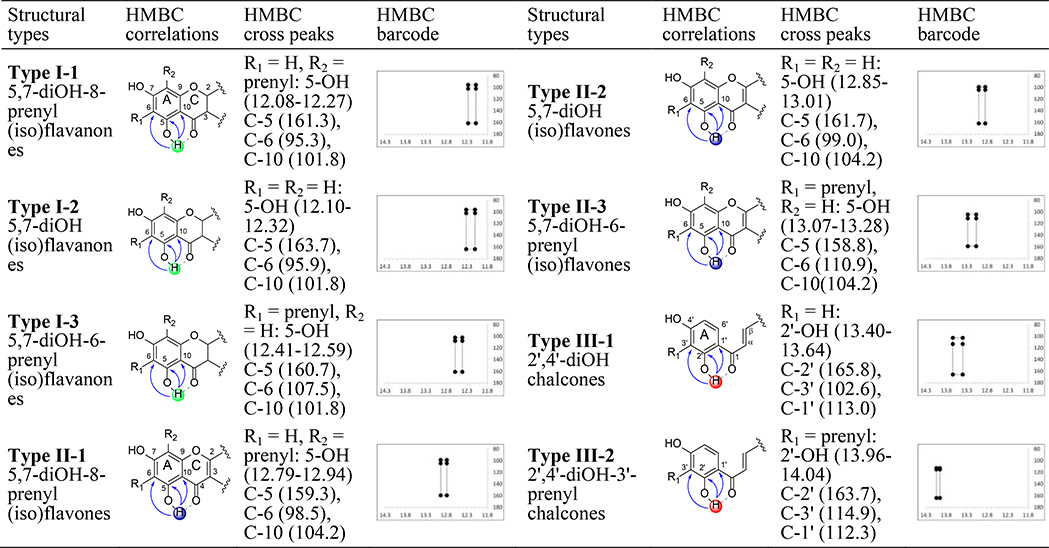
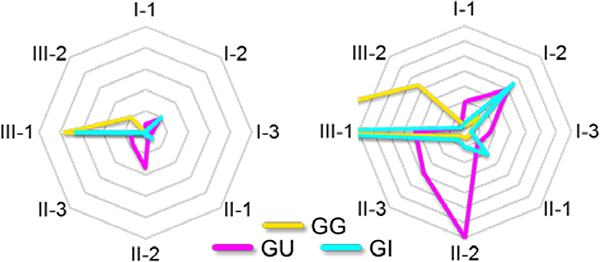
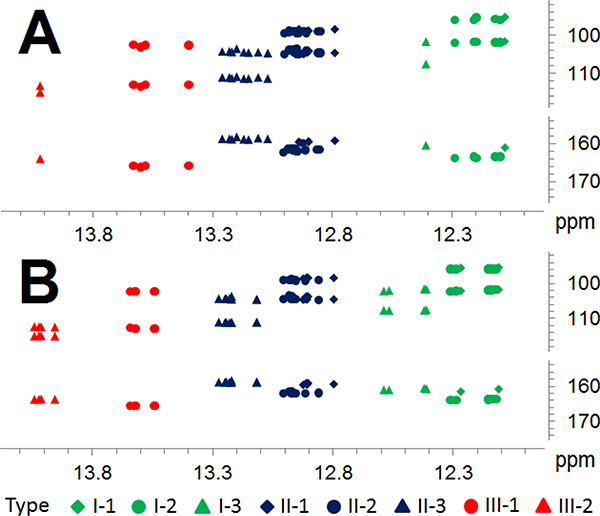
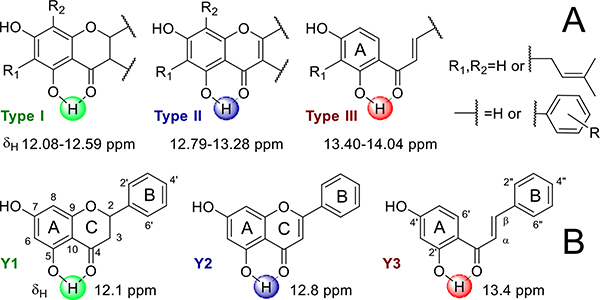
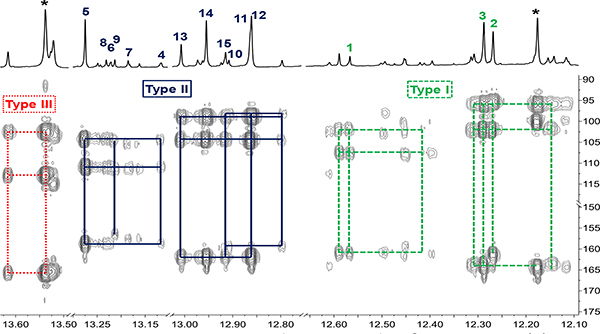
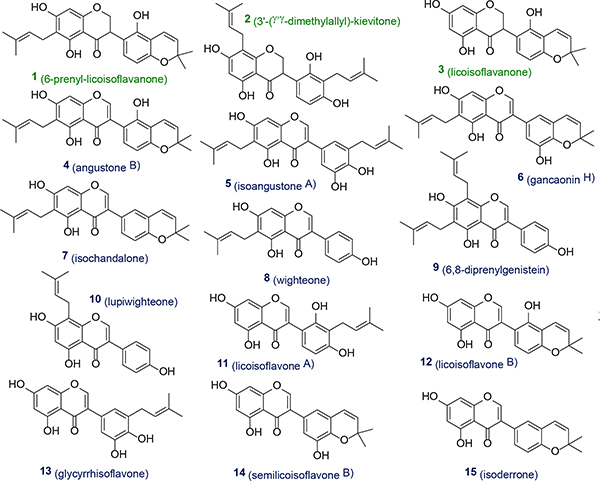
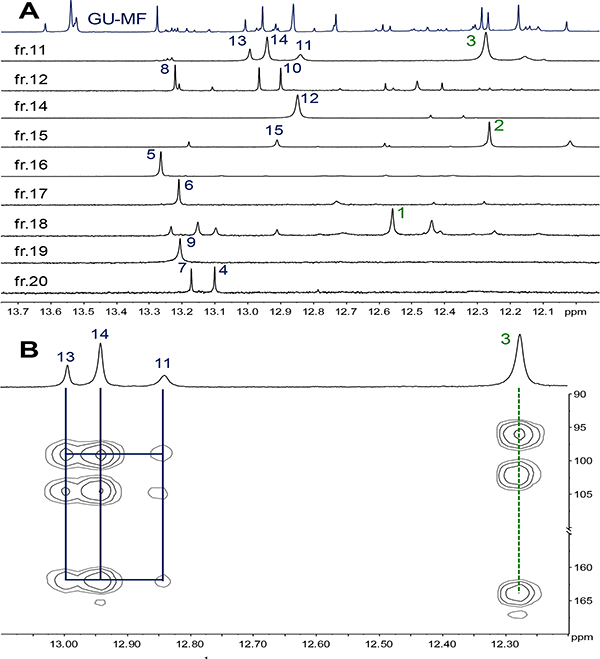
Utilizing the distinct HMBC cross-peak patterns of ower-ield ange (LFR; 11.80-14.20 ppm) hydroxyl singlets, presented NMR methodology characterizes flavonoid metabolomes both qualitatively and quantitatively. It enables simultaneous classification of the structural types of 5-OH flavonoids and biogenetically related 2'-OH chalcones, as well as quantification of individual metabolites from H NMR spectra, even in complex mixtures. Initially, metabolite-specific LFR 1D H and 2D HMBC patterns were established via literature mining and experimental data interpretation, demonstrating that LFR HMBC patterns encode the different structural types of 5-OH flavonoids/2'-OH chalcones. Taking advantage of the simplistic multiplicity of the H,H-uncoupled LFR 5-/2'-OH singlets, individual metabolites could subsequently be quantified by peak fitting quantitative H NMR (PF-qHNMR). Metabolomic analysis of enriched fractions from three medicinal licorice () species established proof-of-concept for distinguishing three major structural types and eight subtypes in biomedical applications. The method identified 15 (GU) phenols from the six possible subtypes of 5,7-diOH (iso)flav(an)ones with 6-, 8-, and nonprenyl substitution, including the new 6-prenyl-licoisoflavanone () and two previously unknown compounds ( and ). Relative (100%) qNMR established quantitative metabolome patterns suitable for species discrimination and plant metabolite studies. Absolute qNMR with combined external and internal (solvent) calibration (ECIC) identified and quantified 158 GU metabolites. HMBC-supported qHNMR analysis of flavonoid metabolomes ("flavonomics") empowers the exploration of structure-abundance-activity relationships of designated bioactivity. Its ability to identify and quantify numerous metabolites simultaneously and without identical reference materials opens new avenues for natural product discovery and botanical quality control and can be adopted to other flavonoid- and chalcone-containing taxa.
利用低场区(LFR;11.80-14.20 ppm)羟基单峰的独特 HMBC 交叉峰模式,该 NMR 方法可定性和定量地表征类黄酮代谢组。它能够同时对 5-OH 类黄酮和生物相关的 2'-OH 查尔酮的结构类型进行分类,以及从 H NMR 光谱中定量单个代谢物,即使在复杂混合物中也是如此。最初,通过文献挖掘和实验数据分析建立了代谢物特异性 LFR 1D H 和 2D HMBC 图谱,证明 LFR HMBC 图谱编码了 5-OH 类黄酮/2'-OH 查尔酮的不同结构类型。利用 LFR 5-/2'-OH 单峰的简单 H,H-去偶多重性,随后可以通过峰拟合定量 H NMR(PF-qHNMR)对单个代谢物进行定量。对三种药用甘草()种属中富集馏分的代谢组学分析,为在生物医学应用中区分三种主要结构类型和八种亚型提供了概念验证。该方法从六种可能的 5,7-二 OH(异)黄酮(烷)酮亚型中鉴定出 15 种(GU)酚,包括新的 6-prenyl-licoisoflavanone()和两种以前未知的化合物(和)。相对(100%)qNMR 建立了适合于物种鉴别和植物代谢物研究的定量代谢组模式。采用外部和内部(溶剂)联合校准(ECIC)的绝对 qNMR 鉴定和定量了 158 种 GU 代谢物。基于 HMBC 的黄酮类代谢组学(“flavonomics”)的 qHNMR 分析,能够探索指定生物活性的结构-丰度-活性关系。它能够同时识别和定量大量代谢物,而无需相同的参考物质,为天然产物发现和植物质量控制开辟了新的途径,并可应用于其他含有黄酮类和查尔酮类的类群。